NASA’s newest planet-hunting observatory, the Pandora space telescope, has successfully separated from its rocket and is now circling Earth in a sun-synchronous orbit. Its mission: to stare simultaneously at distant worlds and their stars, unraveling whether signals in exoplanet atmospheres are real or stellar illusions.
The hunt for habitable worlds just got a powerful new tool. NASA’s Pandora satellite is officially on station, poised to begin a meticulous year-long investigation into the chemical makeup of alien skies. Unlike flagship telescopes that might glimpse an exoplanet once, Pandora is designed for the long stare. It will conduct detailed observations of 20 specific exoplanets, focusing on a critical trio of atmospheric features: water vapor, hazes, and clouds. Finding these is a key step in assessing a planet’s potential for life, but there’s a catch—a star’s own activity can create false signals that masquerade as planetary atmospheres.
That’s where Pandora’s unique dual-view strategy comes in. As project scientist Dr. Elisa Quintana from NASA’s Goddard Space Flight Center has explained in pre-mission briefings, the satellite will observe exoplanets and their host stars simultaneously. “A star’s spots and faculae—bright, hot regions—can contaminate the light we see passing through a planet’s atmosphere,” Quintana noted. By studying both at once, Pandora aims to disentangle the star’s noisy signature from the planet’s true atmospheric fingerprint, a crucial correction that has been a major challenge in exoplanet science.
READ ALSO: https://modernmechanics24.com/post/meta-landmark-nuclear-power-deals/
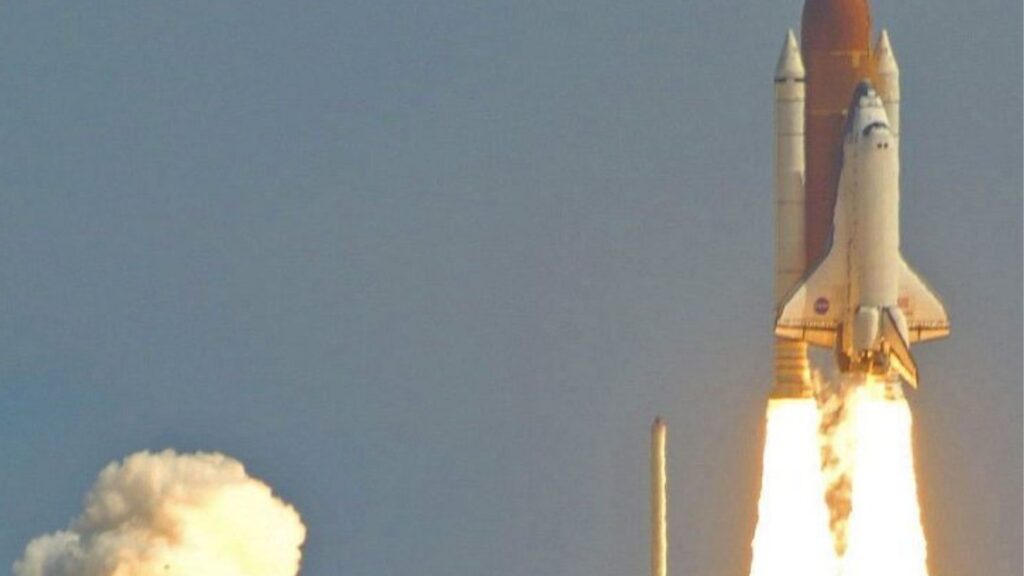
Pandora wasn’t alone on its ride to space. It shared the SpaceX Falcon 9 rocket with two other cutting-edge NASA-sponsored CubeSats, according to the agency’s mission update. The Star-Planet Activity Research CubeSat (SPARCS) will study how ultraviolet radiation from volatile red dwarf stars affects the atmospheres of orbiting planets. Meanwhile, the Black Hole Coded Aperture Telescope (BlackCAT) is a transient hunter, designed to scan large swaths of the sky for the brilliant, sudden X-ray flashes from collapsing stars and other cosmic explosions.
The SPARCS mission, in particular, highlights NASA’s commitment to educational pathways. It was selected under the agency’s CubeSat Launch Initiative (CSLI), a program that provides a low-cost route to orbit for universities and non-profits. Flying as part of the Educational Launch of Nanosatellites (ELaNa) 60 grouping, SPARCS gives students and faculty hands-on experience in every phase of a real space mission, from hardware design to data analysis.
WATCH ALSO: https://modernmechanics24.com/post/humanoid-robots-no-human-control/
For the Pandora team, the immediate next step is a breath-holding moment: confirmation of signal acquisition. Once that vital link is established, the satellite will begin its calibration phase before settling into its primary science campaign. By persistently watching its target list of stars and planets, Pandora promises to deliver cleaner, more reliable data than ever before on what these distant worlds are truly made of. In doing so, it will refine the search parameters for future telescopes tasked with finding the next Earth, teaching us not just about planets, but about the complex stellar environments they call home.