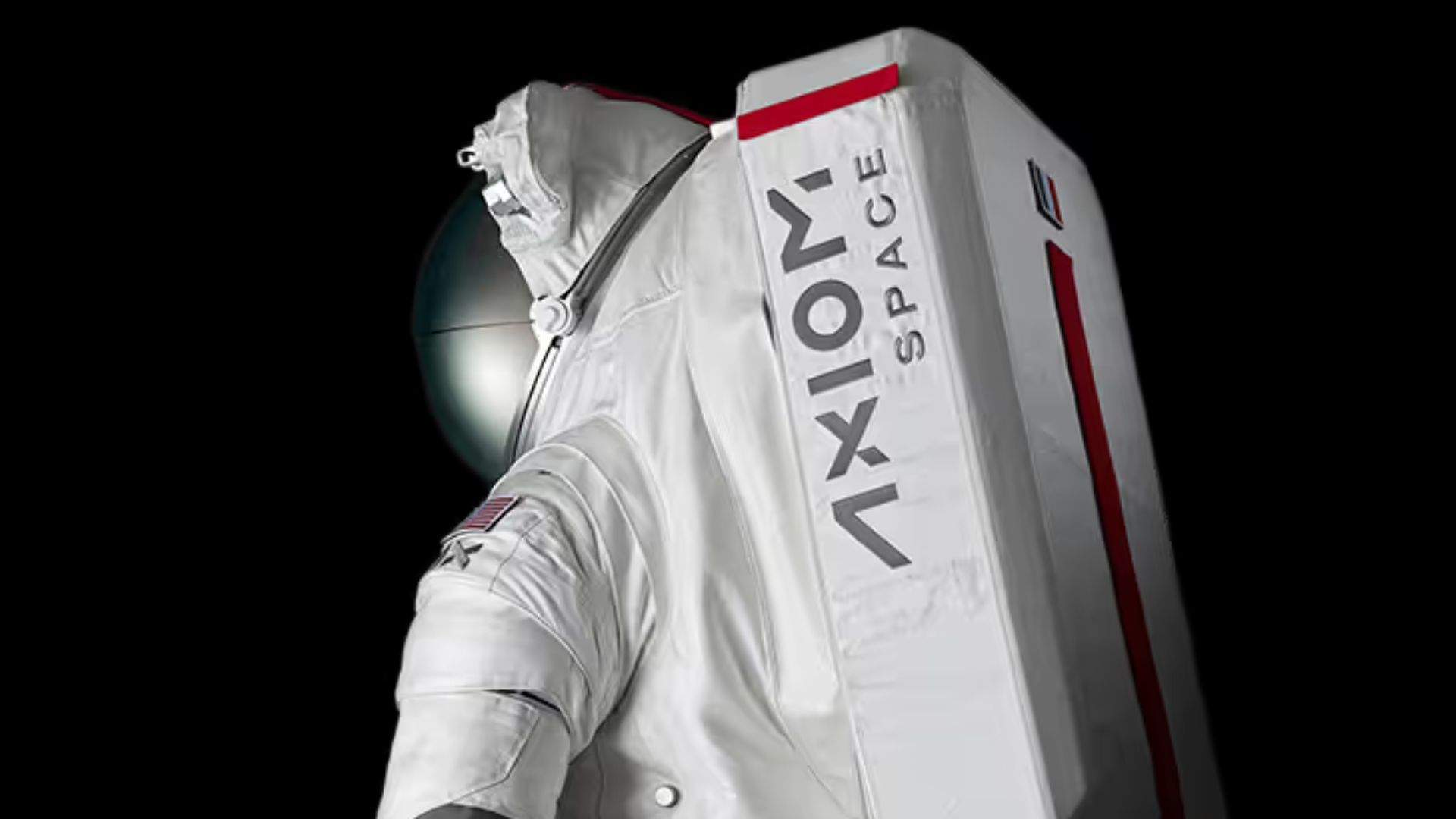
NASA’s Artemis III astronauts will wear a new-generation space suit developed by Axiom Space, designed to provide enhanced mobility and protection during lunar walks on the south pole.
Four astronauts will fly by early March on NASA’s Artemis II mission, which would take them farther away from Earth than any crewed mission in almost 50 years.
The focus is already on Artemis III, the mission that will open a new era of exploration, bringing humans back to the lunar surface, even before Artemis II sets foot on the moon.
One of NASA’s most difficult tasks prior to the start of the mission is outfitting astronauts for lunar walks.
A space suit is more than simply a piece of cloth. It is a miniature spacecraft built around the human body. It shields humans from sharp rocks, fine lunar dust, cosmic radiation, and extreme temperatures. In addition, it offers space for tools and equipment, oxygen, and cooling water. At the same time, it allows astronauts to move freely while working on the Moon.
READ ALSO: https://modernmechanics24.com/post/china-20mw-offshore-wind-turbine-grid/
Since 2022, the US-based space infrastructure firm Axiom Space has been working on NASA’s new lunar space suit. The company unveiled the Axiom Extravehicular Mobility Unit(AxEMU) official design in 2024. The suit is currently being tested. It is anticipated that the Artemis III mission will make use of it.
The AxEMU initially resembles previous NASA space suits. It is large and white, with a life-support bag and a well-known helmet. However, experts claim that the technology beneath the surface represents a significant advancement.
“It’s really pushing the limits of material science,” says Paul Spana, curator and director of collections at Space Center Houston. “A lot of new technologies are used in this suit to support moonwalking on Artemis III.”
Similar to the suits used during the Apollo era, the AxEMU is made especially for lunar conditions. Buzz Aldrin, an Apollo 11 astronaut, once characterised the Moon as a site of “magnificent desolation,” with heavy dust, no atmosphere, and sharp temperature fluctuations. Conditions for Artemis astronauts will be significantly more challenging near the moon’s south pole.
WATCH ALSO: https://modernmechanics24.com/post/humanoid-robots-engage-chat-unscripted/
“This region presents steeper terrain, extreme temperatures, and long periods of light and darkness,” says NASA spokesperson Victoria Ugalde. “These conditions are far more challenging than what Apollo astronauts faced at the lunar equator.”
The new suit must also work across different spacecraft, including landers and rovers.
The AxEMU helps match these needs with features like advanced heat regulation and scratch-resistant materials that protect against sharp rocks and abrasive dust. The vital feature of it is freedom of movement.
The Apollo space suits resembled inflated balloons, stiff and confining. They made it harder for astronauts to kneel, bend, or walk normally.
The AxEMU went for a different approach. Its enhanced joints and flexible materials allow astronauts to climb, jog, squat, and even perform full splits. This increased range of motion will make it easier to conduct scientific studies, collect samples, and operate instruments on the lunar surface.
“The enhanced mobility allows astronauts to work longer and more efficiently,” Ugalde says. “It also helps them fit into different vehicles and environments.”
READ ALSO: https://modernmechanics24.com/post/dewalt-robot-speeds-data-center-builds/
Despite its advantages, the suit’s weight remains a concern. Axiom Space has not disclosed the exact weight of the AxEMU, but it appears to be heavier than previous suits.
Even in the Moon’s lower gravity, that weight can still strain the body. NASA astronaut and physician Mike Barratt has warned that heavy suits, combined with tools and equipment, could increase the risk of fatigue or injury during long missions.
“Weight is always a key consideration in space suit design,” Ugalde admits. She adds NASA is extremely confident that astronauts will be able to complete all required tasks safely and effectively.
NASA plans to learn from the Artemis III mission and improve future designs. Data collected during real lunar operations will help engineers refine the suit for longer stays and more complex missions.
WATCH ALSO: https://modernmechanics24.com/post/buildroid-ai-expands-robotics-platform/
“These lessons will shape future Artemis missions,” Ugalde says. “They will expand operating ranges and enhance crew capabilities.”
NASA’s long-term goal is a sustained human presence on the Moon, using it as a testing ground for future missions to Mars. With the AxEMU, it believes astronauts will be better equipped than ever to take those next giant leaps.