An international research collaboration has measured a one-in-ten-billion particle decay with 40% smaller uncertainty than before. The result puts the Standard Model of physics to a stringent test.
The NA62 Collaboration at CERN has refined its measurement of an extremely rare decay process involving kaons. The team studied how a positively charged kaon decays into a positively charged pion and a neutrino-antineutrino pair. This happens in less than one out of every 10 billion kaon decays. The new measurement reduces uncertainty by 40 percent compared to previous results.
The NA62 Collaboration, an international research group working at CERN, conducted the experiment. Lead data analyst Joel Swallow presented the findings at the 2026 La Thuella conference. NA62 spokesperson Giuseppe Ruggiero highlighted the significance of the result. The collaboration includes hundreds of physicists from dozens of institutions worldwide.
READ ALSO: https://modernmechanics24.com/post/hawk-study-bird-flight-insights/
The Standard Model of particle physics describes how fundamental particles and forces behave. Rare decays like this one offer a way to test whether the model holds up under extreme scrutiny. Because theoretical predictions for this specific decay are very precise, any deviation between prediction and measurement could signal new physics beyond the Standard Model.
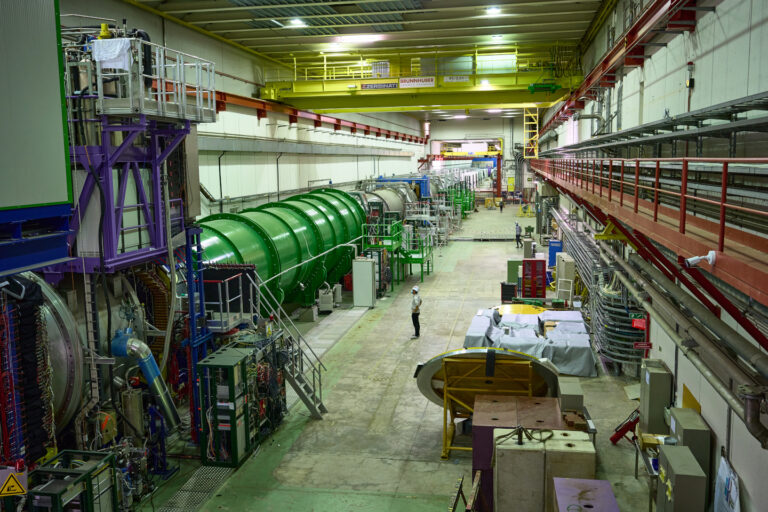
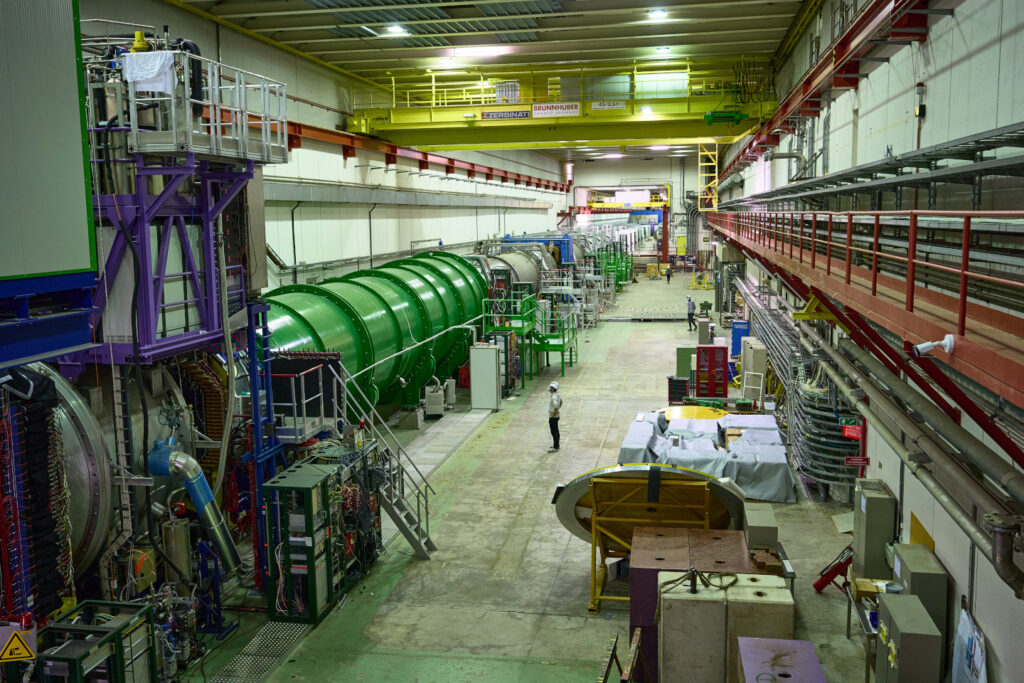
The NA62 experiment acts as a “kaon factory.” It fires a high-intensity proton beam from CERN’s Super Proton Synchrotron at a beryllium target. This creates nearly a billion particles every second, with about 6 percent being kaons. Detectors then track the decay products in detail. The team applied improved analysis techniques using cutting-edge machine learning algorithms to data recorded in 2023 and 2024, combining it with earlier measurements.
With the full dataset, the collaboration obtained a branching ratio of 9.6 +1.9 -1.8 × 10⁻¹¹. The result matches theoretical predictions closely. This consistency sets powerful constraints on ideas about new physics, meaning many alternative theories can now be ruled out. Joel Swallow noted that measuring something so rare with this precision is a major technological achievement.
The measurement, while highly precise, does not yet show any deviation from the Standard Model. This means it confirms existing theory rather than revealing something new. The search continues with even more data and further refinements to push the boundaries of what can be detected.
WATCH ALSO: https://modernmechanics24.com/post/isro-gaganyaan-crew-parachute-validation/
This work demonstrates the incredible predictive power of the Standard Model. Giuseppe Ruggiero said the stress test of the theory is remarkable given how rare and theoretically clean this process is. Each refinement brings physicists closer to understanding whether the Standard Model tells the complete story or if hidden particles and forces await discovery.