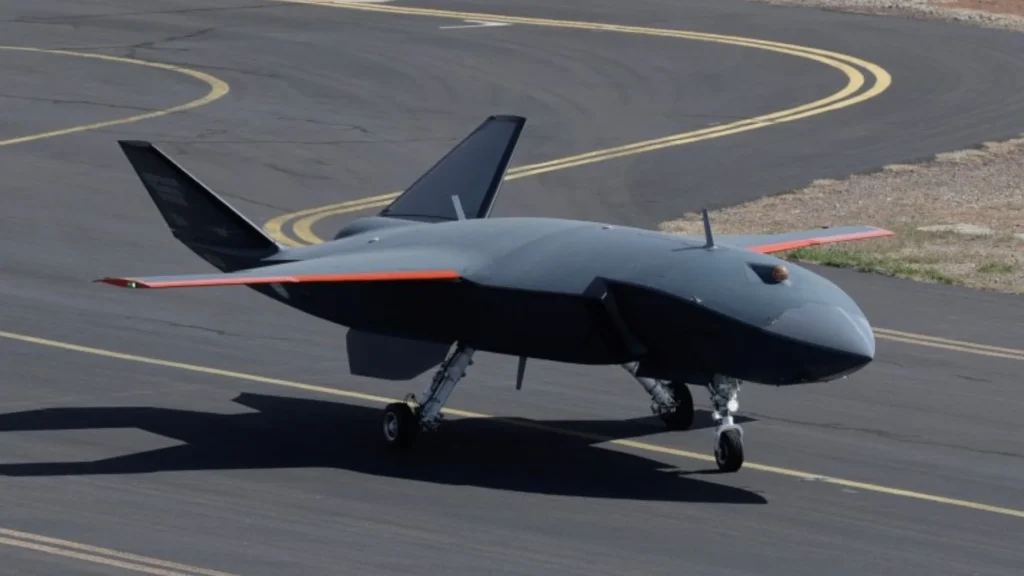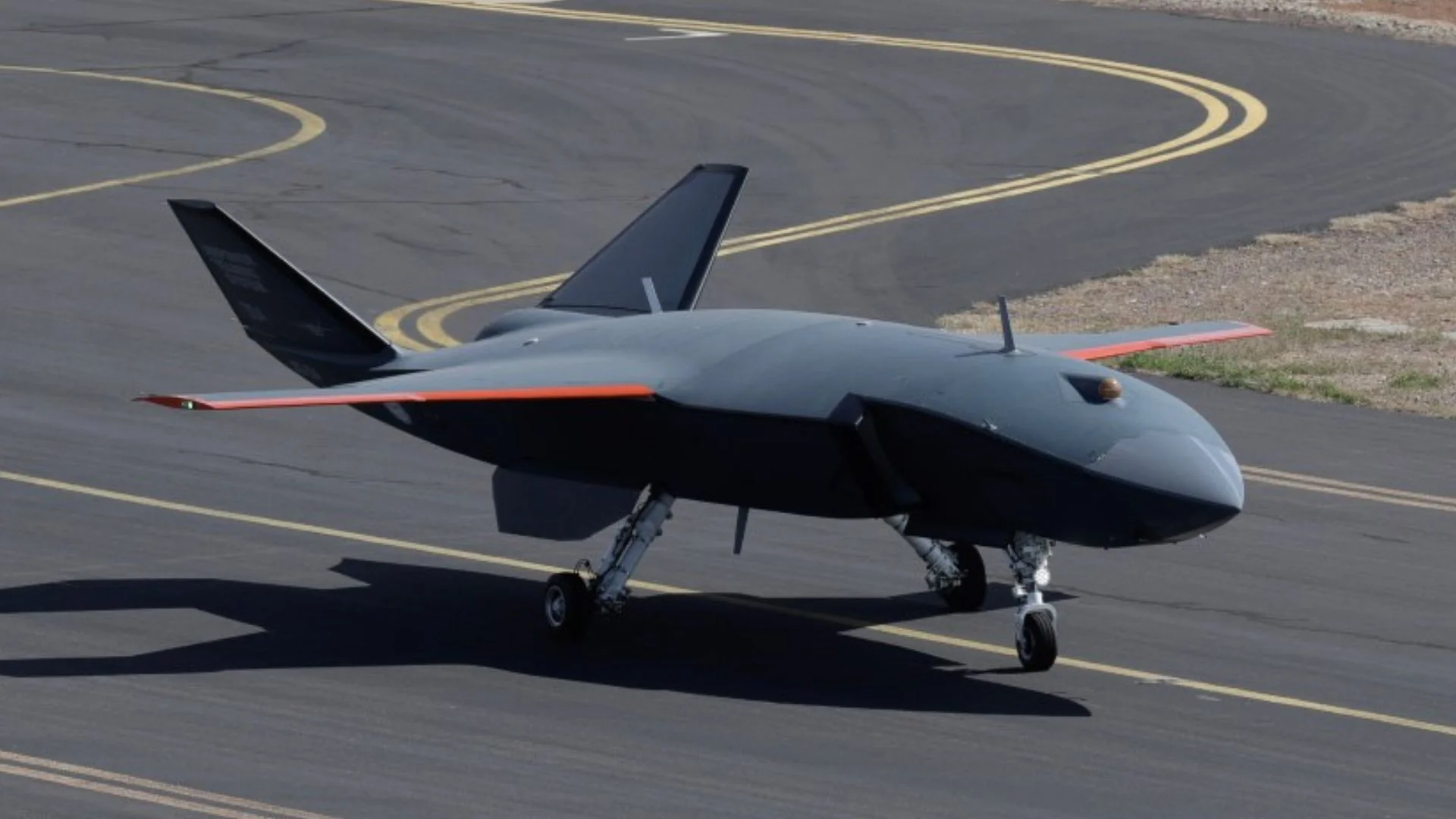
The MQ-28 Ghost Bat, developed by Boeing, is now entering the European defense space with strong support from Rheinmetall.
This partnership is more than a routine collaboration. It signals changes in how air forces prepare for modern warfare. Germany is emerging as a focal point, as it seeks to enhance its aerial capabilities with advanced unmanned systems.
Germany’s Search for a New Combat Edge
Germany is actively exploring options for Collaborative Combat Aircraft (CCAs). These drones are designed to operate alongside fighter jets, enhancing mission effectiveness while reducing pilot risk.
The MQ-28 Ghost Bat is being considered for this requirement. Rheinmetall and Boeing plan to position it as a potential solution for the Bundeswehr, with a target induction timeline around 2029.
READ ALSO: Germany’s Agile Robots Teams with Google DeepMind on AI Humanoid
Rheinmetall CEO Armin Papperger states that the company will ensure full system integration, operation, and further development within Germany. He adds that the platform will be tailored to meet national requirements while boosting local industrial capabilities.
What Makes the MQ-28 Ghost Bat Unique
The MQ-28 Ghost Bat is designed as a “loyal wingman,” meaning it works closely with manned fighter aircraft like the Eurofighter and F-35.
Its biggest strength lies in its modular design. The drone’s nose section can be swapped out, allowing different sensors or mission payloads to be installed. This flexibility enables the aircraft to perform multiple roles, from surveillance to combat support, without major structural changes.
This adaptability could make it suitable for a range of battlefield needs.
WATCH ALSO: China’s UBTech has started world’s first mass delivery of humanoid robots
Proven Performance and Combat Capability
Unlike some competitors, the MQ-28 has moved beyond conceptual stages. It has completed more than 150 test flights, demonstrating reliability and operational maturity.
In recent testing, the drone launched an AIM-120 AMRAAM missile. This suggests that the MQ-28 can engage targets directly in addition to supporting missions.
Australia, the launch customer, has invested in the platform. This may reduce development risks for future operators and influence confidence in its capabilities.
Continuous Evolution Through Advanced Variants
The MQ-28 program is progressing through multiple development stages. Block 1 aircraft served as prototypes, while Block 2 systems are now moving toward operational readiness.
The upcoming Block 3 variant will introduce major upgrades, including an internal weapons bay. This feature allows the drone to carry missiles or precision-guided bombs while maintaining a low radar signature.
The platform is also evolving in terms of sensors. Some variants already include infrared search-and-track systems, while future versions will support multiple sensor configurations. This ensures the drone remains relevant against future threats.
Germany’s air force is undergoing a major transition. It is modernizing with advanced fighter jets like the F-35 while dealing with uncertainties around the Future Combat Air System (FCAS) program.
READ ALSO: Scientists Reveal 200x X-Ray Chip That Can Learn and Slash Data in Real Time
Any delays or setbacks in FCAS could create capability gaps. In such a scenario, drones like the MQ-28 become essential.
They provide additional combat capability, sometimes described as combat mass, without increasing risks to human pilots. These drones can carry out high-risk missions, such as entering contested airspace, jamming enemy systems, or acting as decoys.
The MQ-28 is not alone in this race. Competing platforms include the XQ-58A Valkyrie, Airbus’s Wingman concept, and the CA-1 Europa developed by a German startup.
However, most of these alternatives are still under development or in the process of adaptation. The MQ-28 stands out because it has already been tested, is operationally mature, and is backed by significant investment.
This can lead to an advantage in terms of readiness and reliability. Rheinmetall’s involvement goes beyond partnership. The company plans to act as the system integrator in Germany, handling integration, maintenance, and logistics.
It also aims to establish a strong industrial base in Europe. This could enable local production and support, making the platform more attractive to European nations. The move also opens opportunities for regional exports, strengthening Europe’s defense ecosystem.
The MQ-28 represents a broader shift toward manned-unmanned teaming. In this model, fighter jets operate alongside drones that perform specialized roles.
These drones take on high-risk tasks while pilots focus on strategy and control. This combination improves efficiency, survivability, and overall combat effectiveness.
WATCH ALSO: China showcases new 40,000-ton amphibious assault ship Sichuan
The concept is already being explored by major military powers, and Europe is now moving in the same direction. Even if long-term programs like FCAS succeed, drones like the MQ-28 will remain crucial. They are not replacements for fighter jets but force multipliers that enhance their capabilities.
If FCAS faces delays or challenges, the importance of CCAs may increase. In such cases, the MQ-28 could contribute to operational readiness.
Germany’s decision on its CCA program is expected to influence the future of its air force. The MQ-28 Ghost Bat, with Rheinmetall’s support, is considered a strong option.
With ongoing development, demonstrated performance, and international interest, the drone may be positioned for wider adoption. If chosen, it could become a component of Europe’s next-generation air combat strategy, potentially influencing future air warfare.