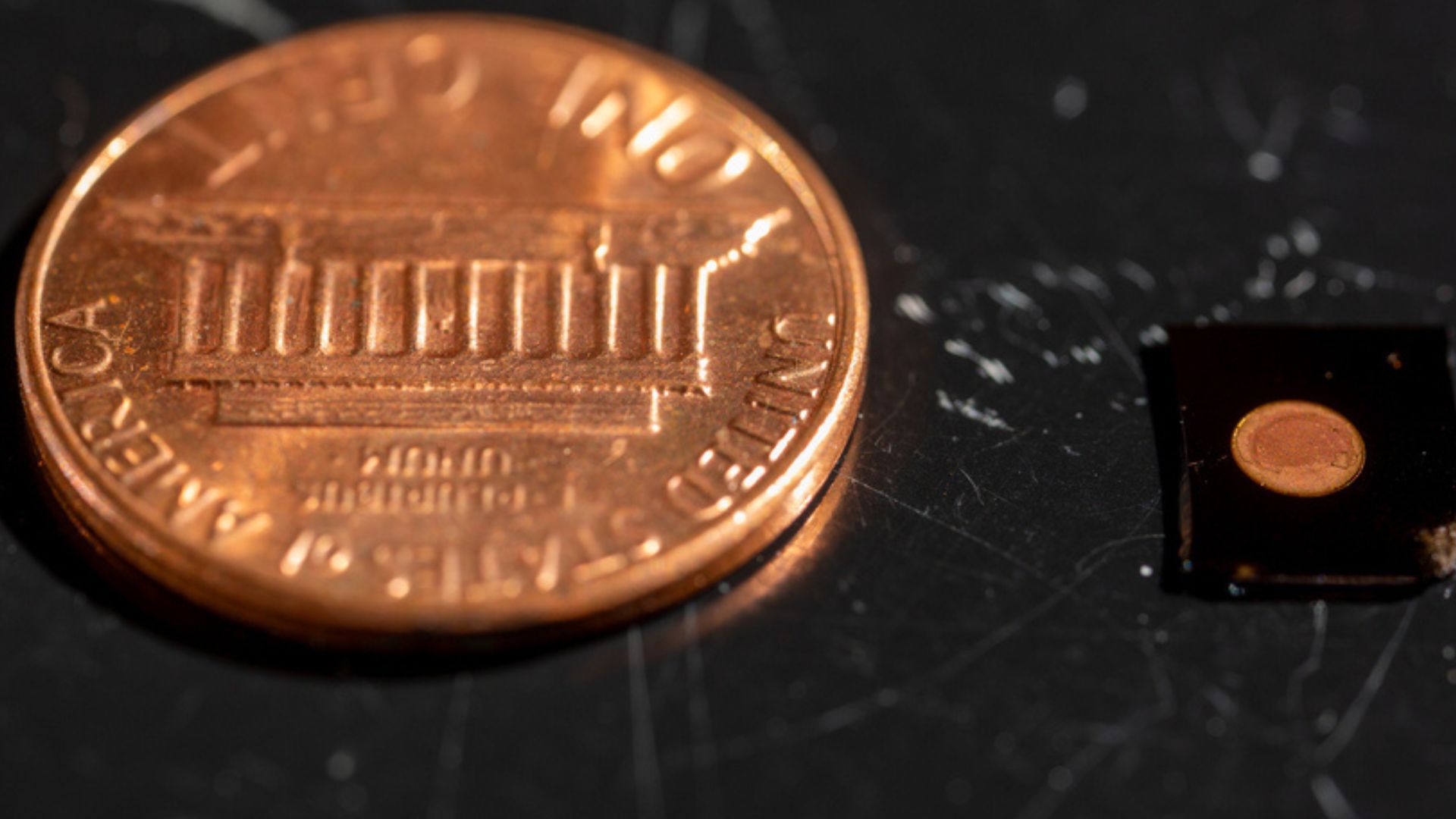
Engineers at the Massachusetts Institute of Technology (MIT) have developed a new breath test that could diagnose pneumonia in just minutes.
The portable sensor detects disease signals in a patient’s breath, potentially removing the need for X-rays or long laboratory tests.
The technology, called PlasmoSniff, identifies tiny chemical markers released during lung infections. Researchers say the system could allow quick diagnosis directly in clinics or even at home.
The study describing the technology was published in Nano Letters.
How the Breath Test Works
The process begins when a patient inhales specially designed nanoparticles. The method is similar to using an asthma inhaler. These nanoparticles carry small synthetic chemical markers known as biomarkers.
If the lungs are healthy, the nanoparticles are exhaled unchanged. But if pneumonia is present, enzymes produced during infection cut the biomarkers off the nanoparticles.
These detached biomarkers are then exhaled through breath. The PlasmoSniff sensor captures and identifies them.
READ ALSO: China’s New AI Radar Can Spot Real Drone Threats While Ignoring Decoys
“In practice, a patient would inhale nanoparticles and within about 10 minutes exhale a biomarker that shows the condition of the lungs,” said Aditya Garg, a postdoctoral researcher in MIT’s mechanical engineering department. He added that the PlasmoSniff technology can detect these biomarkers within minutes at the point of care.
Detecting Tiny Disease Signals
The research team designed the sensor using plasmonics, a technology that studies how light interacts with matter at extremely small scales.
The core of the sensor contains a thin gold film covered with tiny gold nanoparticles. Between them lies a gap only five nanometers wide. This space acts like a trap for disease biomarkers.
Water molecules attached to the sensor surface help capture these biomarkers as they pass through. Once trapped, the sensor shines Raman light on them.
READ ALSO: AI Adviser Helps Robotic Lab Discover Advanced Electronic Materials 60x Faster
This optical technique reads the unique vibration pattern of each molecule, similar to a chemical fingerprint. Even very small amounts can be detected.
“This is a needle-in-a-haystack problem,” said Loza Tadesse, assistant professor of mechanical engineering at MIT. She explained that the technology can detect molecules that would normally be hidden among thousands of others.
Testing the Technology
Researchers tested the sensor using lung fluid samples from mice. They added synthetic pneumonia biomarkers and heated the fluid to simulate exhaled breath.
The PlasmoSniff sensor successfully detected the biomarkers at extremely low concentrations, levels similar to those produced in real infections.
Previous studies by Sangeeta Bhatia’s research group had shown that these biomarkers could be detected using mass spectrometry. However, such equipment is large and expensive. The new chip-scale sensor offers similar sensitivity in a compact form factor.
WATCH ALSO: The Future of Work: Robots That Think, Move, and Learn Like Humans
The researchers are now working to integrate the sensor into a handheld device. A patient could inhale nanoparticles and then breathe into a mask connected to the sensor for several minutes.
The system could provide a diagnosis quickly without complex medical equipment.
Scientists believe the technology may also detect other diseases, including certain cancers and infections. It may even help monitor air pollutants or industrial chemicals.
“It’s not just limited to disease diagnostics,” Tadesse said. “If a molecule has a known vibrational fingerprint and can bond with water, our platform can detect it.”
If successfully developed for clinical use, PlasmoSniff could make diagnosing lung diseases faster, easier, and more accessible worldwide.