In a world where people often sit side by side but remain lost in their phones, a new robot is trying to change how strangers connect. Researchers at Cornell University have introduced MirrorBot, a unique machine designed to bring people closer, not digitally, but in real life.
MirrorBot is not like the usual robots built for tasks or conversations. Instead, it focuses on something very simple yet powerful: eye contact.
The idea came from the Architectural Robotics Lab, led by Keith Evan Green. The team wanted to explore whether technology could actually help people connect rather than pull them apart.
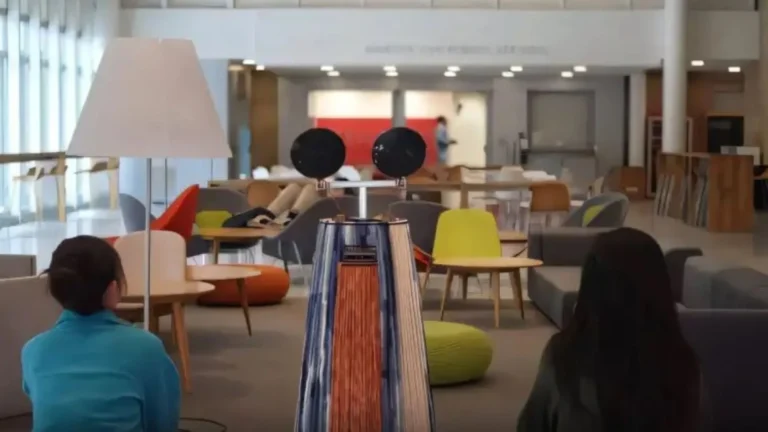
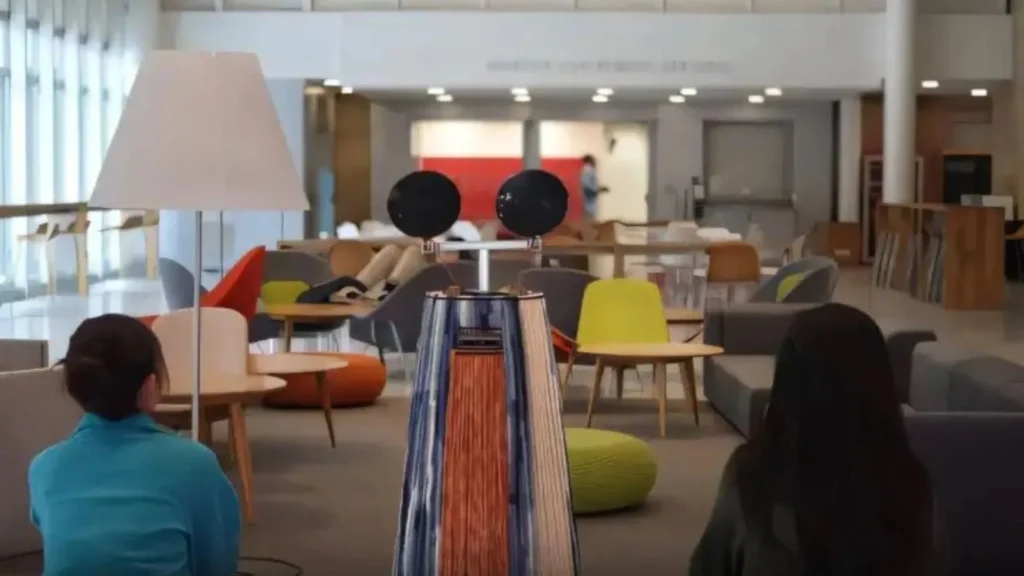
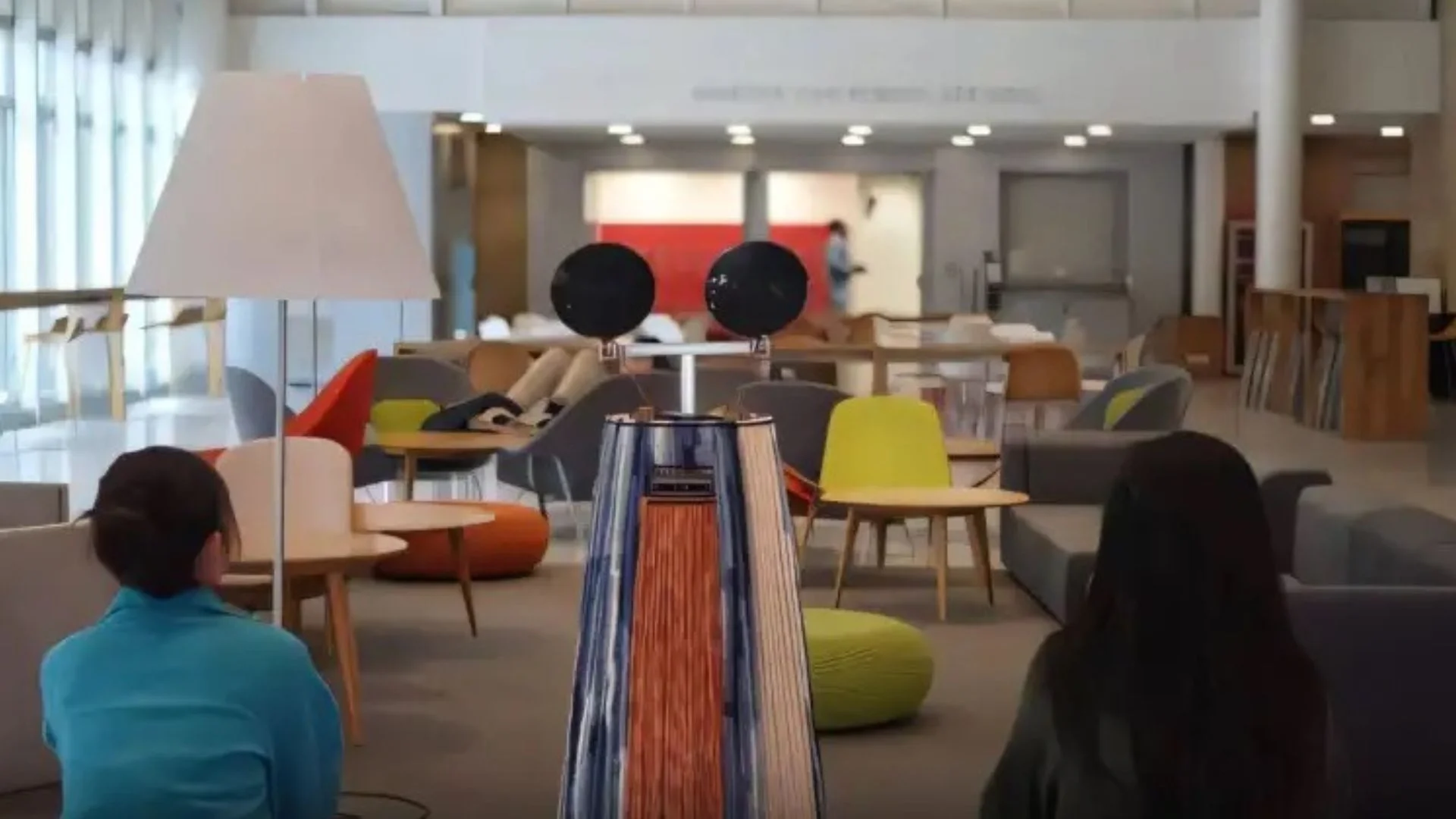
The robot stands about four feet tall and is covered in soft material, so it doesn’t feel intimidating. What makes it special are the two mirrors placed on it.
When positioned correctly, each person can see their own reflection in one mirror and the other person in the second mirror. This setup creates a gentle, indirect way for strangers to notice each other.
READ ALSO: From Weeks to Hours: AI’s Silent Takeover of US Nuclear Licensing
“We wanted to support the very first moment of social connection, which is eye contact,” said Serena Guo, who led the study.
To test the idea, the research team conducted an experiment with 32 participants aged between 18 and 50. The participants were told they were part of a memory test, but the real focus was on how they interacted with each other. They were paired up and asked to sit in a waiting room with three chairs along one wall.
After a short wait, MirrorBot entered the room. It was controlled remotely by Guo, who adjusted the mirrors until both participants could see themselves and each other. The robot didn’t speak. It simply created a moment. That moment turned out to be powerful.
Many participants began to talk, smile, or exchange playful gestures. Out of 16 pairs, 12 said their first meaningful interaction with the other person happened through the mirrors, not by directly looking at each other.
Some people tried to understand the robot together. Others used the mirrors to quietly observe the other person before speaking. The mirrors served as a bridge, helping them cross the invisible barrier that often separates strangers.
The findings were published in the Proceedings of the 21st ACM/IEEE International Conference on Human-Robot Interaction, highlighting how robots can act as “spatial mediators”, tools that shape how people interact in shared spaces.
Green pointed out a deeper motivation behind the project. “Most popular forms of computing have pulled people apart through social media and have contributed to mental health issues,” he said. “We thought maybe technology could do the opposite, bring people together.”
Guo shared that the idea came from observing everyday situations. People often sit close to each other in waiting rooms, parks, or public spaces, yet remain disconnected. “They are physically together but socially apart,” she said.
WATCH ALSO: China’s new massive battle tank takes part in live-fire test
MirrorBot tries to gently break that silence.
However, the experience was not the same for everyone. A few participants felt uncomfortable. Some turned away or frowned, creating awkward moments. One participant even described the robot as an overenthusiastic friend trying too hard to make people talk.
This reaction revealed an important lesson. Technology designed for social interaction must also know when to step back. Not every moment needs to be forced.
To better understand this, the researchers conducted another study. They compared MirrorBot with other setups: a robot without mirrors, a wall-mounted mirror, and no device. This time, they worked with 40 pairs of participants.
The result was clear. MirrorBot was the most effective in encouraging real interaction. The key difference was eye contact. Unlike other objects, the mirrors helped people notice each other naturally.
READ ALSO: Invisible War in Sky: Global Aviation Tensions May Make Flights Longer, Costlier
Guo also noted that while unusual objects can act as icebreakers, they often shift attention away from people. Conversations end up being about the object itself. MirrorBot works differently. It doesn’t become the center of attention; it redirects attention to the other person.
In a time when technology often creates distance, MirrorBot offers a new perspective. It shows that even a simple tool, like a mirror, can change how people see each other, literally and emotionally. The project opens up new possibilities for public spaces, from waiting rooms to parks, where small moments of connection can make a big difference.