Lockheed Martin unveils the Grizzly missile system, a container-based launcher designed to fire AGM-114 Hellfire missiles from concealed positions on land and sea.
The stealthy platform transforms an ordinary shipping container into a covert strike asset, redefining modern battlefield deception and rapid deployment capabilities.
Lockheed Martin’s Grizzly: Built to Hide in Plain Sight
The main advantage of the Grizzly launcher is its ability to remain unnoticed. Unlike traditional missile systems, which are large and easy to identify, this launcher blends in with the background. It looks like any other shipping container used in global trade. This makes it difficult for enemies to detect or target.
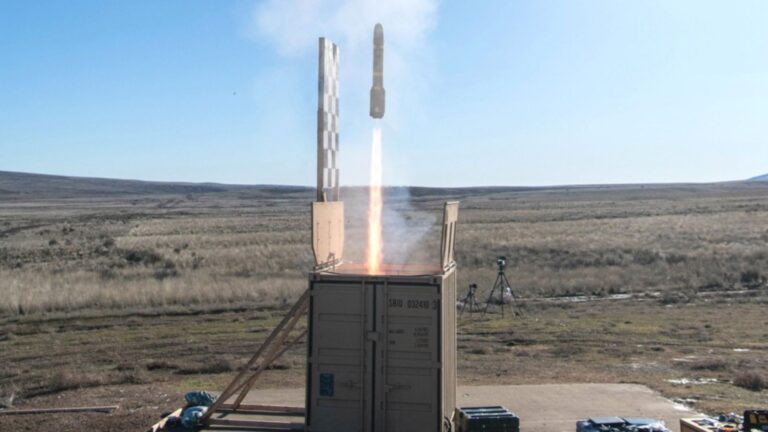
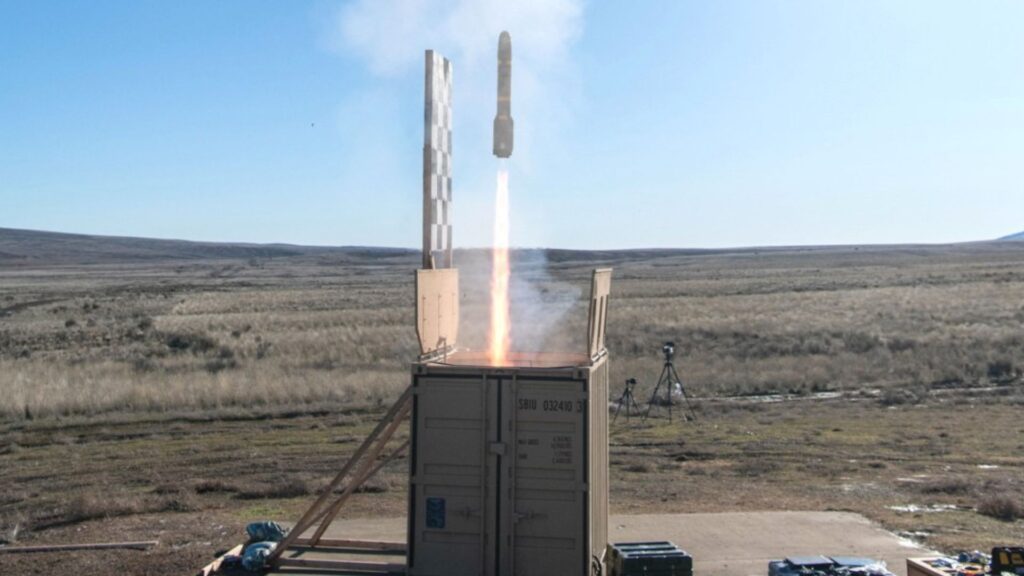
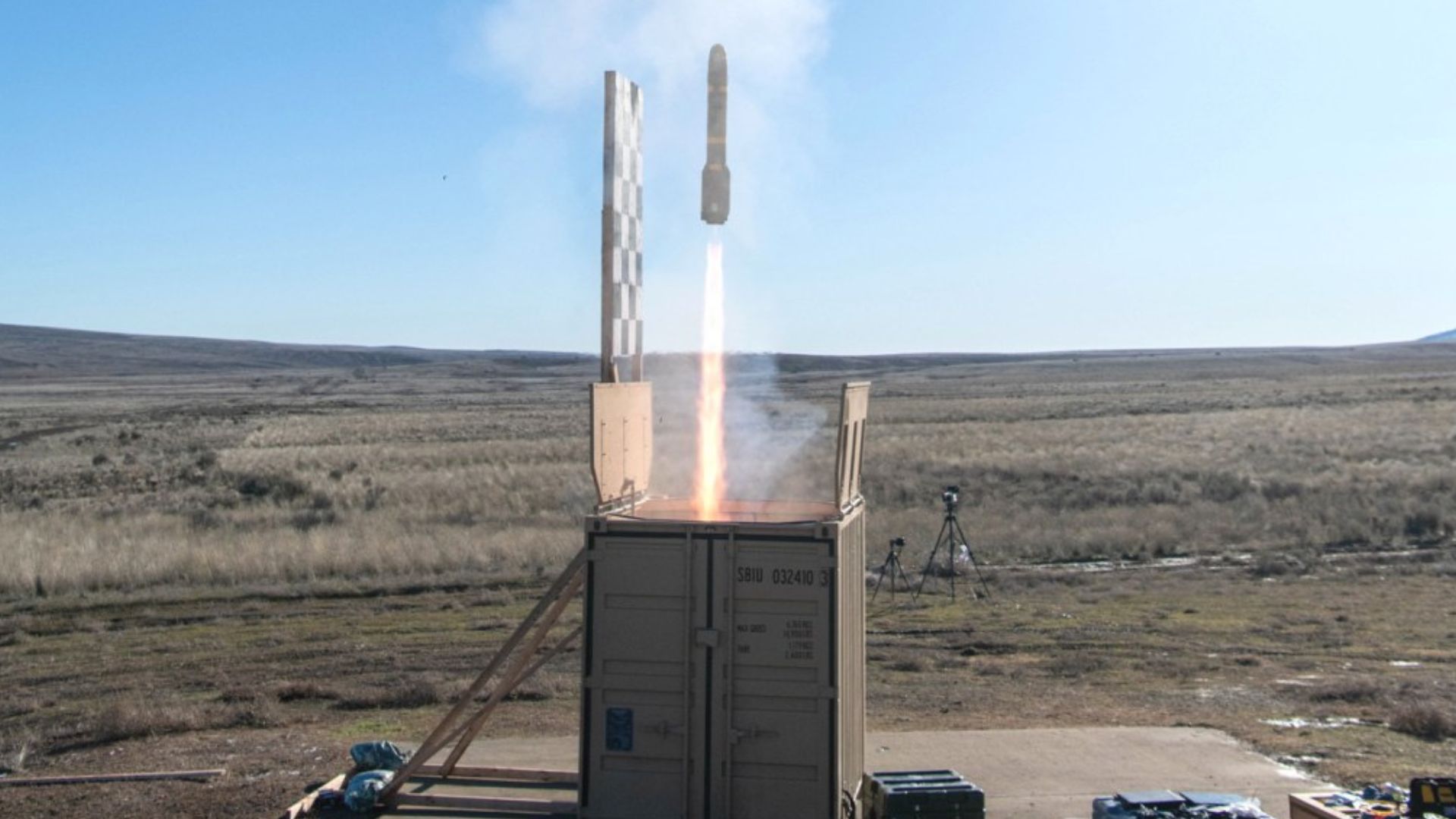
When activated, the container reveals its true purpose. Its roof opens on hinges, allowing missiles to launch within seconds.
READ ALSO: Artemis II Back on Pad: What NASA Fixed Before Historic Moon Flight
“It allows you to spread protection across many locations,” said Chris Murphy. “It makes the enemy uncertain about where defenses are placed.”
This uncertainty can change how conflicts unfold. If an opponent cannot easily identify where weapons are located, it becomes harder to plan attacks.
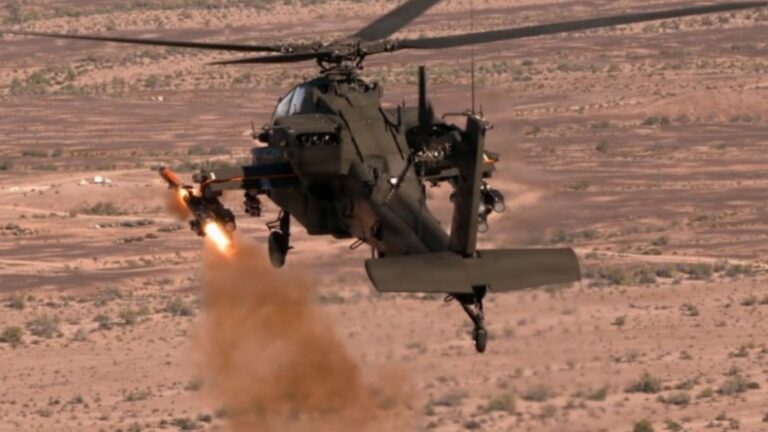
Grizzly uses AGM-114 Hellfire missiles, which are known for their precision and reliability.
These missiles are commonly launched from helicopters and drones. They are used to target vehicles, equipment, and other strategic assets. By adapting them for use in a container system, Lockheed Martin has expanded their role.
The launcher relies on the M299 system, a widely used platform for firing Hellfire missiles. This means the technology has already been tested and proven.
By using existing components, the company has reduced both development time and cost.
The Grizzly system has already undergone testing. According to the company, two live-fire tests have been completed successfully. These tests demonstrated the system’s flexibility and performance.
WATCH ALSO: Elon Musk’s Starlink connects 22,000 students across Ghana with high-speed internet from space
“In one test, we launched missiles vertically,” Murphy said. “In another test, we launched them at an angle to prove the flexibility of the system.”
The ability to launch missiles in different ways allows the system to adapt to various operational needs. The container itself is designed for practical use. It can operate using its own power or connect to an external source. This makes it suitable for a wide range of environments.
One of the most striking aspects of Grizzly is how quickly it was developed. Engineers built the system in just six months. They achieved this by using commercial and off-the-shelf components wherever possible.
This approach reduces complexity and speeds up production.
“Instead of building a few large and expensive launchers, we can use multiple smaller ones,” Murphy explained. “This creates a wider defensive network at a lower cost.”
The concept focuses on quantity and distribution rather than size. Grizzly is not just a single launcher. It is designed to be part of a larger system.
Multiple containers can be placed across different locations and connected through a network. They can be controlled remotely, reducing the need for personnel on-site.
This creates a distributed defense system. Instead of relying on a single large installation, forces can deploy several smaller units. This makes the overall system more resilient. If one unit is destroyed, others can continue operating. This strategy is becoming more important in modern warfare.
Mobility is another key feature of the Grizzly system. Because it is built into a standard container, it can be transported easily. It can be moved by trucks, loaded onto cargo ships, or flown by aircraft.
This allows forces to deploy it quickly in different regions. The system can also be used at sea. Any vessel with enough deck space can carry the container. This adds an extra layer of defense against threats such as drones or small boats.
READ ALSO: No Motors, No Propellers: These Bird-Like Robots Are Rewriting How Drones Fly
This flexibility makes the system suitable for both land and maritime operations.
Grizzly is built with future upgrades in mind. While it currently uses Hellfire missiles, it can be adapted to fire other types of weapons. One possible option is the Joint Air-to-Ground Missile (JAGM), which offers improved targeting and performance.
Because the system uses compatible technology, these upgrades can be added without major redesign. This ensures that Grizzly remains relevant as military needs evolve.
Military experts see systems like Grizzly as part of a larger shift in strategy. Modern warfare is moving away from large, fixed bases. Instead, forces are using smaller, mobile units spread across wide areas. This approach is known as distributed operations.
Grizzly fits well into this model. By placing multiple hidden launchers in different locations, forces can create a network that is difficult to detect and destroy.
“It gives our adversaries pause,” said Ronald Clark. “When systems look like ordinary objects, it becomes much harder to identify and target them.”
This strategy increases both flexibility and survivability. The Grizzly system is likely to attract interest from countries around the world. Many nations already use Hellfire missiles, making integration easier. The system offers a cost-effective way to enhance defense capabilities.
WATCH ALSO: Chinese company unveils new robot that has human-like appearance
It is especially useful in large regions where rapid deployment is essential. For example, in areas with vast distances, mobile systems can provide better coverage than fixed installations. The ability to deploy these systems discreetly adds another advantage.
Grizzly represents a new direction in military technology. It combines stealth, mobility, and firepower in a single platform. Most importantly, it does not look like a weapon. It looks like something ordinary until it is used.
As global tensions evolve, such systems could play a major role in future conflicts. They show how innovation is changing the nature of warfare, not by making weapons bigger, but by making them smarter and harder to detect.