A group of South Korean researchers in July 2023 claimed to have created a material that exhibits superconductivity at room temperature and normal pressure.
If true, this superconductor named LK-99 would be one of the greatest scientific breakthroughs in history. But many scientists remain deeply sceptical.
Superconductors are materials that can carry electricity without any resistance. Under normal conditions, all materials resist the flow of electric current. Electrons collide with atoms and lose energy in the form of heat. This resistance wastes power. In a superconductor, this resistance suddenly drops to zero below a certain temperature. Once a current starts flowing, it can continue forever without losing energy.
Superconductivity was discovered in 1911 by Dutch physicist Heike Kamerlingh Onnes. He found that mercury lost all electrical resistance when cooled to about 4 kelvin above absolute zero. This discovery opened a new field of physics. Since then, many superconductors have been found. But most work only at extremely low temperatures.
READ ALSO: https://modernmechanics24.com/post/super-antibody-targets-deadly-sfts/
For decades, scientists believed superconductivity was possible only near absolute zero. In 1986, this belief changed. Researchers discovered “high-temperature superconductors” that worked at about 35 kelvin. This was still very cold, but it allowed the use of liquid nitrogen rather than the expensive liquid helium. This discovery created huge excitement and earned Nobel Prizes.
Despite progress, superconductors have remained impractical for everyday use. Recently, hydrogen-based materials were shown to superconduct at much higher temperatures. Some worked near room temperature. But they required enormous pressure, equal to millions of atmospheres. This made them unusable outside laboratories.
That is why LK-99 caused such a stir. The South Korean team claimed their material works at room temperature and normal pressure. This is the “holy grail” of superconductivity research. Scientists have chased this goal for more than a century.
If a true room-temperature superconductor exists, it could transform modern life. Power grids could transmit electricity with no energy loss. Electric trains could run more efficiently. Powerful magnets could become cheaper and easier to use. MRI machines would no longer need costly cooling systems. Quantum computers could advance much faster.
WATCH ALSO: https://modernmechanics24.com/post/explore-raytheons-giant-radar-making-facility/
However, extraordinary claims require extraordinary evidence. This is where LK-99 runs into trouble.
The LK-99 papers were uploaded to the preprint website arXiv. They have not yet been peer reviewed. Peer review is a critical step where other experts examine the work for errors, missing data, or false claims. Many physicists say the LK-99 papers lack clarity and proper measurements.
Several labs across the world rushed to replicate the results. Teams in the United States, China, India, and Europe tried to recreate LK-99. Most failed to see any signs of superconductivity. A few groups reported partial effects, such as weak magnetic behaviour. But none confirmed full superconductivity.
Some researchers were blunt in their criticism. A German experimental physicist wrote that he did not believe the claims at all. A scientist at Argonne National Laboratory told Science magazine that the authors showed a poor understanding of superconductivity. Many said the data quality was too low to support such a major claim.
This scepticism is rooted in history. The field of superconductivity has seen many false alarms. In the late 1980s, after the discovery of YBCO, some scientists believed they had observed room-temperature superconductivity. These signals vanished after closer study.
READ ALSO: https://modernmechanics24.com/post/epstein-files-science-world-connections/
Over time, questionable claims became so common that physicists jokingly called them Unidentified Superconducting Objects(USOs). Many papers lacked essential experimental details. Others misinterpreted common effects as superconductivity.
More recently, physicist Ranga Dias made multiple claims of room-temperature superconductors. His work was later retracted. He faced allegations of data fabrication and scientific misconduct. These episodes have made the community extra cautious.
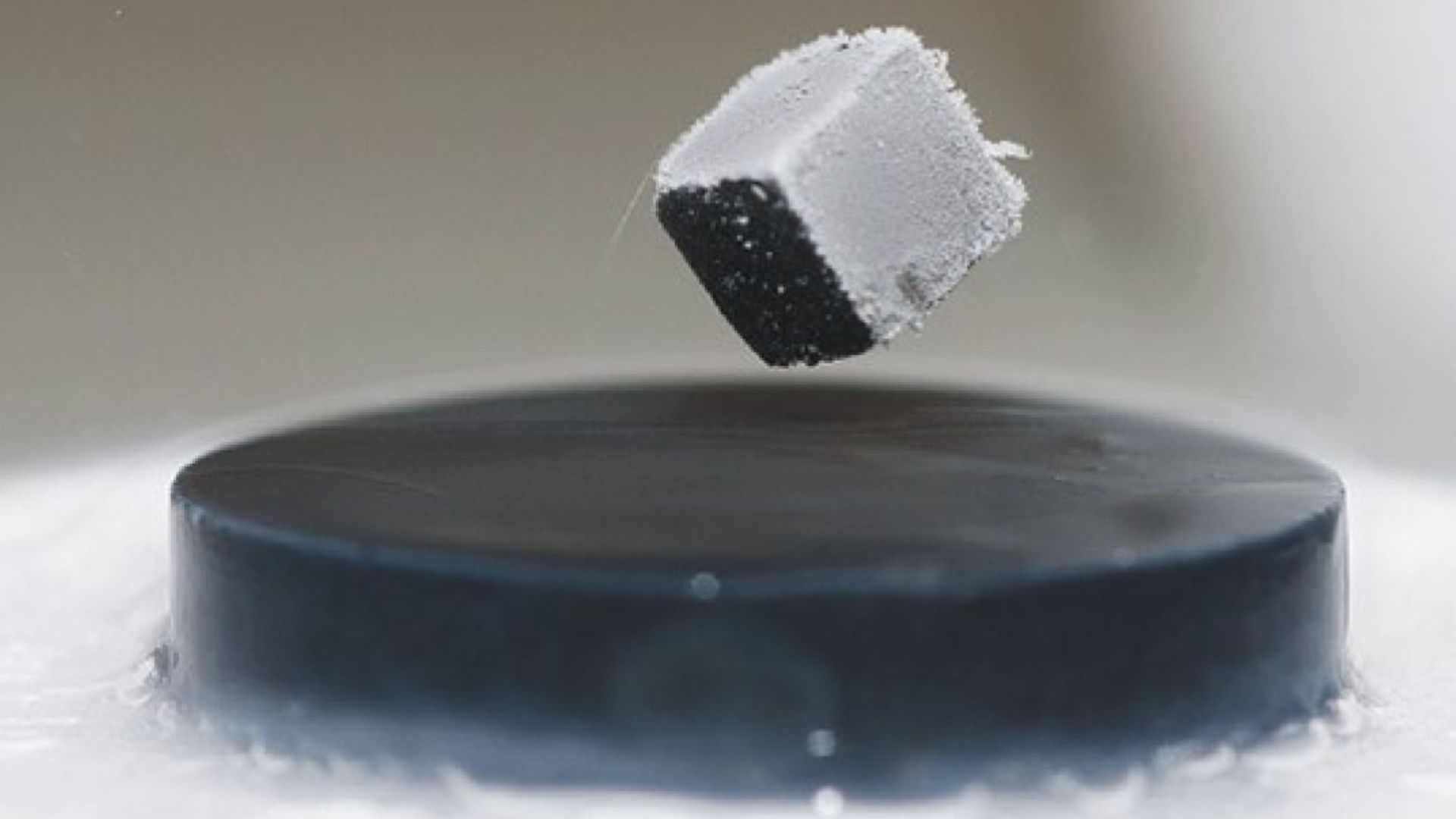
Because of this history, scientists now demand clear proof. A real superconductor must show zero resistance. It must also show the Meissner effect. This effect causes a superconductor to completely expel magnetic fields. Partial magnetic levitation alone is not enough.
So far, LK-99 has not met these standards.
China is closely watching the LK-99 debate. It has long been a leader in superconductivity research. The Chinese government funds major national projects in this field. Institutes under the Chinese Academy of Sciences play a key role.
WATCHhttps://modernmechanics24.com/post/india-drdo-akhash-ng-missile-success/ ALSO:
Chinese scientists have made important discoveries in the past. In 2008, they helped discover iron-based superconductors that work at 55 kelvin. This was named one of Science magazine’s top breakthroughs of the year. In 2014, Chinese theorists predicted the discovery of high-temperature superconductivity in hydrogen compounds. This was later confirmed by experiments in Germany.
These successes show why China takes the LK-99 claim seriously, but cautiously. Chinese labs have attempted replications. So far, results remain inconclusive.
The LK-99 episode highlights both the excitement and discipline of science. Big claims can inspire hope and creativity. But science advances through careful testing, replication, and doubt.
For now, LK-99 remains unproven. It may turn out to be a misunderstanding or an experimental artefact. Or it could reveal a new direction for research, even if it is not a true superconductor.
The dream of room-temperature superconductivity is still alive. But as history shows, it will not be realised easily. Scientists will continue to push forward, guided by evidence, patience, and scepticism.