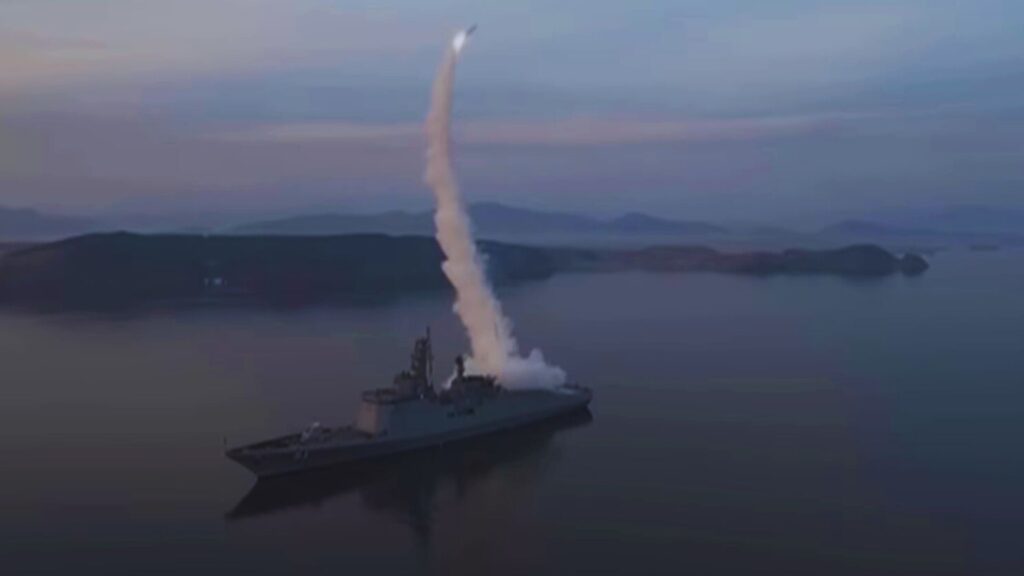
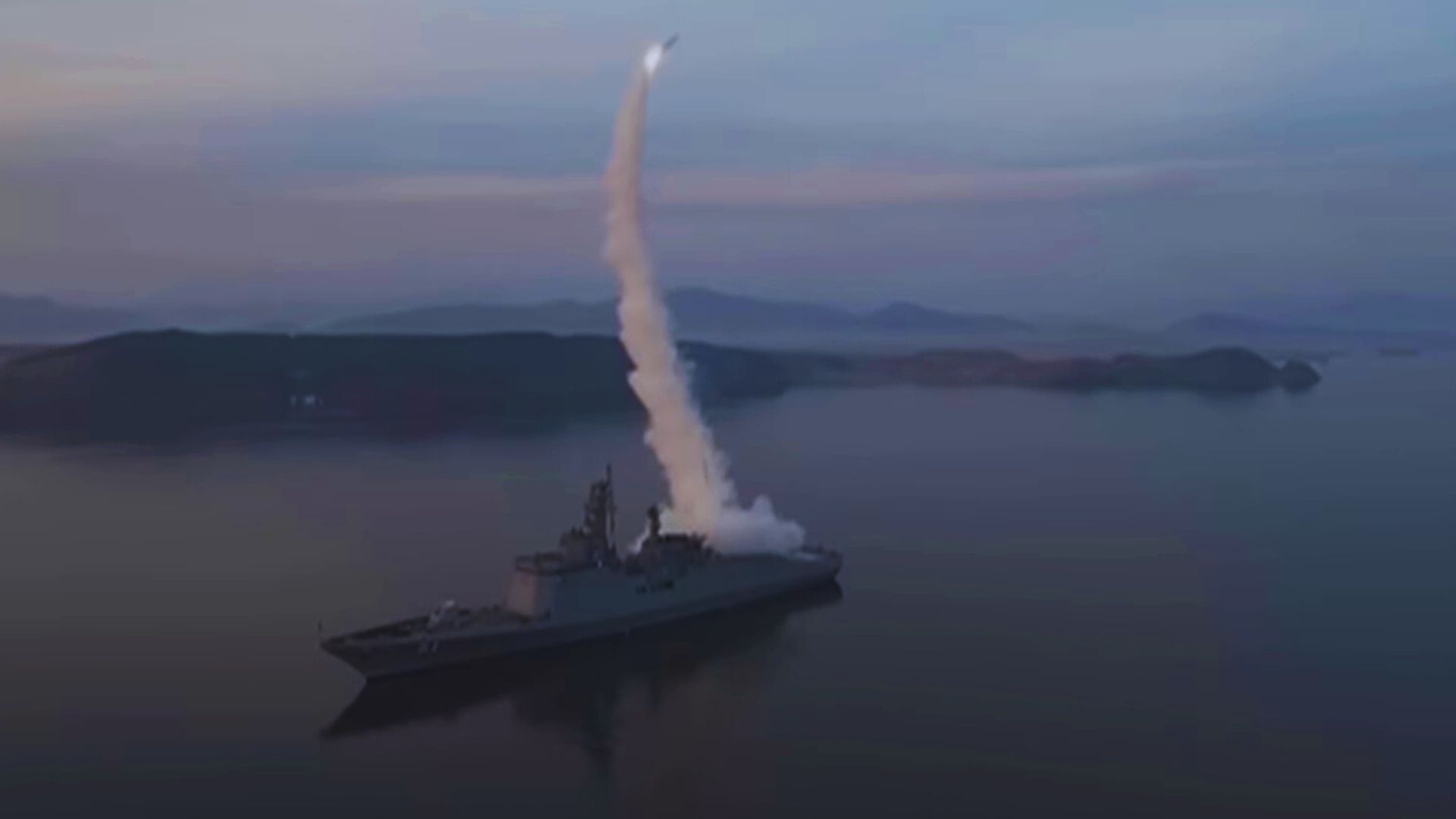
North Korean leader Kim Jong Un observed the test launch of strategic cruise missiles from a naval destroyer as tensions rose over ongoing military drills between the US and South Korea.
State media reported Wednesday that the missile launches were carried out from the Choe Hyon, a modern destroyer that entered service about a year ago. Kim watched the launches through a live video feed while seated in a conference room.
Images released by the Korean Central News Agency (KCNA) showed him monitoring the firing sequence on a large screen.
His teenage daughter, believed to be Kim Ju Ae, was also seen in photographs accompanying the event. The girl has appeared alongside her father at several military demonstrations and public ceremonies since late 2022.
According to KCNA, the test was conducted on March 10 to examine the operational capability of the destroyer’s combat systems. The missiles were launched simultaneously after the warship received target information through the national command network.
The cruise missiles flew for around 10,116 to 10,138 seconds along their designated flight paths over the West Sea before striking island targets off North Korea’s west coast.
READ ALSO: Houston Scientists Break Ambient-Pressure Superconductivity Record at 151K
Kim expressed satisfaction with the results and said the test proved the reliability of the country’s integrated strategic weapons control system.
“Our war deterrent must remain powerful and reliable,” Kim said, stressing that strengthening the nuclear deterrence capability is a key strategic task for North Korea.
Choe Hyon Destroyer
The Choe Hyon destroyer is considered one of North Korea’s most advanced naval platforms. Military analysts say the warship plays a key role in expanding the country’s naval strike capabilities.
Some important features of the destroyer include:
Integrated combat system: The ship integrates detection, targeting, and weapons control into a single command network.
Strategic cruise missile launch capability: It can fire long-range cruise missiles designed to strike land or sea targets.
Advanced detection systems: Radar and sensor systems allow the destroyer to track targets and coordinate missile launches.
Multi-role weapons systems: The ship is equipped with anti-aircraft, anti-submarine, and torpedo systems for different combat situations.
Command integration: It connects with the national strategic command system, allowing coordinated military operations.
WATCH ALSO: US firm successfully demonstrates ship-based Sea Launcher for autonomous underwater vehicle ops
Kim also suggested changes to future warship designs. He said smaller high-speed ships should focus on stronger anti-ship strike power. He added that larger destroyers could carry additional supersonic weapons instead of certain automatic naval guns.
The missile test came shortly after the US and South Korea launched their annual Freedom Shield military exercise. The drills began on March 9 and will run for 11 days.
The exercise primarily includes a computer-simulated command post training program and field training activities. The US and South Korea say the drills aim to improve joint defense readiness.
READ ALSO: Lost 19th Century Film Showing First Robot Ever on Screen Found in US Archive
North Korea, however, sees them as preparations for a possible invasion. Pyongyang often responds to such drills by conducting missile tests or military demonstrations.
Kim’s sister, Kim Yo Jong, issued a warning earlier this week criticizing the exercises. She said the drills show the inveterate hostility of the US and South Korea toward North Korea.
She warned that Pyongyang would make its rivals understand the strength of its war deterrent.
Growing Military Signaling
Kim had previously visited the Choe Hyon destroyer last week and personally observed another cruise missile launch. North Korea has showcased its military hardware in recent years, including new missiles, submarines, and naval systems.
By highlighting the destroyer’s capabilities and missile tests, analysts say Pyongyang is trying to demonstrate that its naval forces are becoming a more important part of its strategic deterrence.