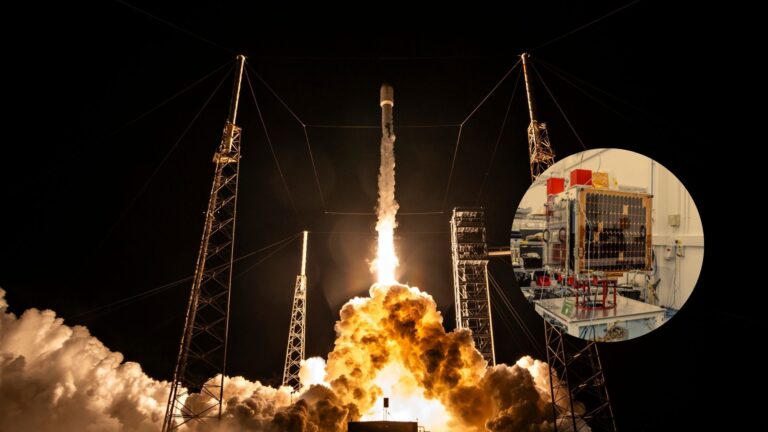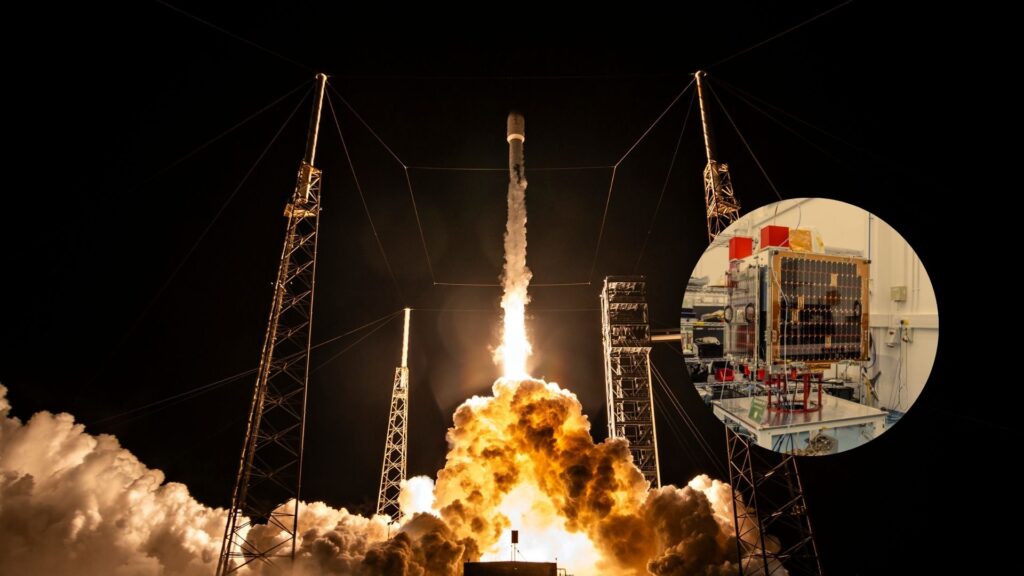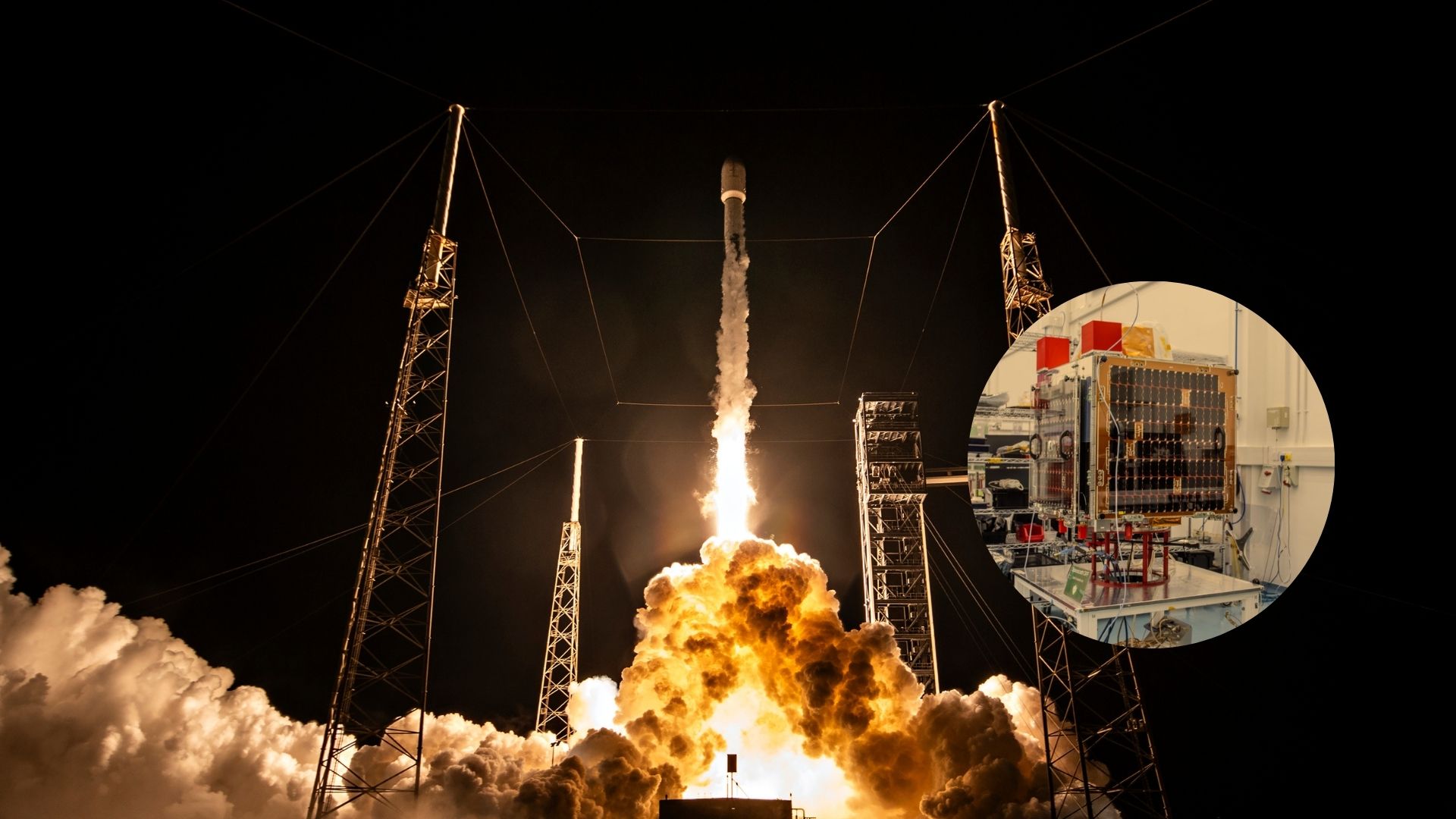
A new satellite built in Britain is set to change how the world observes Earth’s activity. The satellite, named HotSat-2, will launch aboard a SpaceX Falcon 9 rocket.
The launch is scheduled from California on March 29.
Developed by SatVu, the spacecraft can detect heat patterns from space with remarkable precision, even from inside buildings.
Meet HotSat-2
What makes this satellite unique is its ability to capture high-resolution thermal images. These images reveal heat signatures that can indicate human activity, machinery use, or operational systems, even when hidden behind walls or roofs.
This technology does not literally see through walls in the traditional sense. Instead, it detects differences in heat. These variations can help experts understand what is happening inside structures.
READ ALSO: SpaceX’s Secret Sky Plan Can Change Nights Forever; Scientists Alarmed
The potential applications are wide-ranging. For intelligence agencies, this technology could offer new ways to monitor sensitive locations.
For example, it may help track activity within nuclear facilities or weapons factories by observing heat patterns associated with operations.
“High-resolution thermal data is no longer a luxury,” said Anthony Baker. “It is essential for making accurate geographical assessments.”
He added, “Our system can capture data from anywhere on Earth, including places that are hard to access. It works day and night and provides consistent results.”
Unlike drones or aircraft, which have limited range and access, satellites can continuously observe vast areas. This makes them especially useful for monitoring remote or restricted regions.
SatVu’s technology has already demonstrated its potential. The company previously captured thermal images of the Yongbyon Scientific Research Centre in North Korea. Over several months, the images revealed changing heat patterns around reactors and nearby facilities.
WATCH ALSO: Two Humanoid Bots Tackle 32-Box Job With Zero Human Help
These observations suggested that certain parts of the site were active. The company explained that the detected heat signatures could indicate early-stage operations or testing. Such insights are valuable for understanding nuclear activity and potential risks.
The satellite’s capabilities go beyond security. It can also track industrial activity, such as operations at airports, seaports, and power plants. For instance, it can detect whether a ship is being loaded or if equipment in a facility is running.
This information can support economic monitoring. In times of conflict or crisis, the technology could help assess damage to critical infrastructure.
For example, if an oil or gas facility is hit, thermal images can show which sections are still operational and which are not.
“If there is a large explosion, it is hard to know the extent of the damage,” Baker said. “Our imagery helps identify exactly what has been affected.”
This could be especially useful in regions where energy infrastructure is under threat. Accurate data can help governments and companies respond more effectively and stabilize supply chains.
READ ALSO: Human-like Robots in McDonald’s Uniforms in China, But Only for a Reason
The satellite also has environmental uses. It can monitor urban heat levels and track environmental changes. This data can help cities better understand the impact of extreme heat and plan more effective responses to climate challenges.
“Thermal monitoring from space opens up new possibilities,” said Liz Lloyd. “It supports national security, climate resilience, and economic insight.”
The project has received strong financial backing, including support linked to NATO. The company plans to expand its satellite network in the coming years.
SatVu aims to launch a total of eight satellites. Once fully deployed, this network will be able to revisit any location on Earth every two hours.
This frequent coverage will provide near real-time updates. Such a capability could transform how information is shared between countries. Unlike highly classified government systems, a commercial platform can more easily distribute data among allies.
This could improve cooperation, especially in regions facing rising geopolitical tensions.
SatVu already works with several international partners, including the US, Japan, and European nations like Poland. However, it has not yet secured a contract with the UK government.
WATCH ALSO: US firm’s new giant robot can help tackle wildfires
Despite this, the company sees strong future demand.
“HotSat-2 is designed to show what is active and what is not,” Baker said. “It helps track how patterns change over time, whether during the day or at night.”
As the satellite prepares for launch, expectations are high. The mission represents a major step forward in space-based observation.
By combining advanced thermal imaging with global coverage, it introduces a powerful new layer of insight from orbit. In a world where information is critical, this technology could reshape how decisions are made, on Earth and beyond.