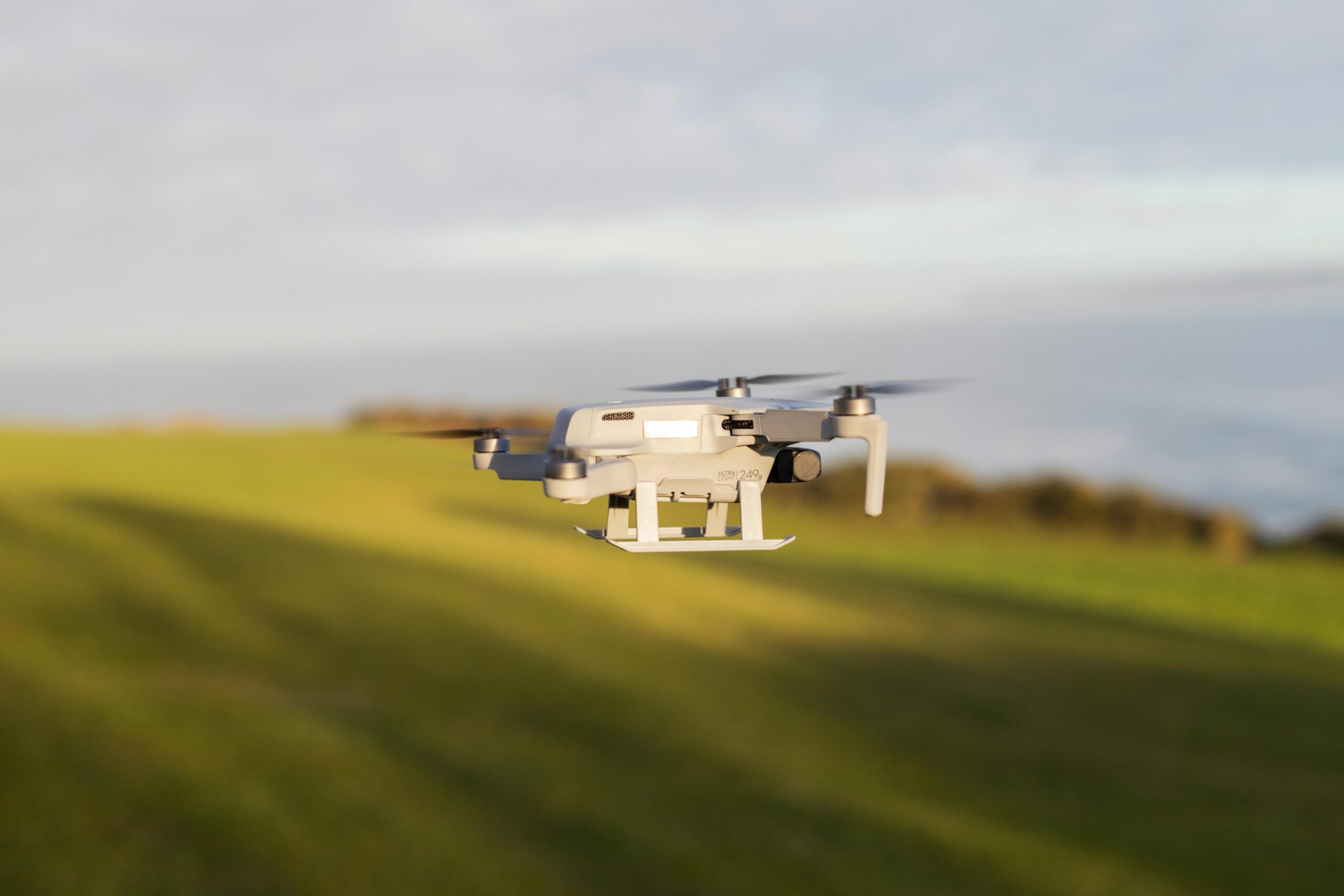
Researchers at the Swiss Federal Laboratories for Materials Science and Technology (EMPA) have developed an extreme-heat-resistant drone that can operate in temperatures up to 392 °F (200 °C) for ten minutes, beaming back live thermal imagery to guide firefighters through infernos. The FireDrone, now being commercialized by an EMPA spinoff, uses a novel polyimide aerogel insulation and an active cooling system to venture where no human or conventional drone can safely go.
Imagine sending a scout into a blazing building that doesn’t need air, feels no fear, and can see through smoke to map the heat. That’s the promise of the FireDrone, a specialized unmanned aerial vehicle born from years of research at the Swiss Federal Laboratories for Materials Science and Technology (EMPA). While standard drones fail at a mere 104 °F (40 °C), this rugged prototype is engineered to survive the heart of a fire, giving first responders a crucial eye in the sky during their most dangerous missions.
The secret lies in a high-tech cocoon that protects the drone’s vital electronics. The team initially used a porous insulating gel. However, as reported by the research institute, they have since upgraded to a superior material: a pure polyimide aerogel. This advance is a game-changer. The aerogel can be cast in a single, seamless piece that envelops every component, providing uniform protection against searing heat. “It can be cast in any desired shape, so all of the drone’s electronic components can be encased with a single piece of the protective material,” noted developers.
READ ALSO: https://modernmechanics24.com/post/atlas-quark-soup-collective-flow/
But insulation alone isn’t enough. To ensure sustained operation, the drone now features an internal temperature management system. This smart system constantly monitors the core electronics and activates an active cooling mechanism when needed. This combination allows the FireDrone to withstand that punishing 392 °F environment for roughly 10 minutes per flight—enough time to perform a critical reconnaissance.
The payload is just as important as the protection. The drone is equipped with cameras and sensors designed to beam back high-resolution thermal images in real time to a ground control station. Firefighters can gather around a large display, analyzing the feed together to locate victims, identify structural weaknesses, and find the fire’s origin through thick, toxic smoke. Its flight systems are specially tuned for challenging indoor environments like tunnels, apartment complexes, and industrial facilities, using pilot-assist and localization tech that works even without GPS.
WATCH ALSO: https://modernmechanics24.com/post/china-6-ton-tiltrotor-first-flight/
The applications extend far beyond residential fires. “It’ll also come in handy when tackling industrial fires, especially those with furnaces or chemical refineries that can take up to several days to cool down,” explained the team. Instead of waiting for a smoldering ruin to become safe for human entry, a FireDrone can be sent in immediately to assess damage and spot lingering hot spots, protecting both firefighters and infrastructure.
Now out of the lab, the project has taken a major step toward real-world use. An EMPA spinoff company is leading the charge to commercialize the technology. The drone has undergone rigorous testing at a fire brigade training ground and a Swiss cement plant, proving its mettle in realistic scenarios. The vision includes a portable, thermally insulated docking station for quick redeployment and plans to integrate the system directly into fire trucks.
READ ALSO: https://modernmechanics24.com/post/plane-lands-itself-after-emergency/
“That could make firefighting a whole lot safer and more predictable,” the developers concluded. By acting as a robotic vanguard, the FireDrone has the potential to drastically reduce firefighter exposure to hazardous conditions, transform situational awareness, and ultimately, save lives.