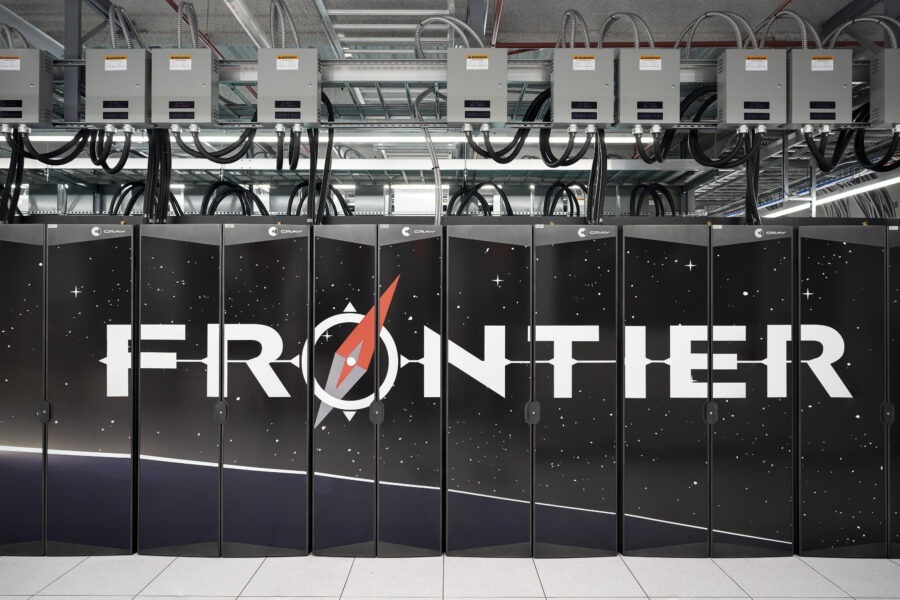
In a landmark fusion of nuclear energy and artificial intelligence, California’s Diablo Canyon Power Plant partnered with tech startup Atomic Canyon to harness the world’s fastest supercomputer, the Department of Energy’s Frontier at Oak Ridge National Laboratory (ORNL), to train the first-ever AI models specifically designed for the nuclear industry. This breakthrough aims to slash thousands of hours spent searching billions of pages of complex documentation.
Imagine if the entire regulatory history of the U.S. nuclear fleet—every safety report, maintenance log, and engineering evaluation—could be queried as easily as asking Google about the weather. For an industry buried under billions of pages of critical paperwork, that ability would be transformative. Thanks to a pioneering project using the world’s most powerful supercomputer, this vision is now a step closer to reality, promising to accelerate America’s nuclear energy ambitions.
READ ALSO: https://modernmechanics24.com/post/fusion-reactor-intelligent-robot-control/
This innovative collaboration brings together Pacific Gas and Electric Company’s (PG&E) Diablo Canyon Power Plant, tech startup Atomic Canyon, and the computational might of the Frontier supercomputer at the Oak Ridge National Laboratory (ORNL). Their mission: to train AI models that can reliably and instantly navigate the dense, highly technical language unique to nuclear energy. The goal is to reduce the immense administrative burden that comes with operating, licensing, and extending the life of nuclear reactors, reported Oak Ridge National Laboratory.
The need is urgent. Diablo Canyon, which supplies about 8% of California’s electricity, was slated for decommissioning in 2025 before a state reversal extended its operations to 2030. That decision triggered a frantic race to compile a massive license renewal application. “We had to pivot… going through thousands and thousands of documents and records,” said Maureen Zawalick, Vice President at Diablo Canyon. Staff estimate they spend a staggering 15,000 hours annually just searching for documents within their own 2-billion-page database.
Standard commercial AI tools like ChatGPT failed spectacularly. “You can’t just use any consumer AI model because, in the nuclear industry, precision matters and reliability is everything,” explained Trey Lauderdale, founder and CEO of Atomic Canyon. Generic models don’t understand nuclear jargon and are prone to dangerous “hallucinations,” or fabrications.
WATCH ALSO: https://modernmechanics24.com/post/chinese-company-new-humanlike-robot/
The solution was to build a bespoke AI from the ground up, but that required immense computing power. Through ORNL’s Oak Ridge Leadership Computing Facility (OLCF), Atomic Canyon was awarded 20,000 GPU hours on Frontier—the world’s first exascale supercomputer equipped with over 37,000 AMD Instinct™ MI250X GPUs. This colossal resource allowed the team to train their “FERMI” sentence-embedding models on the Nuclear Regulatory Commission’s (NRC) Agencywide Documents Access and Management System (ADAMS), a database containing 53 million pages of reactor history since 1980.
“To ensure accuracy and reduce hallucinations, we needed a tremendous amount of data and the ability to run the data many times over… we needed a supercomputer,” Lauderdale stated. Richard Klafter, Atomic Canyon’s head of engineering, detailed how Frontier’s power enabled them to create a model that understands not just nuclear terminology but the context within technical procedures, drastically improving search accuracy and speed.
The resulting platform, named Neutron, acts as a hyper-specialized search engine. It allows engineers to ask natural language questions—“Find valve X and its entire history”—and receive precise, sourced answers from millions of documents in seconds. “Now we have this foundational search tool,” said Jordan Tyman, Diablo Canyon’s project director, envisioning its use for developing procedures and training, freeing engineers from administrative tasks.
READ ALSO: https://modernmechanics24.com/post/tum-startup-reinventing-rocket-pressure-tanks-2/
The early results are promising, showing a high return on investment and increased productivity. At ORNL, researchers like Tom Evans are already working to integrate these retrieval models with generative large language models to create even more powerful AI assistants for nuclear engineers. This project marks more than a tech demo; it’s the foundation for a smarter, faster, and safer nuclear future, proving that AI, when trained on the right data with the right tools, can become nuclear energy’s most valuable new partner.