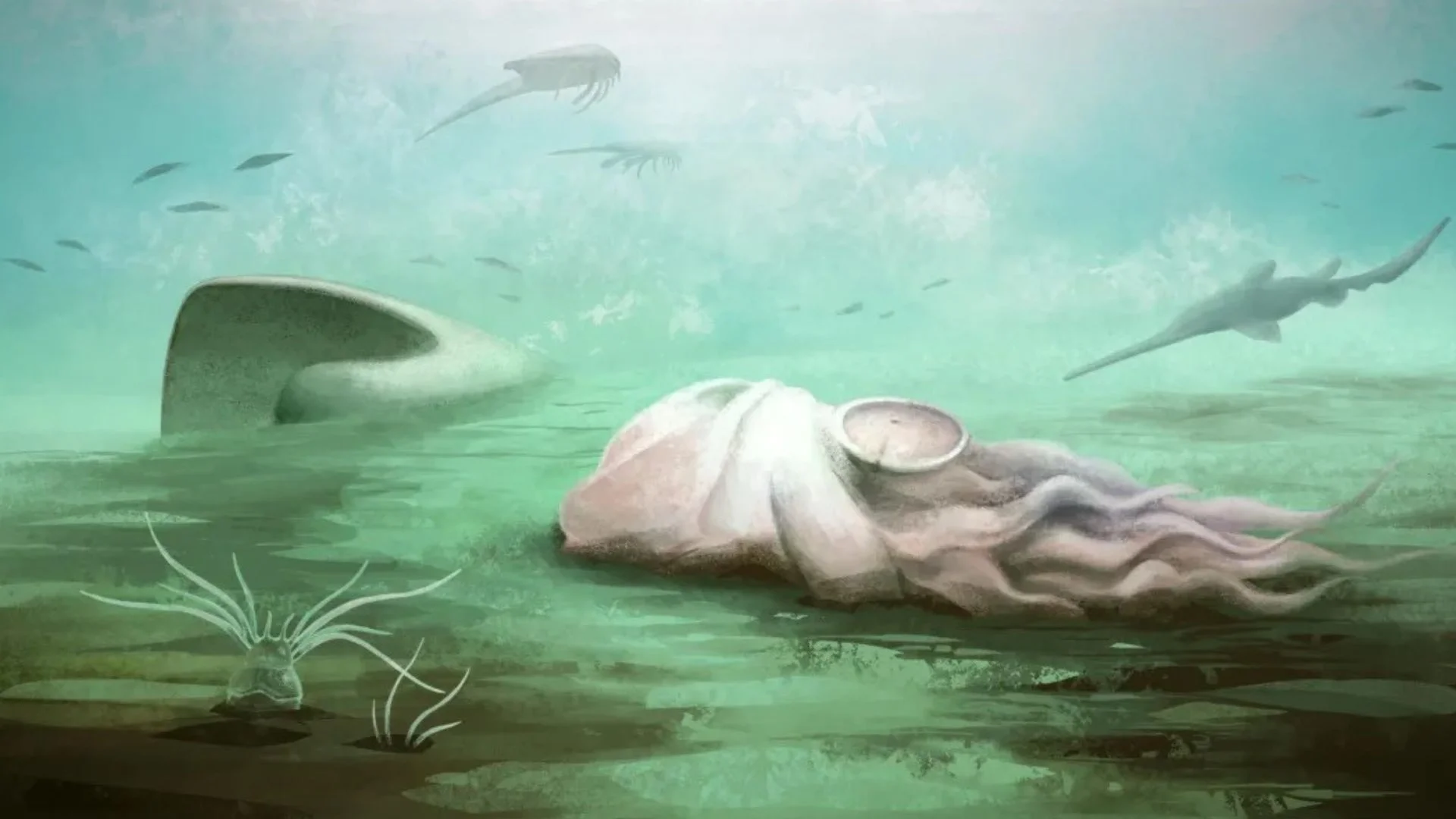
For decades, a 300-million-year-old fossil known as Pohlsepia mazonensis held a special place in science. Once celebrated as the world’s oldest octopus, it even earned a spot in the Guinness Book of Records.
It turns out, according to new research, the fossil was never an octopus.
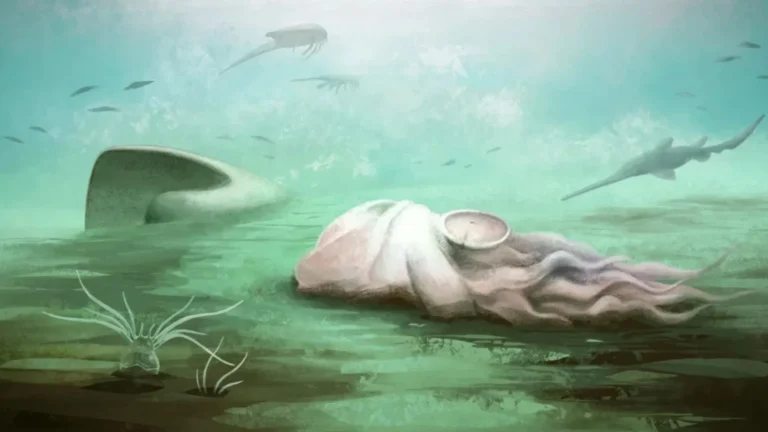
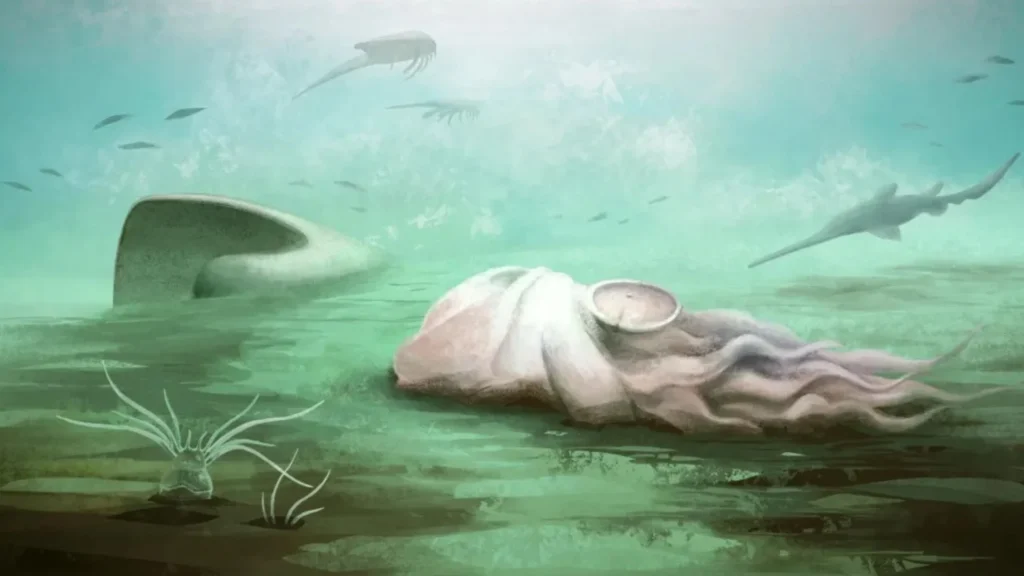
Scientists now say that the specimen belongs to a group related to modern Nautilus, marine animals with multiple tentacles and an external shell. The mistaken identity happened because the fossil had partially decayed before it became preserved in rock. That decomposition changed its shape, making it look convincingly like an octopus.
Dr. Thomas Clements, lead author of the study and Lecturer in Invertebrate Zoology at the University of Reading, explained, “It turns out the world’s most famous octopus fossil was never an octopus at all. It was a nautilus relative that had been decomposing for weeks before it became buried and preserved in rock. That decay is what made it look so convincingly octopus-like.”
READ ALSO: WatchHand Turns Sound Waves Into Finger Tracking on Everyday Smartwatches
The fossil was first discovered in Illinois, USA, and described in 2000. At the time, scientists interpreted its features as evidence of eight arms, fins, and other traits typical of octopuses.
This interpretation pushed the origin of octopuses back by about 150 million years. Over time, some researchers questioned these conclusions, but there was no reliable way to investigate further until now.
Using advanced synchrotron imaging, scientists examined the fossil in unprecedented detail. This technique, which uses extremely bright light beams, can reveal tiny structures hidden within the rock. The scans uncovered small tooth-like features inside the fossil, tiny structures invisible to the naked eye but critical for identification.
These teeth, part of a ribbon-like feeding organ called a radula, matched characteristics seen in molluscs. The fossil had at least 11 teeth per row, unlike octopuses, which typically have seven or nine teeth. Nautiloids, in contrast, often have 13. The teeth closely resembled those of another fossil nautiloid, Paleocadmus pohli, found at the same site.
WATCH ALSO: China’s new massive battle tank takes part in live-fire test
“This was a small but powerful clue,” Dr. Clements said. “Sometimes, reexamining controversial fossils with new techniques reveals tiny details that lead to really exciting discoveries.”
The discovery not only corrects a long-standing error but also reshapes our understanding of octopus evolution. Octopuses are now believed to have appeared much later, during the Jurassic period, rather than hundreds of millions of years earlier. The evolutionary split between octopuses and their ten-armed relatives, such as squids, likely occurred in the Mesozoic era.
The new research also makes the Illinois fossils the oldest known example of nautiloid soft tissue in the fossil record. Previously, this record was held by younger specimens. “It’s amazing to think that a row of tiny hidden teeth, trapped in rock for 300 million years, has fundamentally changed what we know about octopus evolution,” Dr. Clements said.
READ ALSO: China’s New Composite Bends Old Rules, Lifts Aircraft, Drones Strength by 26%
The fossil’s reclassification also resolves a mystery that has puzzled scientists for decades. While the world believed it held evidence of early octopuses, the truth points to a different branch of marine evolution. The nautiloid family, including modern Nautilus, is often called a ‘living fossil’ because its lineage has remained relatively unchanged for millions of years.
The study, published on April 8, 2026, in Proceedings of the Royal Society B, highlights how modern technology can overturn long-standing scientific assumptions. As Dr. Clements noted, new imaging methods enabled scientists to peer beneath the rock surface and reveal structures that had been hidden for hundreds of millions of years.
The case of Pohlsepia mazonensis serves as a reminder that fossils can mislead, especially when decay alters the animal’s appearance. By revisiting old specimens with modern tools, researchers can uncover new truths and rewrite the history of life on Earth.
WATCH ALSO: Rolls-Royce tests world’s first high-speed marine engine powered by methanol
The Illinois discovery may no longer hold the title of the oldest octopus, but it now tells a richer story, one of soft-tissue preservation, ancient nautiloids, and the complex path of evolution. Science, it seems, has a way of correcting itself, even across hundreds of millions of years.