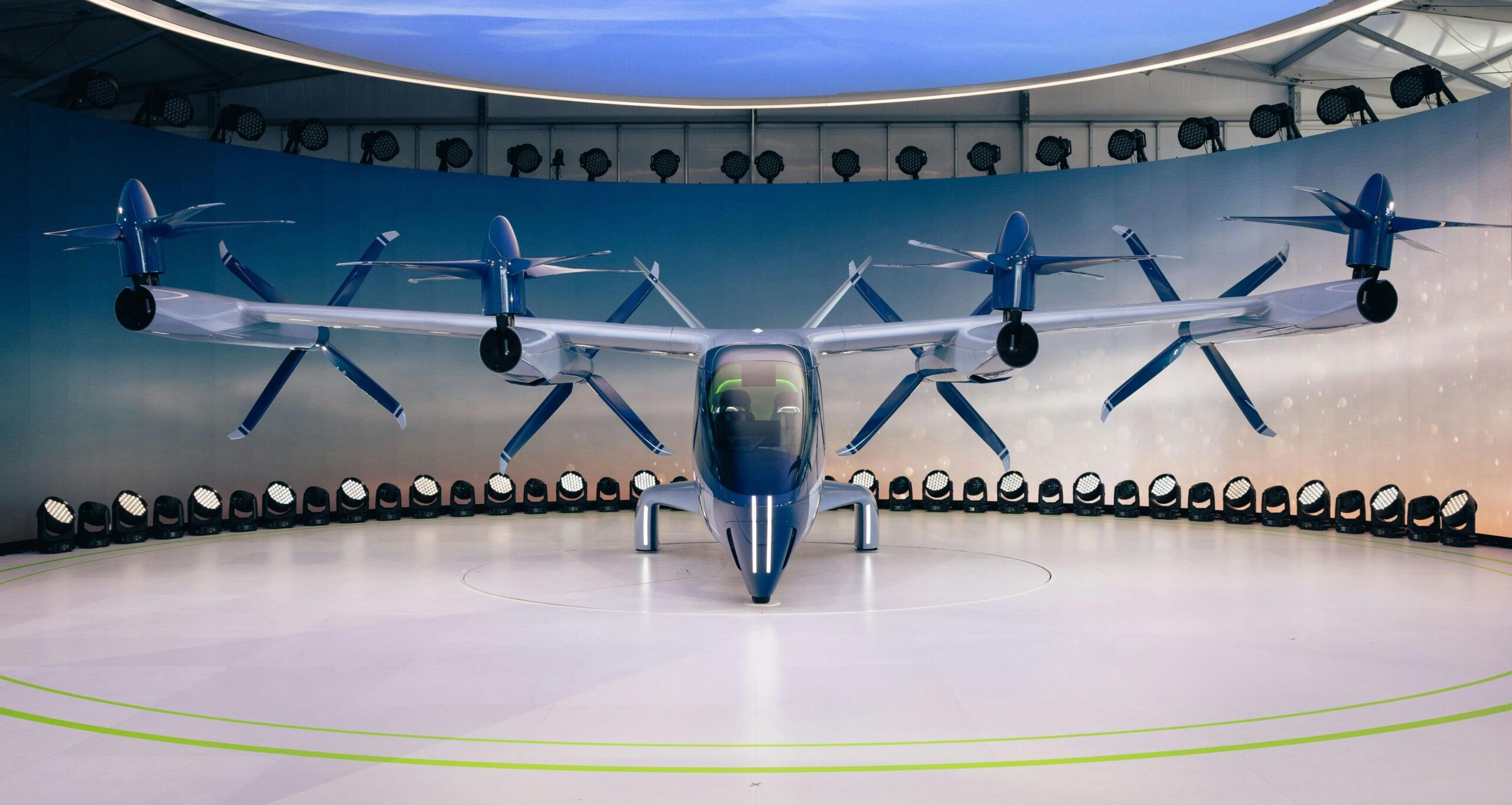
Nanyang Technological University, Singapore (NTU Singapore) has unveiled the nation’s first indigenously designed and built full-scale aircraft: an advanced electric vertical take-off and landing (eVTOL) prototype. With an eight-metre wingspan and a unique design featuring eight lift rotors and a rear pusher propeller, this milestone project, led by global pioneer Professor James Wang, signals Singapore’s ambitious entry into the future of advanced air mobility, aiming to transform transportation in Asia’s dense megacities.
The bustling flight line of the Singapore Airshow 2026 is no stranger to global aerospace giants, but this year, a new contender emerged—one born not in a legacy factory in Europe or America, but in the research labs of a Singaporean university. The debut of this sleek, electric aircraft represents more than just a new vehicle; it’s the physical manifestation of a nation’s strategic pivot from maintaining aircraft to creating them from the ground up.
The fundamental problem this NTU eVTOL prototype aims to solve is urban and regional mobility in geographically constrained environments. As cities across Asia grow denser, ground transportation faces gridlock. This aircraft is designed to offer a sustainable alternative, combining the point-to-point convenience of a helicopter with the quiet efficiency and lower operating costs of electric propulsion. It’s a vision for moving people and cargo over traffic, not through it.
READ ALSO: https://modernmechanics24.com/post/f35-uss-abraham-lincoln-drone-kill/
The aircraft’s basic function hinges on a clever dual-mode design. For take-off and landing, eight electric motors power dedicated lift rotors mounted on the wings, allowing it to operate like a helicopter from any confined space. Once airborne, the system transitions, and a single rear-mounted pusher propeller takes over, enabling efficient, airplane-like forward flight. This hybrid approach marries vertical agility with cruise efficiency.
The visionary behind this ambitious project is the innovator and principal investigator, Professor James Wang of NTU’s School of Mechanical and Aerospace Engineering, hailed by some as a pioneer in electric vertical flight. The engineering and development was a monumental national effort, orchestrated by NTU and executed through a consortium of local and international industry partners including Eaton Aerospace, Syensqo, and Singapore’s own A*STAR, which provided critical expertise in composites, systems integration, and testing.
A key, honest limitation is the prototype’s current stage of development. Unveiled as a technology demonstrator, it is not yet a certified, passenger-ready vehicle. The path from a successful research platform to a commercially viable, safety-certified aircraft operating in regulated airspace is long, complex, and capital-intensive. The project’s next major phase will focus on evolving this proof-of-concept into a full-sized, cargo- or passenger-capable prototype.
WATCH ALSO: https://modernmechanics24.com/post/baes-cv90120-tank-modern-warfare/
The overall value and summary of this achievement is strategic, positioning Singapore as a future hub for aerospace innovation. “This project represents an important step in strengthening our capabilities in the research and development of complete eVTOL aircraft configurations,” said Professor Lam Khin Yong, NTU’s Vice President (Industry). It moves Singapore’s strong aerospace ecosystem beyond maintenance and into high-value design and systems integration, potentially capturing a leading role in the nascent Advanced Air Mobility (AAM) market for Southeast Asia.
The project is a testament to sustained national investment in research, supported by Singapore’s RIE2025 plan. By developing all core technologies in-house—from motors to flight control systems—NTU and its partners have built deep indigenous capability. “If you can dream it, you can build it,” stated Prof. Wang, emphasizing the project’s role in demonstrating Singapore’s technical ambition.
Looking ahead, the prototype will serve as a living testbed. The goal, as outlined by Professor Louis Phee, NTU’s Vice President (Innovation and Entrepreneurship), is clear: translation. The university will now work with industry to commercialize key technologies, with the ultimate aim of developing a certified aircraft. This step is crucial for transitioning from a spectacular airshow debut to a practical solution for intra-city logistics or regional passenger travel.
READ ALSO: https://modernmechanics24.com/post/sunlight-power-self-repair-solar-cells/
The unveiling at the Airshow is more than a display of engineering prowess; it’s a statement of intent. In a global race to define the future of flight, Singapore, through NTU’s homegrown eVTOL, has announced it is not just watching from the sidelines but is actively designing and building its own seat at the table.