Texas state authorities have approved a six-gigawatt Clean Air Permit for Fermi America’s ambitious Project Matador campus near Amarillo.
This approval unlocks the next phase of construction for the planned 11-gigawatt hypergrid.
The permit was granted by the Texas Commission on Environmental Quality on February 25. It marks one of the largest air authorizations ever issued in the country.
Company executives say the approval confirms that the project meets both state and federal emissions standards and positions Texas at the forefront of scalable energy infrastructure.
A Mega Grid for the AI Era
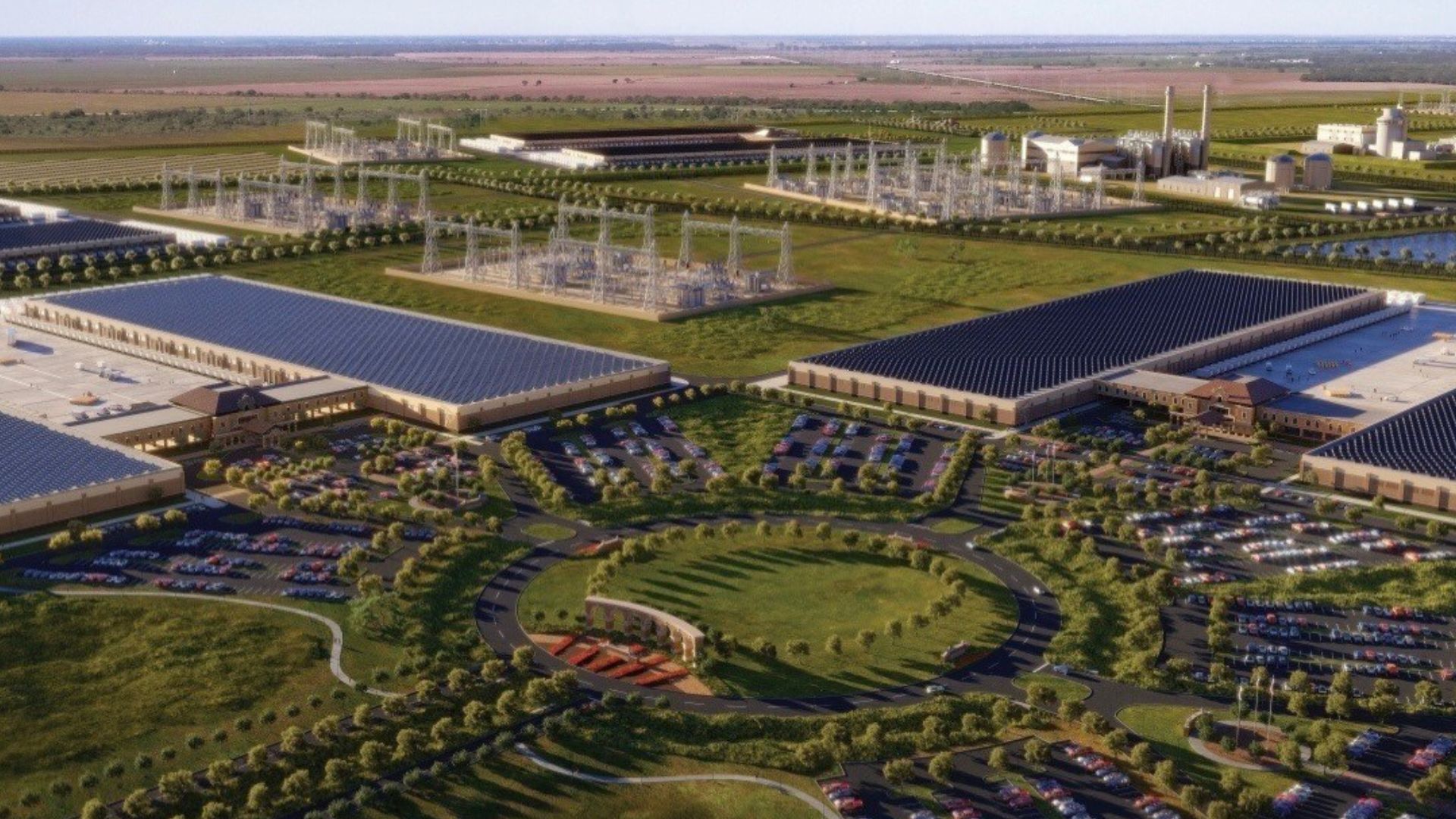
Project Matador is designed as an 18-million-square-foot private energy campus expected to come online between the late 2020s and mid-2030s. At full capacity, the hypergrid could generate up to 11 gigawatts of electricity. That is enough to power millions of homes or multiple hyperscale data centers.
The grid will rely on a diversified mix of four nuclear reactors, natural gas generation, and solar energy. It reflects a hybrid approach to reliability and sustainability.
“When it comes to responsible, scalable energy production, Texas is leading the way,” said Toby Neugebauer, CEO and co-founder of Fermi America. He emphasized that securing the air permit removes the final regulatory barrier before advancing into full-scale development.
The approval comes after months of technical evaluation, including air quality modeling, engineering assessments, and a public comment period. Regulators concluded that the project complies with environmental safeguards intended to protect public health and regional air standards.
Gas Turbines Ready for Deployment
As Project Matador moves closer to execution, Fermi America is preparing to deploy its fleet of Siemens Energy SGT-800 gas turbines. Six units are already stationed at the Port of Houston and will soon be transported to the Amarillo site.
The company previously secured more than two gigawatts of long-lead-time power assets to accelerate deployment. Executives argue that early procurement positions the campus to respond rapidly to surging electricity demand, particularly from artificial intelligence infrastructure.
READ ALSO: https://modernmechanics24.com/post/world-first-quantum-inspired-robot/
“Securing the second-largest Clean Air Permit in the country is yet one more significant milestone for our 11 GW private grid campus,” said Cathy Landtroop, Chief Communications Officer at Fermi America. She added that the company is uniquely positioned to help hyperscale technology operators secure dedicated power at scale.
Why Texas?
Texas offers a combination of regulatory flexibility, industrial land availability, and grid expertise that few other states can match. Governor Greg Abbott’s administration has actively promoted large-scale energy and technology investments, and the state’s independent grid system has long attracted private infrastructure projects.
READ ALSO: https://modernmechanics24.com/post/boeing-poseidon-canada-naval-security/
Fermi America credited state leadership and local authorities for facilitating what it described as a rigorous yet efficient review process. Company officials also highlighted strong support from the Amarillo community, forecasting thousands of jobs and billions of dollars in regional economic impact.
Powering America’s Next Growth Cycle
US’s electricity demand is rising at its fastest pace in decades, fueled by AI data centers, advanced manufacturing, electric vehicle growth, defense modernization, and supply chain reshoring.
Hyperscalers and industrial giants increasingly seek dedicated, behind-the-meter power solutions to avoid grid congestion and volatility.
WATCH ALSO: https://modernmechanics24.com/post/humanoid-robots-unscripted-conversation/
According to environmental experts, the campus could ultimately support up to 11 gigawatts of clean natural gas capacity, pending further approvals and financing arrangements.
With the Clean Air Permit in place, Fermi America now turns to final financing and tenant agreements. Project Matador will redefine the scale of private energy infrastructure in the US, offering a blueprint for meeting next-generation power demands without overburdening public grids.
For Texas, the approval signals more than regulatory clearance. It underscores the state’s growing role as a national hub for energy innovation in the AI-driven economy.