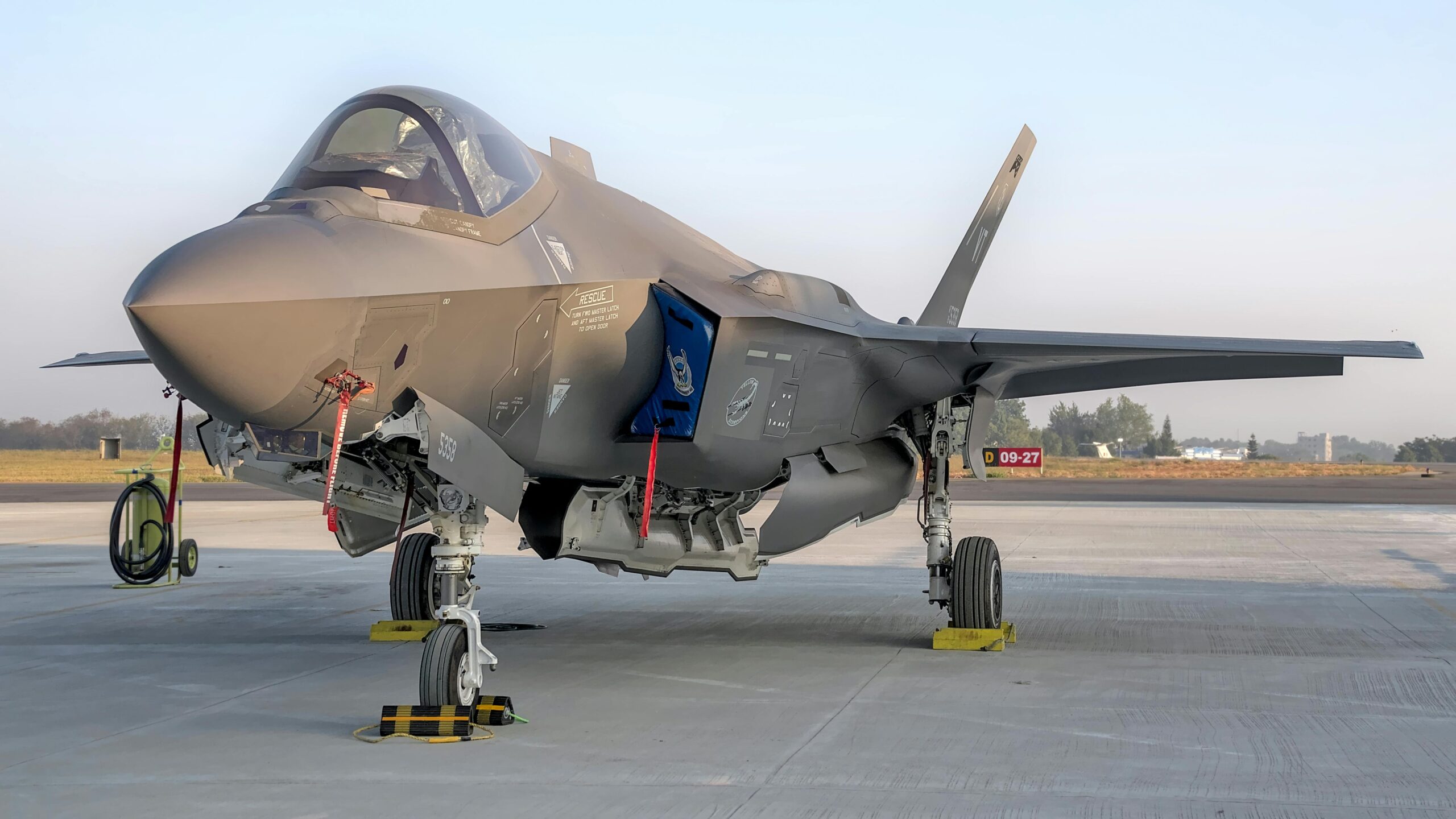
A U.S. Navy F-35C stealth fighter from the USS Abraham Lincoln (CVN 72) has shot down an Iranian Shahed-139 drone over the Arabian Sea, in what officials call a defensive action. The incident, occurring approximately 500 miles from Iran’s coast as the supercarrier operated in international waters, marks a critical escalation in a tense regional environment already defined by a major U.S. military buildup and ongoing diplomatic maneuvering.
The vast, open waters of the Arabian Sea became the stage for a stark demonstration of 21st-century naval air power this week. In a decisive act of self-defense, a carrier-based F-35C Lightning II was called upon to eliminate an approaching aerial threat, showcasing the evolving nature of high-tech confrontations at sea. This engagement wasn’t against a traditional fighter jet, but against a persistent and provocative drone, highlighting a new normal in global hotspots.
The core problem this F-35C engagement solved was an immediate, tangible threat to a $13 billion capital ship and its 5,000-person crew. According to U.S. Central Command (CENTCOM) spokesperson Captain Tim Hawkins, the Iranian Shahed-139 drone “aggressively approached” the USS Abraham Lincoln with “unclear intent,” ignoring de-escalatory measures. The F-35C’s basic function in this scenario was to serve as a seamlessly integrated node in the carrier’s defensive network—using its advanced sensors to identify, track, and ultimately neutralize the threat at a safe distance, protecting the strike group’s integrity.
READ ALSO: https://modernmechanics24.com/post/uh-engineers-create-heat-flow-battery/
The execution of this mission relied on the combined expertise of the U.S. Navy’s air wing innovators who developed the tactics for fifth-generation air combat, and the engineers and pilots of Carrier Air Wing (CVW) 9, who operated the jet from the Nimitz-class supercarrier. This team transformed the F-35C, a multi-role stealth fighter, into a precise counter-drone platform in a matter of minutes.
However, a key limitation in such encounters is the perpetual risk of strategic miscalculation and escalation. While drones present a lower immediate risk than manned aircraft, their aggressive use tests rules of engagement and can quickly spiral. As seen hours later in the Strait of Hormuz, where IRGC speedboats and a Mohajer drone harassed the U.S.-flagged M/V Stena Imperative, these provocations increase the chance of collision or a kinetic response that could broaden the conflict. The guided-missile destroyer USS McFaul responded to that incident, de-escalating the situation.
The overall value and summary of this F-35C engagement is twofold: it reaffirms the U.S. Navy’s commitment to defending its assets in international waters, and it sets a clear precedent for the use of premier stealth fighters in the counter-drone role. This is not the F-35’s first drone interception—it performed similar duties against Houthi threats last year—but downing an Iranian drone far out at sea elevates the stakes. It proves that even the most advanced aircraft in the U.S. arsenal must now routinely address low-cost, asymmetric threats.
WATCH ALSO: https://modernmechanics24.com/post/china-astronauts-mice-space-research-mission/
The weapon used remains unspecified, with the F-35C capable of employing AIM-9X Sidewinders, AIM-120 AMRAAMs, or its 25mm gun pod. This ambiguity itself is a tactical feature. The event underscores a continuous cycle of provocation and response that defines U.S.-Iran relations. It occurred amidst a major U.S. force buildup in the region and on the eve of reported talks between U.S. Special Envoy David Witkoff and Iranian officials in Turkey.
Despite the shootdown, diplomatic channels appear, for the moment, to remain open. White House Press Secretary Karoline Leavitt stated President Donald Trump “remains committed to always pursuing diplomacy first,” while unequivocally reminding Tehran that “a range of options” remains on the table. This incident serves as a potent reminder of those options, casting a long shadow over the upcoming negotiations.
Ultimately, the image of a stealthy F-35C guarding a 100,000-ton carrier from a buzzing drone encapsulates modern naval warfare’s paradox. It blends trillion-dollar technology with persistent, low-tech threats, all under the umbrella of nuclear diplomacy. For the sailors aboard the USS Abraham Lincoln, the engagement was a successful defense. For policymakers in Washington and Tehran, it is another data point in a high-stakes calculus where a single spark in the Arabian Sea can illuminate the fragile line between deterrence and broader conflict.
READ ALSO: https://modernmechanics24.com/post/plant-hormone-controls-proteins-for-life/