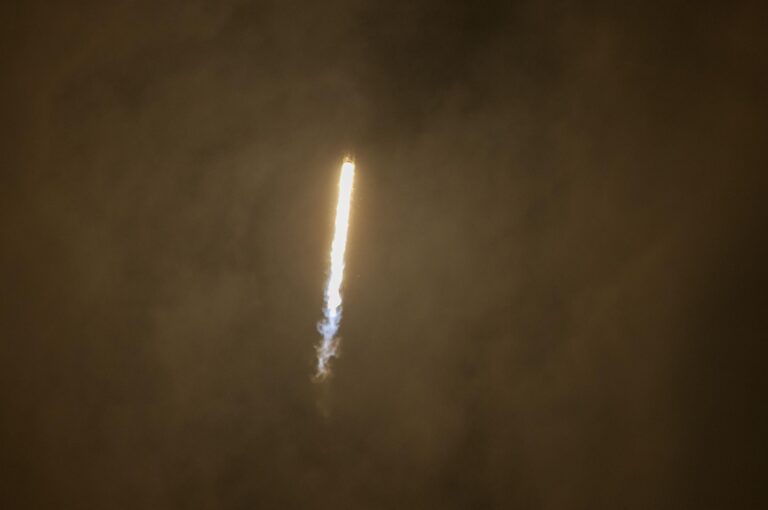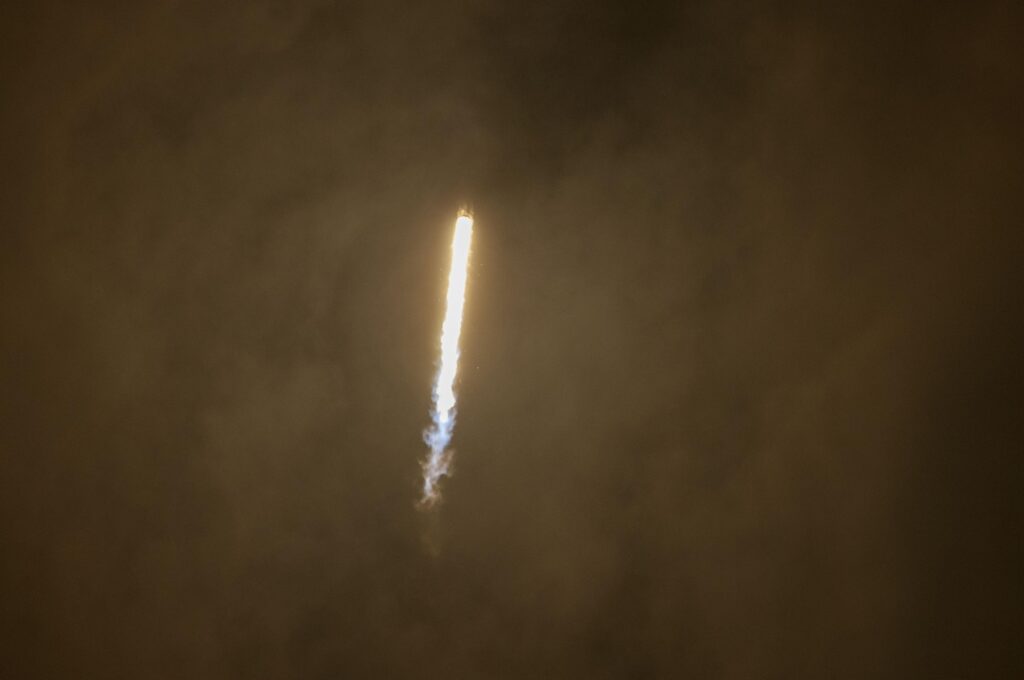
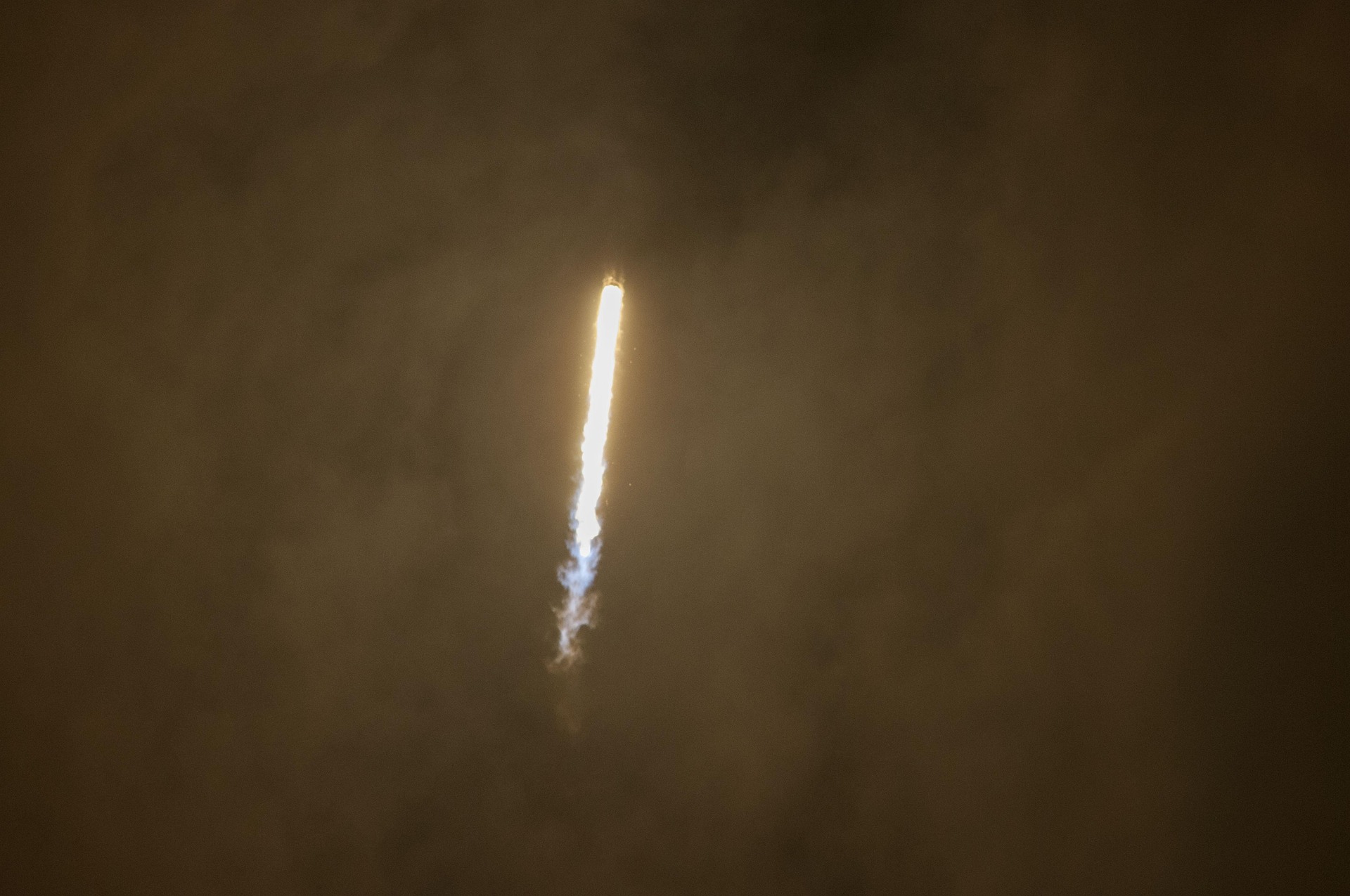
Hypersonica, the Munich-based Anglo-German defense startup, has successfully flown its HS1 hypersonic missile prototype to Mach 6—7,400 kilometers per hour—in a February 3, 2026 test from Andøya Space in northern Norway. Co-founders Dr. Philipp Kerth and Marc Ewenz, both Oxford University doctoral graduates, announced the milestone on February 10, declaring it “a major milestone on our pathway to developing Europe’s first sovereign hypersonic strike capability by 2029.” The flight comes as Russia has twice deployed its Oreshnik intermediate-range ballistic missile against Ukrainian targets since November 2024, a system President Vladimir Putin claims travels at Mach 10 and is impossible to intercept
The problem Hypersonica set out to solve is not whether Europe can build missiles—the continent fields some of the world’s most sophisticated tactical weapons through MBDA, Saab, and Rheinmetall. The problem is whether Europe can build hypersonic missiles, a category defined not merely by speed exceeding Mach 5 but by sustained, maneuverable flight within the atmosphere that defeats existing missile defense architectures. Russia has employed its Kinzhal and Zircon systems against Ukrainian targets, though Ukrainian forces have claimed isolated intercepts. The Oreshnik, an intermediate-range ballistic missile based on the RS-26 Rubezh ICBM, delivers multiple warheads at terminal velocities exceeding Mach 10. European militaries currently possess nothing comparable .
What the HS1 prototype represents is an attempt to close that gap in compressed time. The missile, exceeding one ton and measuring nearly 10 meters in length, flew over 300 kilometers with all systems operating nominally. The test validated functionality down to the subcomponent level at hypersonic speeds. Critically, the development cycle from design to launchpad required only nine months—a timeline the company claims can reduce costs by more than 80% compared to conventional defence procurement programs. Kerth told Hartpunkt that while the airframe and guidance are proprietary, the engine was purchased from an external supplier .
READ ALSO: https://modernmechanics24.com/post/rolls-royce-modular-gas-power-plants/
The basic function of the HS1, as presently conceived, is not to replicate the Oreshnik’s range or payload. It is to demonstrate that a private European startup can achieve the thermal management, guidance, and materials engineering necessary to sustain controlled flight above Mach 5. The missile’s modular architecture, according to the company, enables rapid iteration and reconfiguration. “Europe doesn’t have 20 years or billions to spend on developing hypersonic strike capabilities,” a Hypersonica representative told Defense News. “A new kind of tech-development approach is needed” .
Still, the achievement carries an honest limitation that independent analysts and even the company’s own investors acknowledge. Hypersonica announced a €23.3 million Series A financing round on February 10, led by London-based Plural with participation from the German Federal Agency for Skydiving Innovations. This is a respectable seed-stage investment. It is not sufficient to fund serial production, NATO certification, platform integration, logistics, and life-cycle management. Militär Aktuell, in its analysis of the test, noted that €23.3 million can produce technology demonstrators—but not weapon systems ready for squadron service. The path from successful prototype to operational capability typically requires established defence primes with existing production lines, supply chains, and customer relationships. Hypersonica has not yet announced any such partnership .
What makes this matter, ultimately, is not whether the HS1 can match the Oreshnik’s raw kinematic performance. It cannot. The Russian system, whatever its disputed tactical utility, is a proven ballistic missile with 5,500-kilometer range and the capacity to carry nuclear warheads. The HS1 flew 300 kilometers. The comparison is not of like systems. What matters is the strategic direction the test signals. The European Defence Fund’s 2026 work programme allocates €168 million specifically for hypersonic countermeasures and endoatmospheric interception capabilities. The German 2026 defence budget exceeds €108 billion, more than double pre-2022 levels, with Chancellor Friedrich Merz committing to 3.5% of GDP on defence by 2029. European NATO states, which doubled arms imports between 2020 and 2024 with two-thirds coming from the United States, are now under sustained political pressure to develop indigenous alternatives. The HS1 is the first tangible output of that pressure .
WATCH ALSO: https://modernmechanics24.com/post/us-giant-robot-fights-wildfires/
The innovator of this specific capability is Dr. Philipp Kerth, a physicist, and Marc Ewenz, an aeronautical engineer, who met during hypersonic research at Oxford University and founded Hypersonica in 2023. Both are in their early thirties. They have no prior experience running defence prime contracting organizations. But the engineers who executed the February test—the 50-person team distributed between Munich and London, including specialists from the German Aerospace Center who consulted on trajectory and thermal protection—are the ones who transformed academic expertise into flight-ready hardware. The founders told reporters that their rapid-iteration model “should recalibrate expectations about the costs and time needed to develop this crucial capability” .
Reported by Defense Express, TASS, and Defence Industry Europe, the test has already generated debate about whether a startup can realistically deliver operational hypersonic weapons within NATO’s 2030 framework. Skeptics note that France’s V-MAX hypersonic glider program, which conducted its first flight in 2023, remains in development. The United States has struggled with cost overruns and delays in its Hypersonic Attack Cruise Missile program. Proponents counter that established primes have demonstrated they cannot deliver rapidly or affordably, and that the HS1 represents the only European hypersonic flight test in recent memory conducted entirely outside classified state funding .
READ ALSO: https://modernmechanics24.com/post/ariane-64-historic-europe-space-launch/
What comes next is the scaling problem. Hypersonica must either grow into a production-capable enterprise—an extraordinarily capital-intensive proposition—or partner with an established player such as MBDA, Airbus Defence and Space, BAE Systems, or Rheinmetall. The company has not disclosed which path it intends to pursue. The 2029 target for series production is ambitious; most analysts interviewed by Militär Aktuell consider 2030-2032 more realistic. But the target itself is less important than the fact that Europe now has a flight-validated hypersonic airframe, however prototypical, developed for €23 million in 26 months .
For the rest of us, watching from outside the test ranges and boardrooms, the significance is quieter. The Oreshnik that struck Lviv in January 2026 traveled at approximately Mach 10. The HS1 that flew from Andøya on February 3 traveled at Mach 6. The gap is substantial. But the gap has never been zero before. That is the actual milestone.