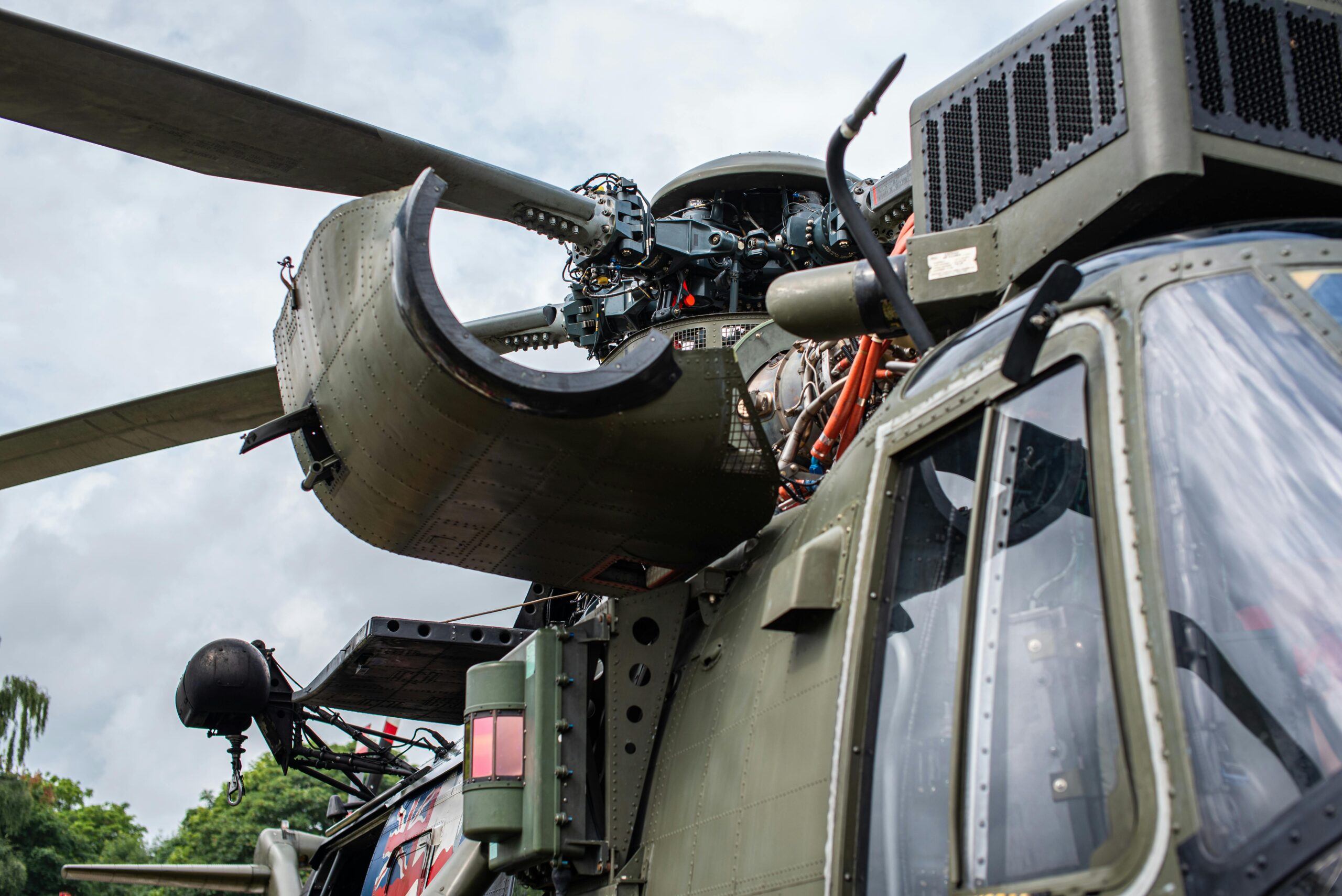
Researchers at the German Aerospace Center (DLR) have successfully tested a revolutionary helicopter rotor system that actively twists its blades in flight, achieving a dramatic seven decibels noise reduction during landing and cutting vibration by more than half. The international Smart Twisting Active Rotor (STAR) project uses integrated “artificial muscles” to dynamically adapt blades, promising a quieter, smoother, and more efficient future for rotorcraft.
The distinctive whop-whop-whop of a helicopter is a sound of both rescue and disruption. While these machines are vital for emergency services and transport, their noise—particularly during the critical landing phase—is a significant environmental and community concern. But what if the blades could intelligently morph in real-time to tame that roar? That’s the vision behind a groundbreaking international effort led by DLR (Deutsches Zentrum für Luft- und Raumfahrt), which has just proven its concept in a landmark wind tunnel test.
The core innovation lies not in mechanics, but in materials. The team replaced traditional mechanical control linkages with piezoceramic actuators integrated directly into the blade structure. Think of them as artificial muscles; when an electrical voltage is applied, these materials strain, causing the entire blade to twist subtly. “The special thing about this approach is that the active twisting of a rotor blade requires no mechanical components and is only minimally affected by the centrifugal forces acting on the rotor blades,” explains Berend Gerdes van der Wall, project manager at the DLR Institute of Flight Systems. This allows for both static adjustment and high-frequency dynamic twisting to counteract vibrations.
READ ALSO: https://modernmechanics24.com/post/us-eyes-new-common-minigun-all-varients/
After years of development, the concept faced its ultimate trial: a three-week measurement campaign in late 2025 at the German-Dutch Wind Tunnels (DNW) in the Netherlands. A four-bladed active twist rotor with a diameter of four metres was put through its paces under DLR’s leadership, with collaborators including NASA, the United States Army, ONERA (France), and JAXA (Japan). The results, reported by DLR, were unequivocally successful. The system demonstrated a seven decibel noise reduction during simulated landing descent—a cut equating to more than half of the perceived loudness. Simultaneously, vibrations were reduced by more than half, and rotor efficiency actually improved under high load conditions.
“During the measurement campaign, we were able to successfully test our concept in a realistic environment,” said van der Wall. “The results show that efficiency increased while noise and vibration were significantly reduced.” This trifecta of benefits—quieter, smoother, and more efficient—is a rare breakthrough in aerospace engineering, where improving one metric often compromises another. The data collected, from blade deformations to acoustic signatures, will now be used to comprehensively validate computational models, accelerating future designs.
WATCH ALSO: https://modernmechanics24.com/post/chinese-company-s-humanoid-robot-dodges-arrow-with-side-flip/
The implications of this technology stretch far beyond today’s conventional helicopters. As explained by DLR, the principles can be applied to high-speed rotorcraft configurations and the burgeoning field of urban air mobility (UAM)—the electric air taxis envisioned for city skylines. For UAM to gain public acceptance, minimizing noise pollution is paramount. The STAR project’s success provides a viable pathway to making those future vehicles good neighbors. By teaching helicopter blades to flex like a bird’s feather in the wind, DLR and its global partners aren’t just tweaking a machine; they’re redefining the acoustic relationship between rotorcraft and the communities they serve.