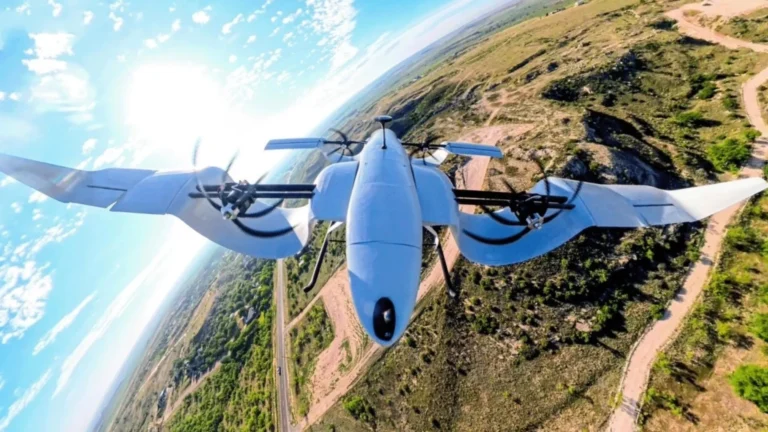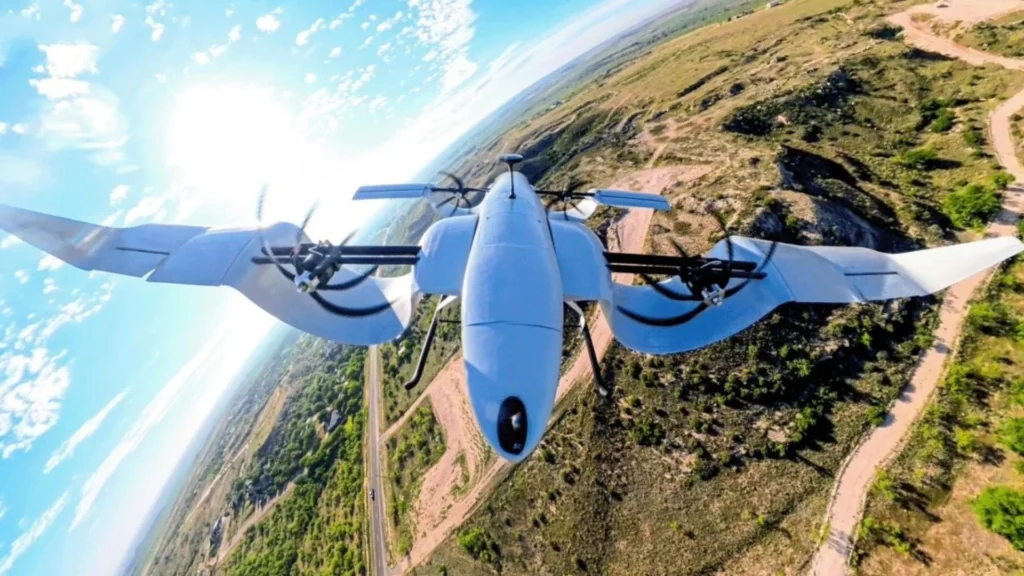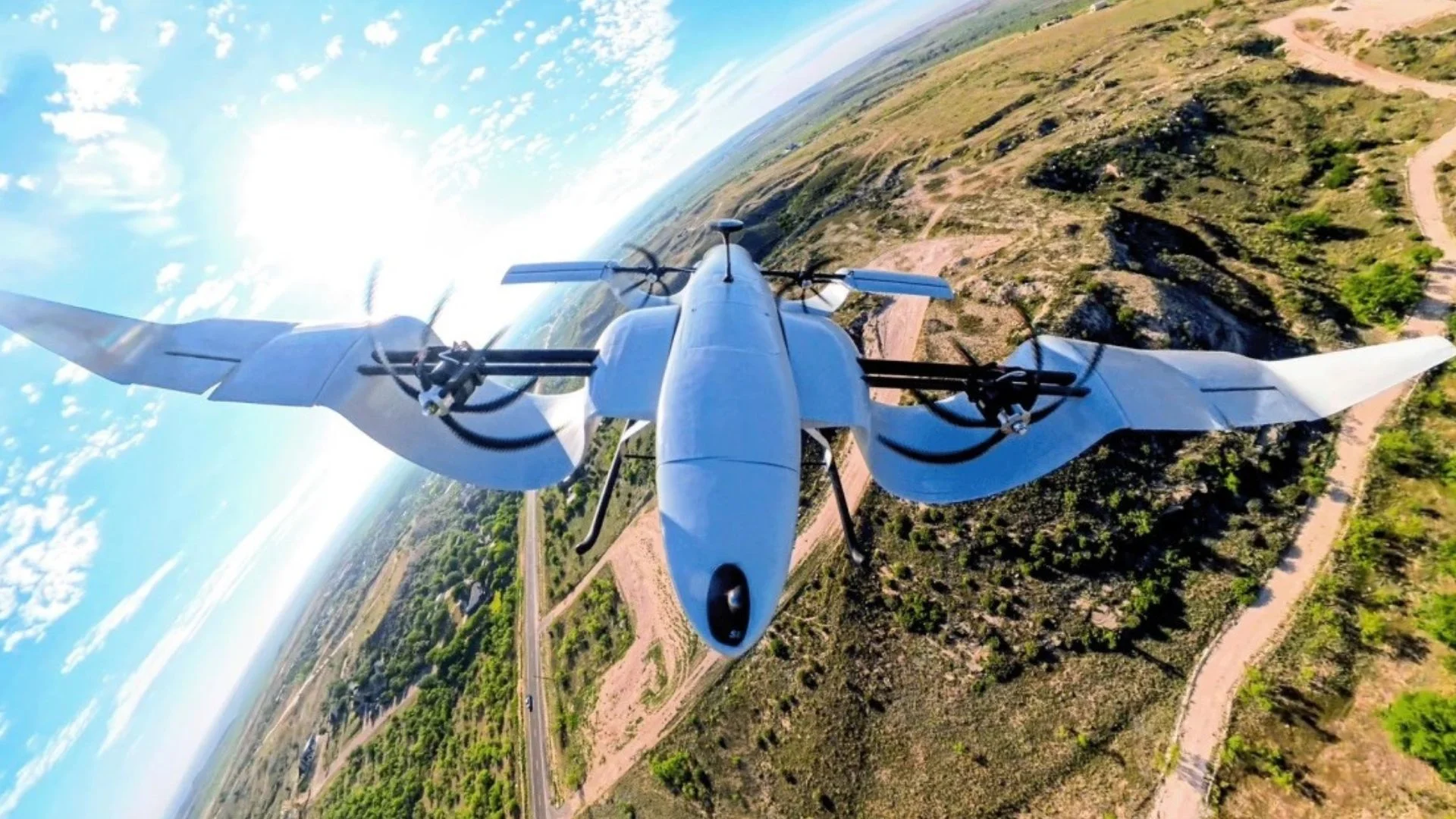
A new kind of aircraft is drawing attention in the aviation world, not just for what it does, but for how it does it. The Cyclone, a hybrid vertical take-off and landing (VTOL) drone developed by HopFlyt, uses a rare wing design that dates back nearly a century.
Its standout feature is its semicircular, or curved, wings. These are not just for style. They are based on a concept known as the channel wing, first introduced in the 1920s by aviation innovator Willard Ray Custer.
Custer had a simple but bold idea. Instead of pushing an entire aircraft forward at high speed to create lift, he wanted to move air over the wings using propellers. In this setup, the wings sit inside a curved channel, and propellers push air directly over them. This creates lift even at very low speeds. At the time, the idea showed promise.
READ ALSO: World’s First Quantum-Safe Drones Pass Trials with Advanced Encryption System
Custer patented the design and demonstrated its ability to lift aircraft in unusual ways. In one test, a man ran alongside a channel-wing plane until it lifted off the ground. In another, the plane was tied down while its propellers were switched on. The force generated was enough to lift it vertically. These early experiments hinted at vertical take-off capabilities long before modern VTOL systems existed.
But the idea did not take off commercially. Aircraft in that era were too heavy, and the available technology could not support the efficiency needed for real-world use. The concept remained mostly forgotten for decades.
Now, that old idea is getting a second life. Modern engineering, especially the rise of electric vertical take-off and landing aircraft, has changed what is possible. These newer machines are lighter and more efficient. This is where HopFlyt saw an opportunity.
The company revisited the channel wing design and made key improvements.
In the Cyclone, the curved wing sections are not fixed. They can pivot based on the flight phase. During take-off, the channel faces toward the rear of the aircraft, helping generate strong upward lift. Once the drone moves into forward flight, the channel rotates beneath the wing, improving efficiency and stability.
The design also adds another function. The pivoting channels can act as a braking system. This gives the aircraft better control, especially during landing or when slowing down mid-flight.
WATCH ALSO: Biohybrid robots turn food waste into functional machines
According to HopFlyt, this updated approach is not just unique, it is effective.
The Cyclone uses about one-third less power during its initial climb compared to other VTOL aircraft. This is a major advantage, especially for operations that require frequent take-offs and landings.
The aircraft runs on a hybrid power system that combines electric and fuel power. Even with this setup, it consumes less than three gallons of fuel per hour during flight. This makes it highly efficient compared to traditional aircraft in its category.
Its performance figures are equally notable. The Cyclone can travel more than 800 miles (about 1,287 kilometers) on a single mission. For shorter distances, it can carry up to 250 pounds (113 kilograms) of internal cargo. This flexibility makes it suitable for a range of uses.
HopFlyt also highlights its cost and environmental benefits. The company says the Cyclone can reduce operational costs by up to 90 percent compared to similar aircraft. It also claims a significant drop in emissions, with up to 50 times less carbon dioxide output.
Chief Engineer Neil Winston believes the timing is right for such innovations.
READ ALSO: 200-Year Talbot Effect Powers Next-Level Quantum Communication Shift
“People often say that by the 1960s, aviation had already explored every idea,” Winston said. “But the technology was not ready back then. Today, we have digital control systems, better batteries, and advanced propulsion methods that make these ideas work.”
He also pointed to the broader shift happening in aviation. “We are seeing a merging of technologies,” Winston said. “Battery systems, electric propulsion, and hybrid designs are coming together. This is creating a new class of drones and VTOL aircraft.”
HopFlyt plans to bring the Cyclone to the market by 2027. The company is targeting several practical applications. These include naval resupply missions, the delivery of goods to offshore energy platforms, and support for medical logistics in remote areas. In the future, the same design could even be adapted for passenger transport.
The return of the channel wing shows how old ideas can find new life with modern tools. What once seemed impractical is now becoming a key part of next-generation aviation. With the Cyclone, a concept from the past is shaping the future of flight.