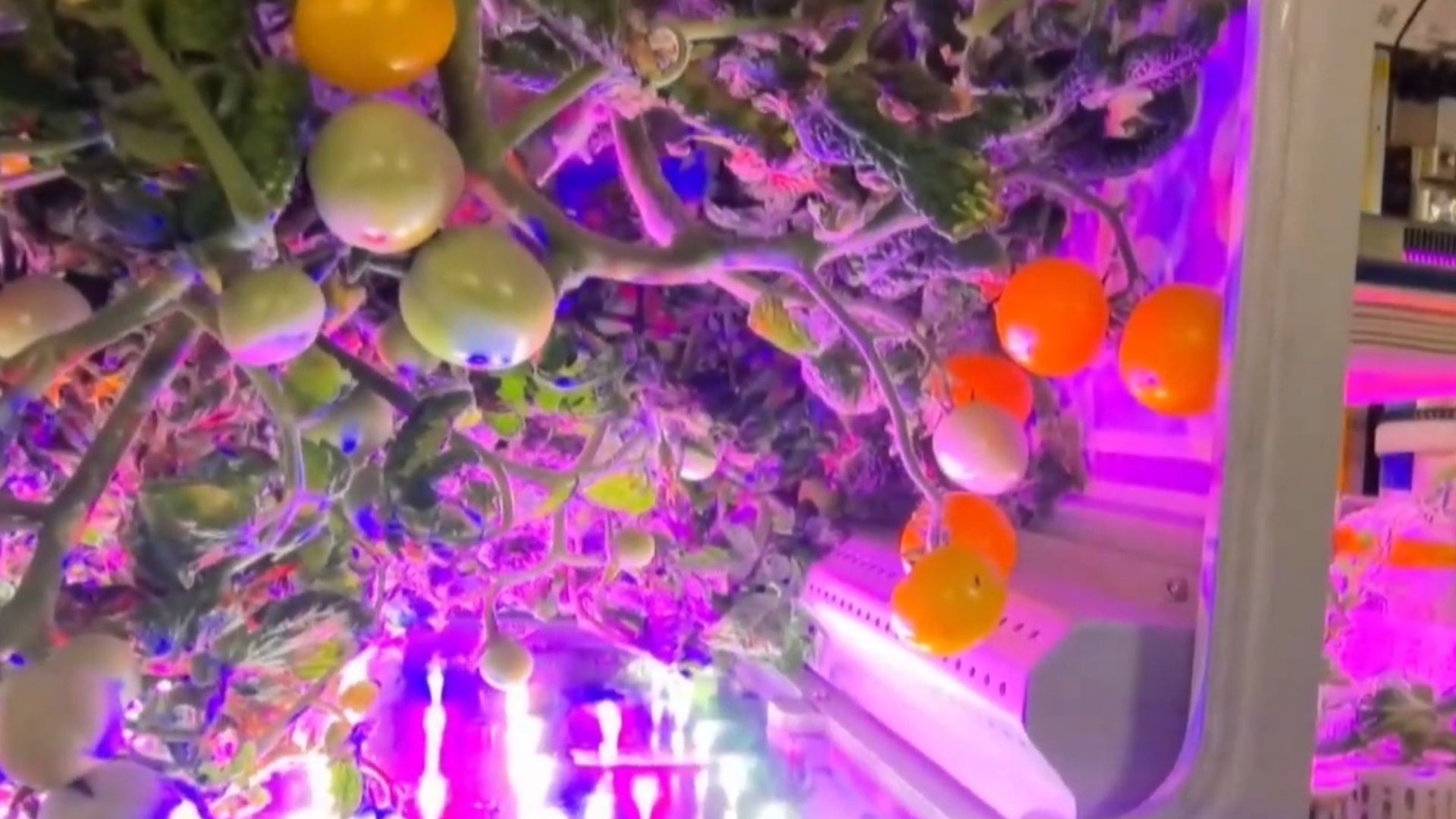
Astronauts aboard China’s Tiangong space station have successfully harvested fresh tomatoes grown in space.
The achievement marks another step forward in space-based food production.
The tomatoes were grown using an advanced aeroponic system. This method uses a fine mist of nutrient-rich water instead of soil. It helps save water and allows plants to grow efficiently in microgravity.
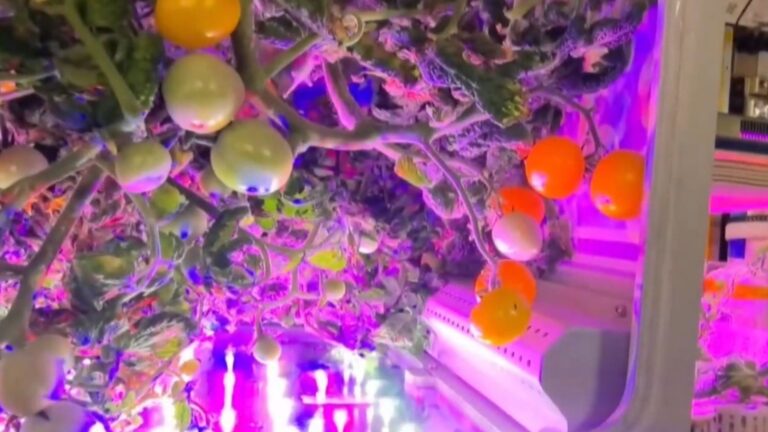
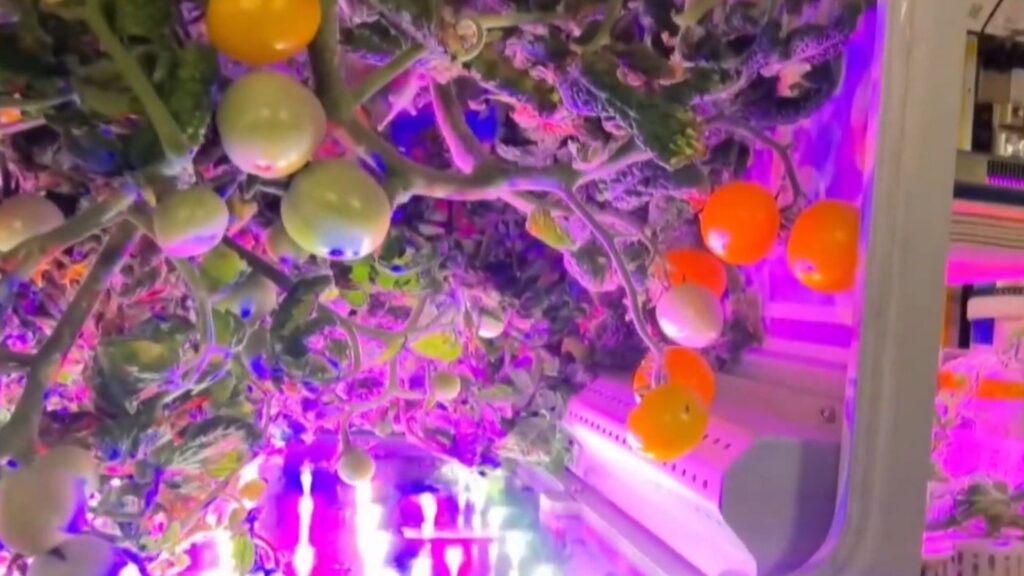
Earlier footage released showed small vines filled with red and yellow cherry tomatoes. The plants grew inside a compact, box-shaped chamber. Astronauts monitored the roots through small windows while they were sprayed with nutrients. A full-spectrum LED light system provided the required light for growth.
According to reports, the crew described the yield as a bumper crop. This suggests the system is working well under space conditions.
Scientists believe this technology could play a key role in long-duration space missions. Growing food in space can reduce dependence on Earth’s supplies. It may also support future missions to deep space destinations.
Tomatoes are just the beginning. Researchers plan to grow other crops, such as wheat and carrots, as well as medicinal plants. These experiments aim to test how different plants adapt to space environments.
READ ALSO: China’s Weird-Looking Humanoid Robot Could Help Build Moon Base by 2035
Similar experiments have already taken place on the International Space Station. Astronauts there have grown lettuce, green onions, and tomatoes over the years. These studies focus on how plants adjust genetically and physically in space.
Beyond food supply, scientists highlight another benefit. Gardening in space can improve astronauts’ mental well-being. According to NASA, growing plants helps boost morale and overall quality of life during missions.
In one unusual incident in 2023, a tomato grown on the ISS went missing for months. Astronaut Frank Rubio was jokingly blamed for eating it. Later, astronaut Jasmin Moghbeli confirmed its discovery.
READ ALSO: Study: Thwaites Glacier Ice Loss Could Rival Entire Antarctic by 2067
She said, “We found the tomato,” clearing Rubio of the blame.
As space agencies push toward longer missions, growing food in orbit becomes increasingly important. The latest harvest from Tiangong shows that sustainable space farming is no longer just an idea, but a growing reality.