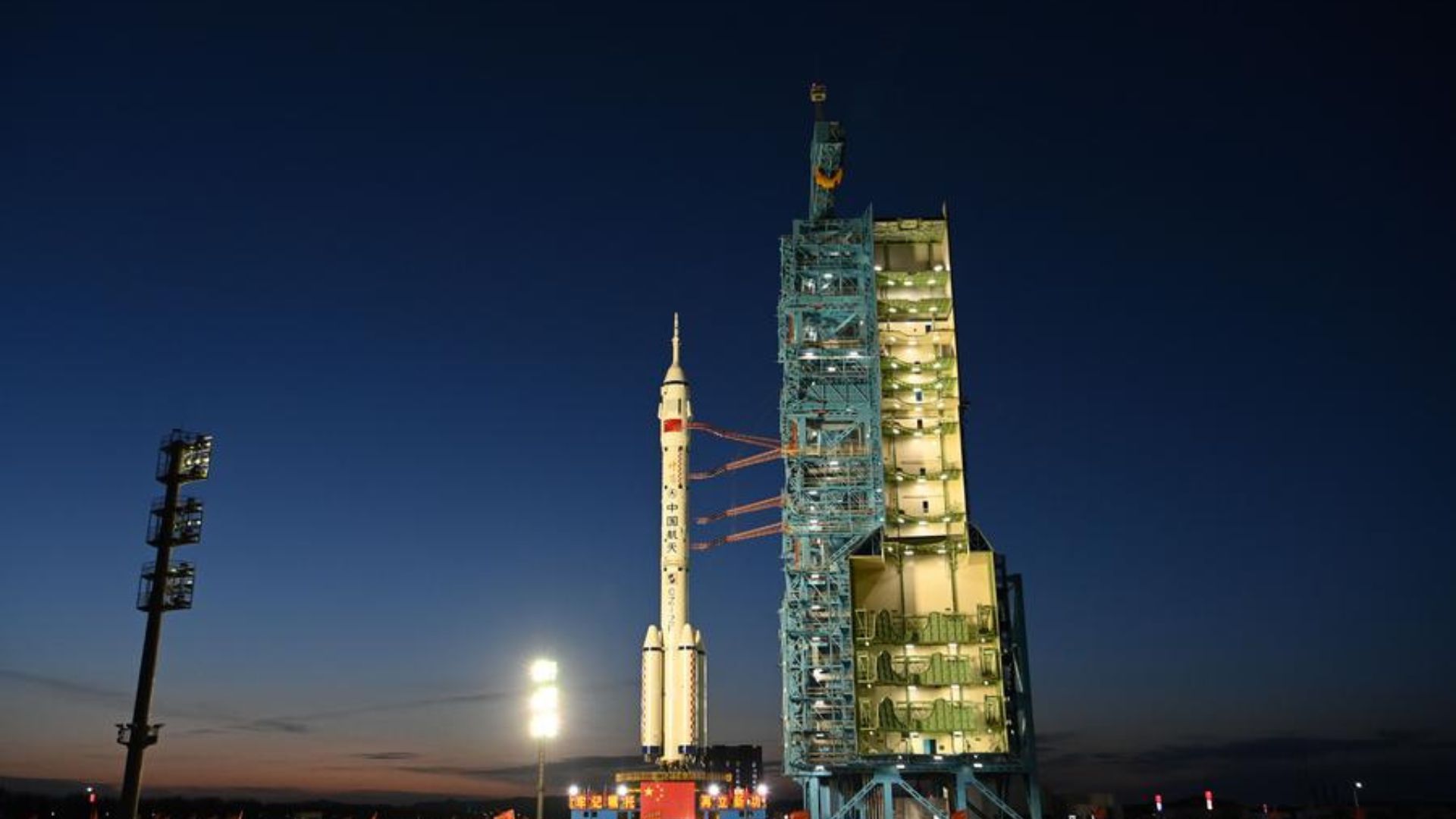
China’s mysterious reusable space plane has returned to orbit, igniting fresh debate over its purpose and long-term ambitions in space.
The robotic spacecraft named Shenlong, which means “Divine Dragon,” launched on February 6 from the Jiuquan Satellite Launch Center, located in the Gobi Desert.
The mission marks Shenlong’s fourth orbital flight since its debut in 2020. As with previous launches, Chinese authorities have shared minimal details, fueling speculation among analysts and defense experts worldwide.
Pattern of Secrecy
Shenlong first reached low Earth orbit (LEO) in September 2020. That inaugural mission lasted just two days. Subsequent missions in May 2023 and September 2024 remained in orbit for 276 days and 266 days, respectively. It became a significant leap in operational duration.
READ ALSO: https://modernmechanics24.com/post/porsche-cayenne-electric-production-starts/
Official statements from Beijing remain broad. Authorities describe Shenlong as a platform to test reusable space technologies that will pave the way for more convenient and affordable round-trip methods for the peaceful use of space in the future.
However, such words leave much open to interpretation.
The vehicle is widely believed to resemble the US military’s X-37B, an autonomous space plane operated by the US Space Force. Like Shenlong, the X-37B conducts classified missions, and most of its payloads and objectives remain undisclosed.
Comparisons With the X-37B
The X-37B first launched in 2010 and is currently on its eighth mission, which began last August aboard a SpaceX Falcon 9 rocket. Measuring roughly 29 feet (8.8 meters) long, it resembles a miniature version of NASA’s retired space shuttle orbiters.
Despite persistent suspicions in its early years, experts have repeatedly claimed that the X-37B serves as a space weapon.
In a fact sheet, the nonprofit Secure World Foundation stated that the X-37B has not approached or rendezvoused with other known space objects and generally operates in lower orbits than most operational satellites. The group noted one exception. During its seventh mission, the craft entered a highly elliptical orbit reaching more than 38,000 kilometers from Earth.
Addressing concerns about weaponization, the foundation wrote that the X-37B would make a poor delivery system for space-to-ground weapons. Its payload bay is relatively small, about the size of a pickup truck bed, and its power generation capacity is limited.
WATCH ALSO: https://modernmechanics24.com/post/humanoid-robot-towel-task/
The fact sheet emphasized that any hyperkinetic weapons would require thrusters capable of executing a significant deorbit burn, which would be difficult given the available space.
It further explained that upon reentry, the vehicle behaves like a gliding aircraft, traveling far slower than ballistic missile warheads and remaining vulnerable to air defense systems.
Shenlong’s Orbital Maneuvers
While much of that reasoning may apply to Shenlong, there is a vital difference.
Unlike the X-37B, Shenlong has conducted rendezvous and proximity operations (RPO) in orbit. During each of its previous three missions, the space plane released at least one object into space.
These deployments were not publicly announced by China but were tracked by the US military, private space situational awareness firms, and amateur astronomers.
According to the Secure World Foundation’s analysis, a satellite launched during Shenlong’s first mission demonstrated broadcast transmission capabilities. Another object deployed during its second mission appeared to possess independent propulsion.
The organization stated that Shenlong conducted numerous close maneuvers and capture or docking operations with its deployed satellites.
READ ALSO: https://modernmechanics24.com/post/womb-transplants-from-deceased-donor/
Such activities are not inherently aggressive. RPO technologies can enable satellite servicing, refueling, repairs and debris removal. These are all considered valuable capabilities in an increasingly crowded orbital environment.
However, experts warn that the same technology could theoretically be used to inspect or interfere with adversary spacecraft.
One analyst noted that if a nation seeks space superiority, mastering rendezvous and proximity operations becomes essential.
Space Superiority or Peaceful Innovation?
China’s expanding space capabilities come amid intensifying global competition in orbit. The US, Russia and other spacefaring nations are investing heavily in reusable systems, satellite constellations and advanced orbital maneuvering technologies.
For Beijing, Shenlong represents another step toward reusable, cost-effective access to space. Reusable spacecraft reduce launch expenses, extend mission flexibility and potentially support commercial as well as military objectives.
Still, the secrecy surrounding the program continues to raise concerns among some observers.
Security analysts argue that greater transparency could reduce misperceptions. Without detailed mission briefings or publicly disclosed objectives, other nations may assume worst-case scenarios.
According to experts, the same argument applies to the X-37B program, which also operates largely behind closed doors.
WATCH ALSO: https://modernmechanics24.com/post/china-new-massive-battle-tank-live-fire/
Transparency could ease fears and strengthen international confidence in the peaceful use of space.
What Is Shenlong Doing Now?
At present, Shenlong continues to circle Earth in low orbit. Tracking data confirms its presence, but the specifics of its onboard payload, experiments, or maneuvering plans remain unknown.
The objectives are unclear, as the mission may focus on satellite servicing tests, advanced materials research, propulsion trials, or strategic military operations.
What is certain is that reusable space planes are becoming a central element of modern space strategy. As more nations pursue similar systems, orbital activity will grow rapidly complex.
However, Shenlong’s fourth mission will likely remain a subject of speculation, a symbol of both technological ambition and the opaque nature of modern space competition.