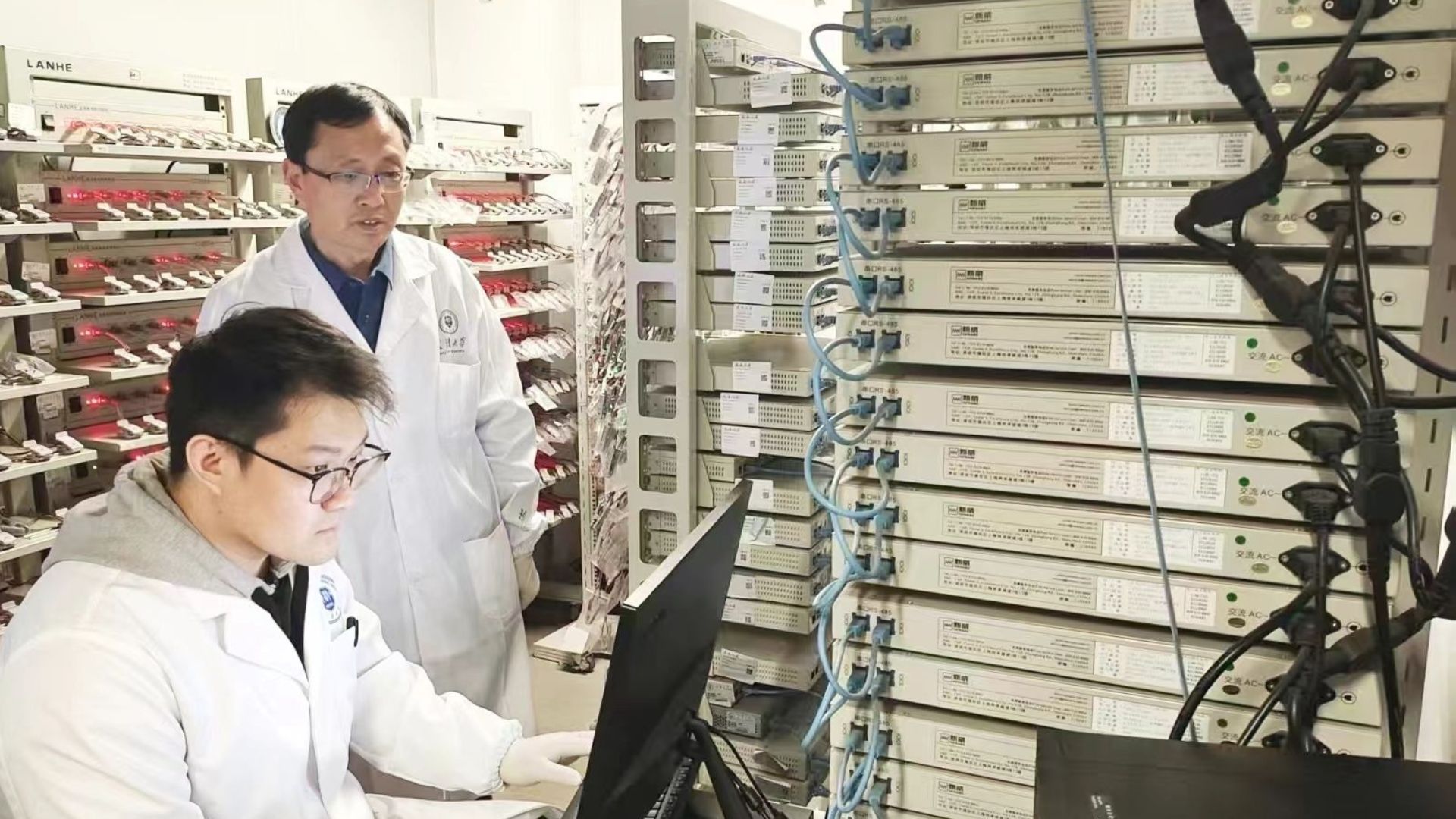
Chinese scientists have developed a new type of organic lithium-ion battery that could change the future of energy storage.
The new battery is safer, more flexible, and more durable than many existing lithium-ion systems.
The technology was jointly developed by researchers from Tianjin University and South China University of Technology. Their findings were published in the international journal Nature.
The research team was led by Professor Xu Yunhua from Tianjin University. The team designed a new organic cathode material that improves energy density and charging speed. This finding solves key problems that have long limited organic batteries.
Why Organic Batteries Matter
Commercial lithium-ion batteries usually use inorganic cathode materials. These often contain metals like cobalt and nickel. While effective, these materials have several drawbacks.
Cobalt and nickel are limited in supply. Mining them can cause environmental damage. There are also concerns about safety, especially under extreme conditions. In addition, traditional batteries are rigid and may lose performance in very hot or very cold environments.
READ ALSO: https://modernmechanics24.com/post/pentagon-lucas-ready-iran-strike-role/
To overcome these limitations, scientists worldwide have been exploring organic electrode materials. Organic materials are abundant and more environmentally friendly. They are lightweight and can be designed with flexible molecular structures.
Researchers often call organic materials the green battery star of energy storage. But they face a major challenge. It has been difficult to achieve high energy density while keeping fast lithium-ion transport and structural stability.
A New Polymer Cathode
To overcome this problem, the team developed a new n-type conductive polymer called polybenzofuran dione (PBFDO).
This material shows excellent electronic conductivity. It allows lithium ions to move quickly. It also offers high specific energy storage capacity.
WATCH: https://modernmechanics24.com/post/ehang-new-evtol-takes-off-public-debut/
Using this organic cathode, the researchers built a pouch-type lithium battery. The battery achieved an energy density of more than 250 watt-hours per kilogram (Wh/kg). In comparison, traditional lithium iron phosphate (LFP) batteries typically deliver 160-200 Wh/kg. This means the new organic battery can store more energy per unit weight.
Apart from this, the new battery can operate over a temperature range of minus 70 degrees Celsius to 80 degrees Celsius. Many conventional batteries struggle under such extreme conditions.
This wide temperature range makes the battery suitable for harsh environments. It could be useful in cold regions, hot climates, and even aerospace applications.
READ ALSO: https://modernmechanics24.com/post/fraunhofer-rmit-advanced-3d-metal-print/
The battery also showed excellent mechanical strength. During tests, the organic cathode kept its structure and full capacity even when bent or compressed.
As for the safety concern, the Ah-level pouch battery passed a puncture test. This test checks whether a battery catches fire or explodes when pierced.
The new battery did not ignite or explode. It maintained stable performance. This demonstrates strong resistance to thermal runaway, a major safety concern in lithium batteries.
Professor Xu Yunhua says, “This research breaks through the traditional constraints of battery technology in terms of resource dependence and environmental impact.” He adds, “It matches the energy density of commercial batteries and offers superior safety and a much wider operational temperature range.”
The research team is already working to scale up the technology, making it ready for practical application. They plan to establish a pilot-scale manufacturing line for organic batteries. This step could help move the innovation from the laboratory to the market.
The scientists are also optimizing manufacturing processes and exploring partnerships with industry.
The new organic battery opens doors to many applications. It could power flexible electronics and wearable devices. It may also support lightweight and adaptable energy storage systems.
WATCH: https://modernmechanics24.com/post/china-largest-offshore-solar-project/
The material is both flexible and durable. Because of this, it aligns well with next-generation technologies that require safe, bendable power sources.
As the world moves toward clean energy and sustainability, safer, greener battery solutions are becoming important. Organic-based batteries could offer a strong alternative to traditional inorganic lithium-ion systems.
With eco-friendly materials, high performance, and enhanced safety, this innovation marks a significant step forward. The innovation shows how academic research can drive real change. Their experiment brings the global energy storage industry closer to a safer, more sustainable future.