China’s fast-growing nuclear power sector is facing serious scrutiny after official reports revealed at least 200 cases of construction flaws and operational problems between 2011 and 2024.
The findings have prompted authorities to call for stronger safety measures across the industry, raising concerns about whether speed has taken priority over safety.
The issues span multiple nuclear facilities across the country. They include design flaws, poor construction practices, and operational mistakes. If these problems had gone unnoticed, they could have led to serious accidents.
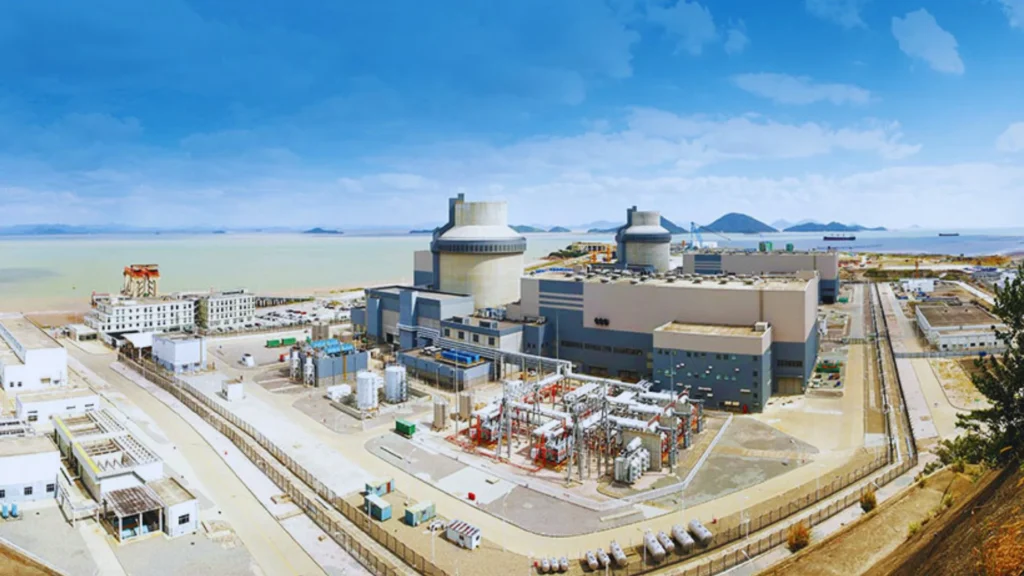
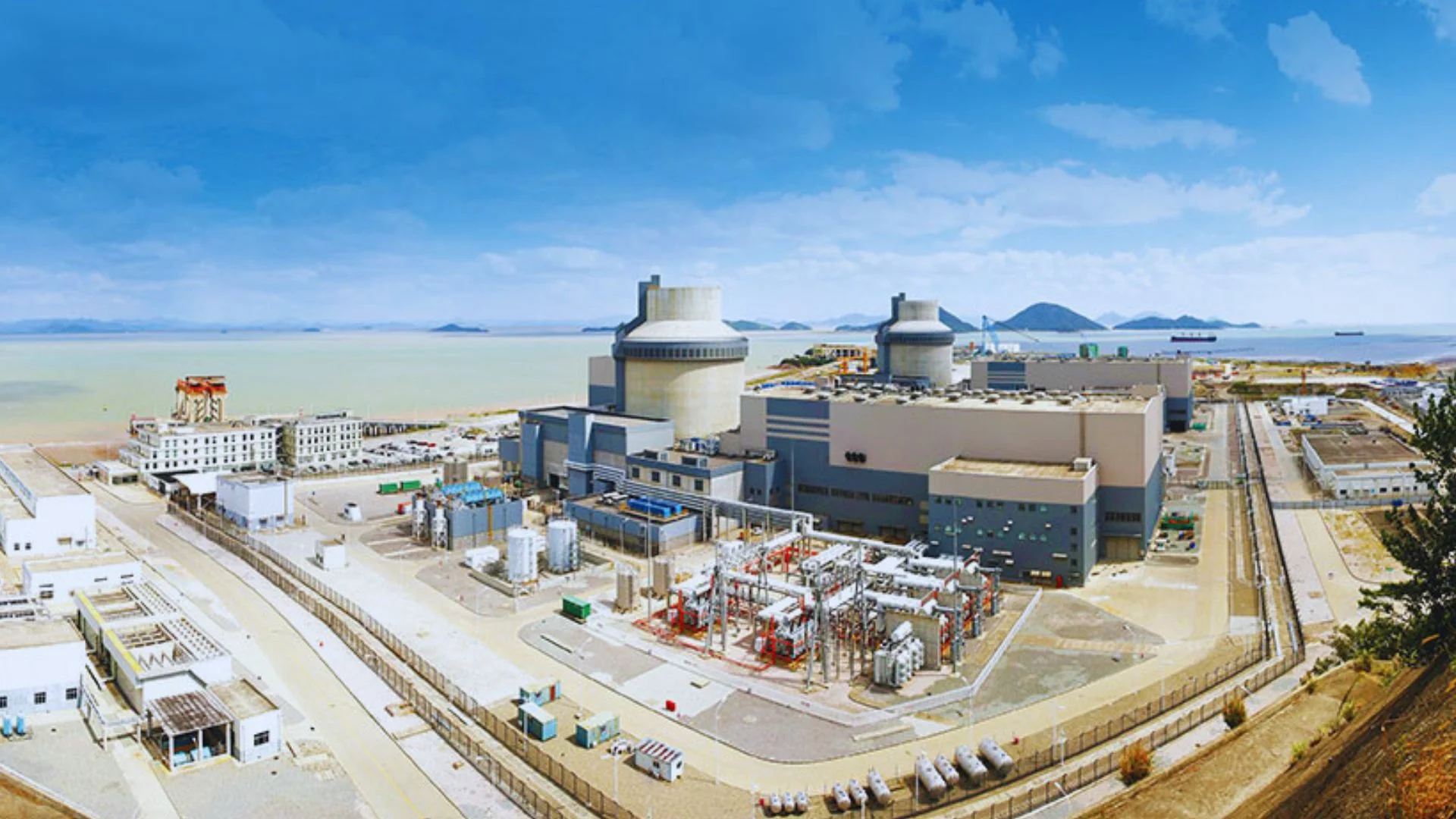
A key concern involves the AP1000 reactor, a next-generation design developed by Westinghouse Electric Company. China adopted this advanced reactor technology at major nuclear sites, including Sanmen in Zhejiang Province and Haiyang in Shandong Province. However, reports show that defects were found in the main piping systems of these plants.
READ ALSO: UK and France Launch Study for Next-Generation Air-to-Air Missile to Replace Meteor
Authorities discovered irregularities in the thickness and curvature of the pipes, which are essential for reactor safety. These flaws forced regulators to step in and order thorough inspections.
As a result, both projects faced significant delays. The Sanmen plant, originally scheduled to begin operations in 2013, began operations only in 2018. The Haiyang plant also saw its launch pushed from 2014 to 2018.
The problems were not limited to these two facilities. At the Hongyanhe nuclear plant in Liaoning Province, workers discovered abnormal deformation in a backup tank used for reactor cooling in February 2013.
Investigations revealed that construction did not follow approved designs. The safety authority directly criticized the plant’s operator, saying its ‘lack of safety awareness’ was to blame.
WATCH ALSO: Humanoid robot folds towel autonomously after observing human
Earlier, in 2011, the Ningde nuclear plant in Fujian Province reported leaks in heat transfer tubes during pressure tests. These tubes are vital for transferring heat safely within the reactor system. Similar defects were later found at four other nuclear sites, indicating a broader pattern rather than isolated incidents.
Regulators did not hold back in their assessment. They said operators lacked experience and technical ability, and criticized them for wasting large amounts of labor and materials during inspections and repairs.
Other troubling findings add to the concern. At the Taishan nuclear plant in Guangdong Province, the concrete used in construction failed to meet the required standards. Weak concrete can compromise the structural integrity of critical facilities.
At the Fuqing nuclear complex in Fujian, investigators found a foreign object left inside a reactor. In another case at the same site, workers ignored operational guidelines and damaged important equipment. These incidents highlight lapses not just in design, but also in basic discipline and quality control.
China had already taken a cautious approach after the Fukushima nuclear disaster in Japan. Following that event, Beijing temporarily halted new nuclear projects and carried out safety reviews. Construction resumed in 2012 after updated checks.
Since then, the country has moved aggressively to expand its nuclear energy capacity. By late 2025, China had 59 operational nuclear reactors, making it the third-largest nuclear power producer in the world after the US and France. With dozens more reactors under construction or approved, China is expected to surpass all other countries and become the world’s largest nuclear power producer by 2030.
However, this rapid expansion is now raising serious questions.
READ ALSO: ASU Air Muscles Let Robots Lift 100x Weight; No Wires, No Limits, Just Power
Hajime Matsukubo of the Citizens’ Nuclear Information Center in Japan warned that China’s safety management system may not be keeping pace with its growth. He said there are concerns about whether enough knowledge and experience have been built up to handle such complex projects.
He added, “Compared with the United States, Europe, and Japan, nuclear plants in China are generally completed in a shorter time and at lower cost.” He argued that this could lead to shortcuts during construction, as workers try to meet tight deadlines.
Matsukubo urged Chinese authorities to improve transparency and share more detailed information about their nuclear facilities with the global community.
WATCH ALSO: China’s new massive battle tank takes part in live-fire test
Yuki Kobayashi, a senior researcher at the Sasakawa Peace Foundation, offered another perspective. He suggested that some of the construction problems may stem from difficulties in transferring advanced nuclear technology from foreign partners to domestic teams.
As China continues its nuclear expansion, these findings highlight a critical challenge. Building reactors quickly is one thing, but ensuring they are safe, reliable, and built to the highest standards is another. The coming years will test whether China can balance ambition with accountability in one of the world’s most sensitive and high-stakes industries.