A new U.S. Department of Defense report warns that China’s People’s Liberation Army Navy (PLAN) aims to build the largest carrier fleet in the Indo-Pacific since World War II, targeting a total force of nine aircraft carriers by 2035. The ambitious plan, outlined in the annual China Military Power Report, would triple Beijing’s current carrier strength and significantly expand its power projection capabilities within the next decade.
The balance of naval power in the Pacific is shifting, and the pace is accelerating. According to the latest assessment from the Pentagon, China is not just modernizing its navy—it is embarking on a historic shipbuilding spree focused on aircraft carriers, the ultimate symbols of global military reach. The definitive report, released to Congress, states clearly: “The PLAN aims to produce six aircraft carriers by 2035 for a total of nine.” This would represent the most significant carrier build-up in the region in over 80 years, directly challenging U.S. naval primacy.
China currently operates three carriers: the Liaoning (16), Shandong (17), and the newly commissioned Type 003 Fujian (18). The Fujian, highlighted in the Pentagon report as a “key modernization development,” is a game-changer. At approximately 80,000 tons and equipped with an electromagnetic catapult system (EMALS), it is the largest warship ever built outside the United States and catapults Chinese naval aviation into a new era. This technology allows its air wing, expected to include stealthy J-35 fifth-generation fighters and KJ-600 early warning aircraft, to launch with heavier fuel and weapons loads over greater distances than its ski-jump-equipped predecessors.
READ ALSO: https://modernmechanics24.com/post/robot-companion-for-lonely-kids/
The strategic implications are profound. A fleet of nine carriers would provide China with a continuous, rotational presence in multiple contested theaters simultaneously, such as the South China Sea and waters near Taiwan. The Pentagon report notes that China has already deployed its carriers in exercises simulating a blockade of Taiwan, presenting “a challenge to potential third-party access during a conflict.” This capability complicates U.S. and allied calculations for responding to a regional crisis, as reported in the Department of Defense’s annual assessment.
The expansion doesn’t stop with dedicated aircraft carriers. The report also details the coming Type 076 class of amphibious assault ships, which will feature an electromagnetic catapult designed specifically for launching and recovering large, fixed-wing drones. The lead ship, Sichuan (51), began sea trials this fall. While not full-deck carriers, these “drone carriers” will significantly augment the PLAN’s organic aviation and reconnaissance capabilities, creating a more distributed and resilient fleet architecture.
WATCH ALSO: https://modernmechanics24.com/post/us-deadly-strike-isis-nigeria/
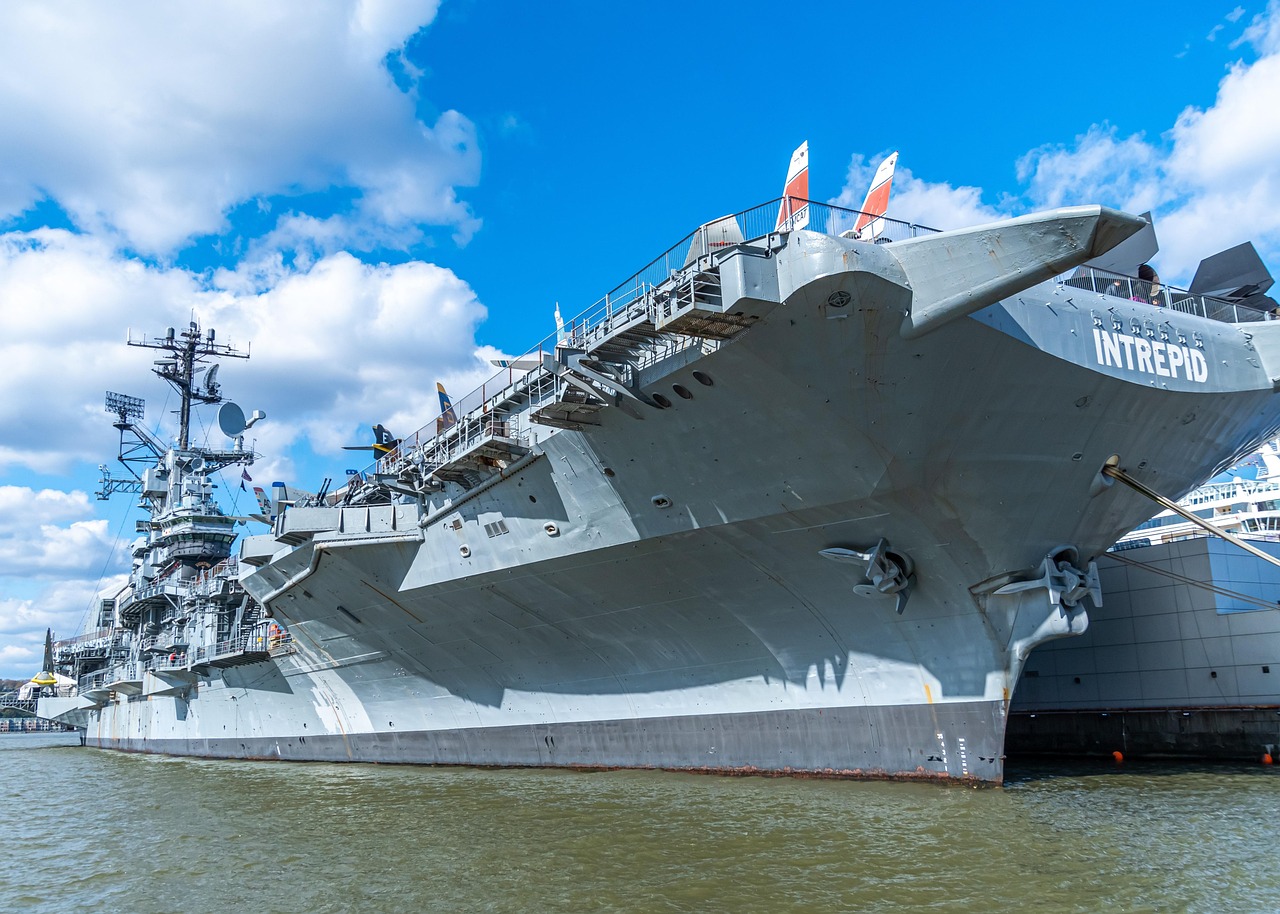
This planned surge comes as the United States strives to maintain its own carrier mandate. Congress requires the U.S. Navy to operate a fleet of at least 11 nuclear-powered carriers, currently composed of Nimitz and new Ford-class vessels. The U.S. maintains a forward-deployed carrier in Japan and routinely rotates others through the Indo-Pacific. However, China’s rapid growth narrows the numerical gap and stretches U.S. strategic attention. The report underscores that regional allies like Japan and South Korea are also pursuing their own carrier aviation programs, indicating a broader regional naval arms race.
The next step in China’s plan is already underway: the Type 004 carrier. While details are scarce, U.S. intelligence indicates work began this year, and previous reports from the Associated Press suggest it will likely be China’s first nuclear-powered aircraft carrier, a critical step for extended blue-water operations. If the Pentagon’s assessment holds, the next ten years will see the waters of the Indo-Pacific become increasingly crowded with flat-tops, setting the stage for a new era of great power naval competition defined not by a single flagship, but by rival carrier strike groups vying for dominance.
READ ALSO: https://modernmechanics24.com/post/vestas-390mw-offshore-wind-south-korea/