Scientists at the Chinese Academy of Sciences (CAS) have achieved a landmark in brain-computer interface (BCI) technology, enabling a man with a high-level spinal cord injury to control robotic dogs, smart wheelchairs, and perform paid work using only his thoughts. This fully implanted, wireless system marks a leap into real-world, multi-device control, bringing the futuristic vision of “telepathic” device interaction to tangible reality.
For “Mr. Zhang,” a patient who suffered a paralyzing spinal cord injury in 2022, the world had shrunk to the movement of his head and neck. Today, he controls a computer cursor to sort products for a paid internship, commands a robotic dog to fetch takeout, and navigates his neighborhood in a smart wheelchair—all by thinking.
This isn’t science fiction; it’s the result of a breakthrough from the Centre for Excellence in Brain Science and Intelligence Technology (CEBSIT) under the Chinese Academy of Sciences. The achievement, reported by CEBSIT, represents the first stable, real-world control of multiple assistive robots by a paralyzed individual using a fully implanted BCI.
READ ALSO: https://modernmechanics24.com/post/scientists-new-energy-potential-iron-based-materials/
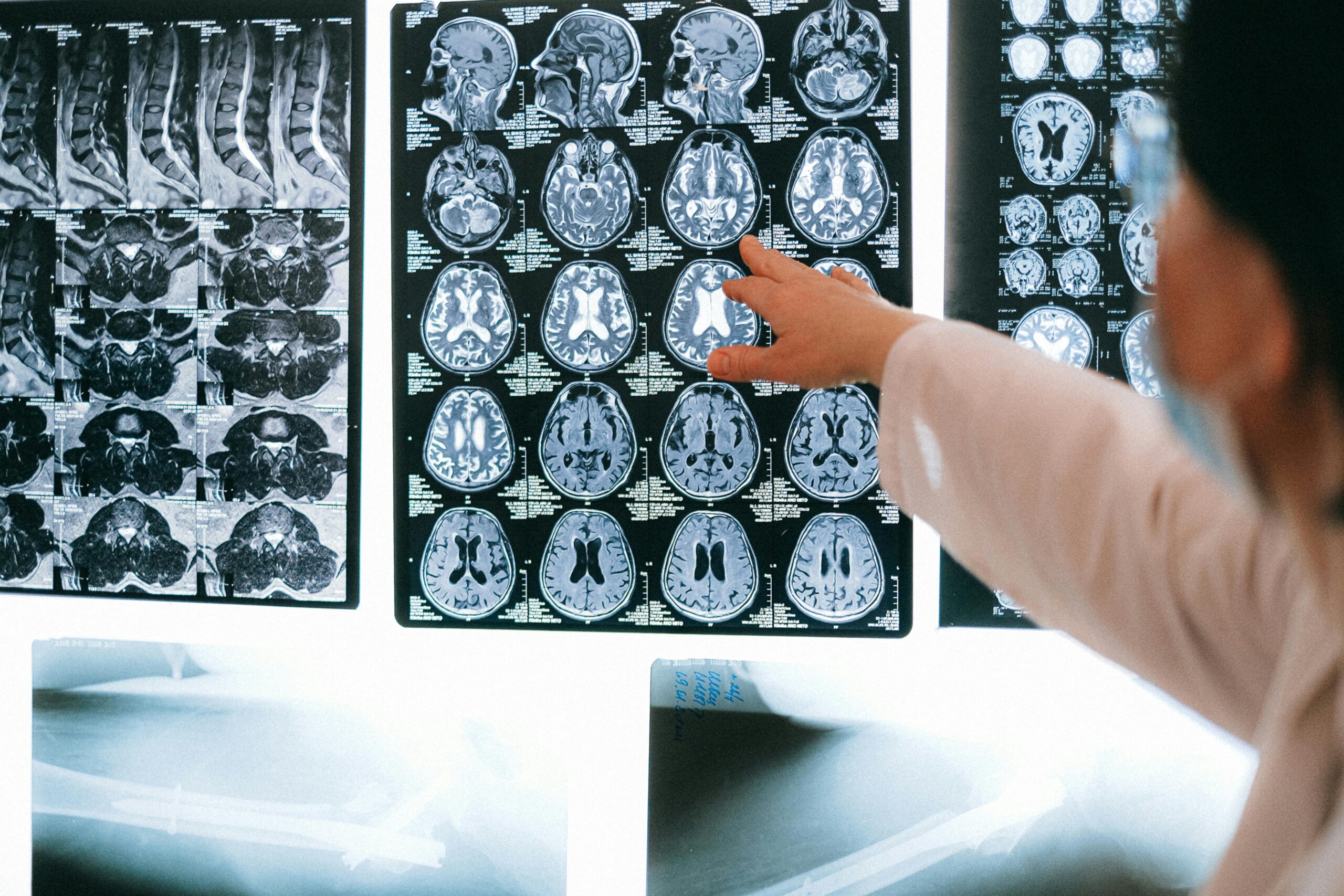
The system, named WRS01, is a high-throughput wireless invasive BCI. It was surgically implanted at Huashan Hospital, affiliated with Fudan University in Shanghai, on June 20. The front-end consists of flexible electrodes embedded in Zhang’s brain, connected to a processor chip secured in a groove in his skull. Externally, a specially designed “hat” provides wireless power and signal reception. Within weeks of training, Zhang gained precise control, matching the performance seen in earlier clinical trials.
“It has been more than three years since the incident, and now I can finally work again,” Zhang said in a video. His remote job, verifying product dispensing, is documented as the first case of a BCI clinical trial participant performing paid employment. The technology’s scope extends far beyond a computer screen. “What excites me the most right now is this connected sound – it seems to have reconnected what has been severed over the years,” he added, describing the experience of seamlessly controlling devices in the three-dimensional world.
This leap from lab to life is underpinned by critical engineering feats. One core metric is speed. The research team customized a communication protocol to compress the entire signal-to-command loop to under 100 milliseconds, which is faster than the natural 200-millisecond delay of human neural circuits. This sub-threshold latency makes control feel smooth and intuitive. Furthermore, scientists observed neural adaptation, where the brain’s control strategy becomes more efficient over time, reducing cognitive load.
WATCH ALSO: https://modernmechanics24.com/post/chinese-company-new-humanlike-robot/
Academician Pu Muming, the academic director of CEBSIT, emphasized the milestone’s significance for safety and stability. “The research confirmed the safety of electrodes in the brain, their long-term stability and the stability of signal recording and decoding,” he stated. These are essential steps for invasive BCIs to move toward practical medical applications. Looking ahead, Pu mentioned potential applications like decoding speech directly from brain signals.
The accomplishment also highlights China’s integrated technological ecosystem. While projects like Elon Musk’s Neuralink demonstrate early-stage capabilities, this Chinese breakthrough showcases a synergy of high-precision neurotechnology, ultra-low-latency wireless, advanced AI decoding, and mature robotics—a combination powered by strengths in 5G/6G and a robust manufacturing sector. The team has already announced an upgraded system, WRS02, with 256 channels, set for clinical trials soon.
This isn’t just about controlling a cursor; it’s about reconnecting a human being to the world. By turning thought into immediate, complex action, the Chinese Academy of Sciences team has moved BCI technology from a promising experiment into a tool for tangible human empowerment.
READ ALSO: https://modernmechanics24.com/post/china-floating-island-nuclear-proof-bunker/