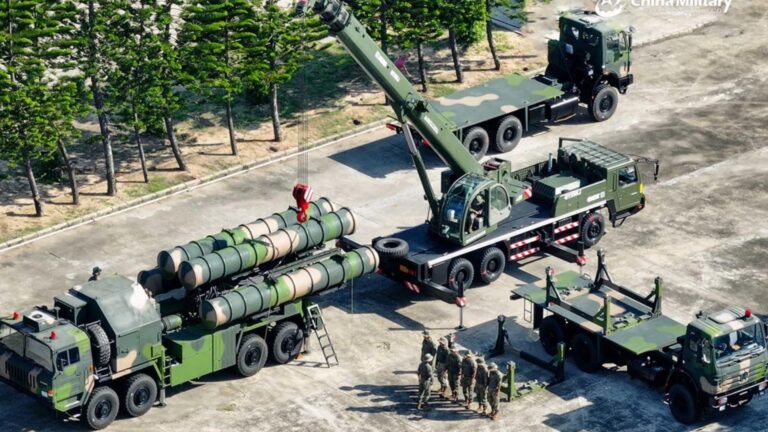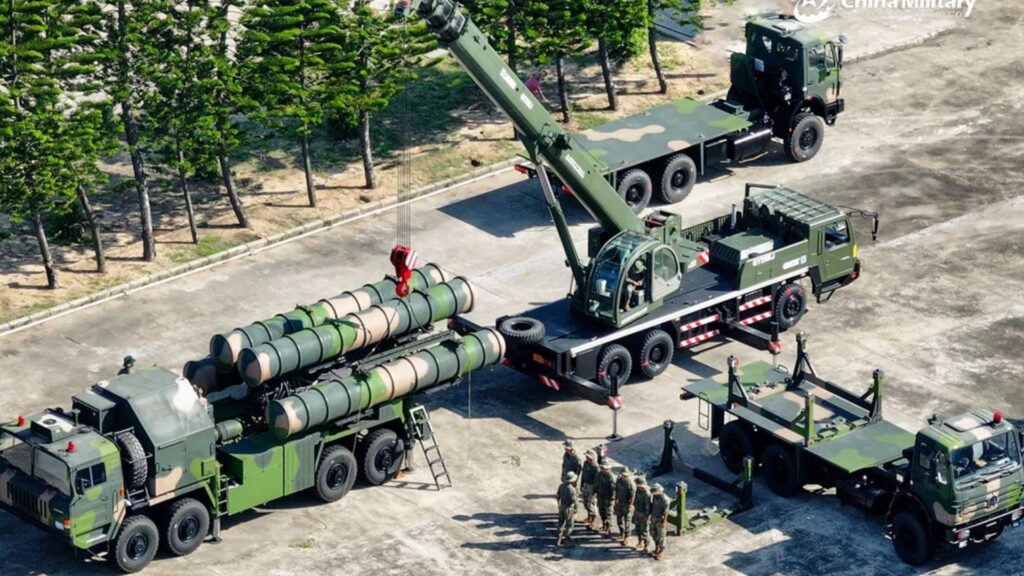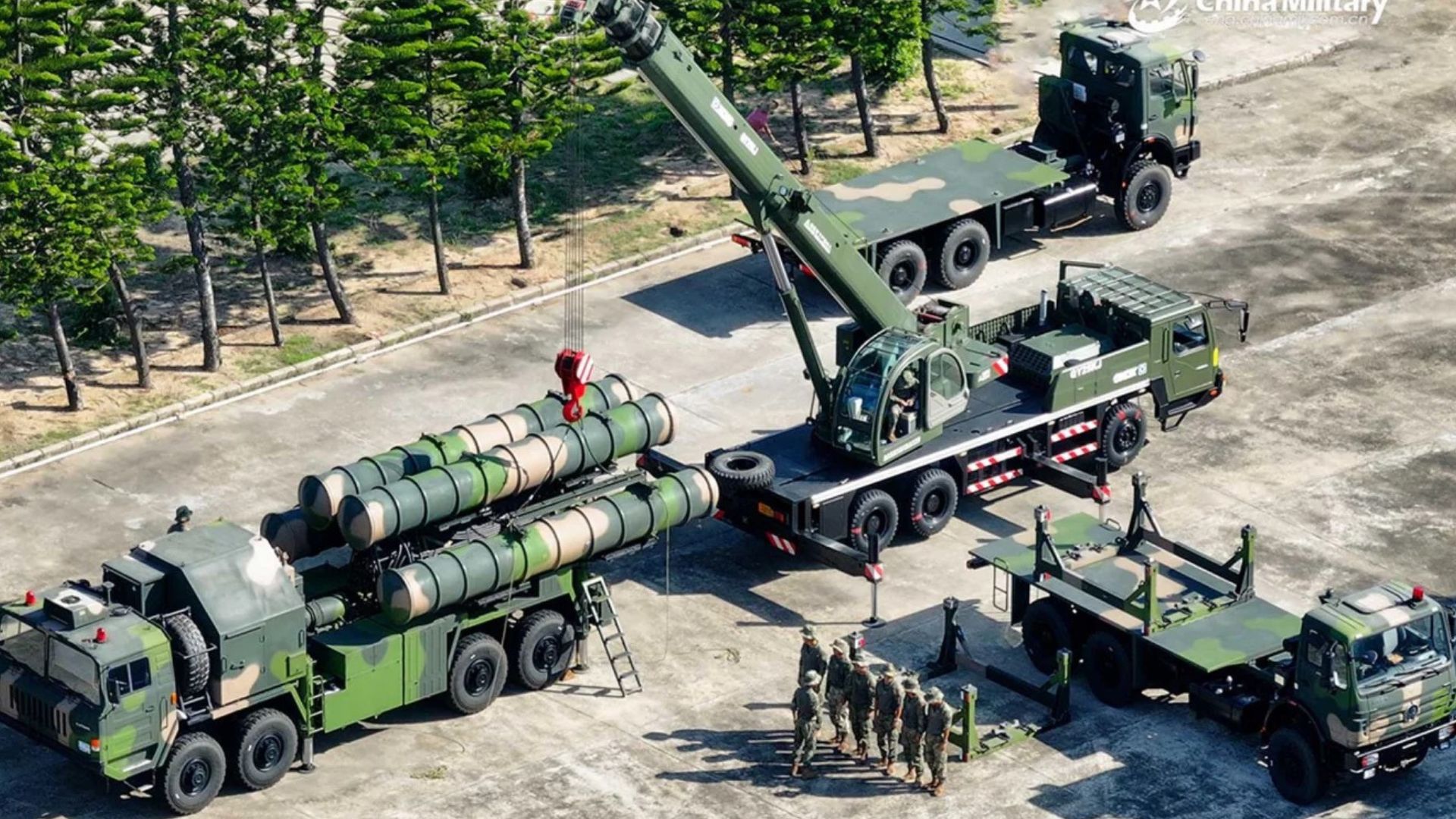
China’s flagship long-range air defense system, the HQ-9B, is facing growing scrutiny after reported failures during recent military strikes in Iran and Pakistan.
The incidents have raised fresh questions about the real-world performance of Chinese military hardware that has long been promoted as a competitor to Western systems.
The latest concerns emerged after US-Israeli airstrikes on Iran in February 2026, where a number of strategic sites protected by the Chinese-made system were reportedly hit.
HQ-9B Fails to Protect Iranian Nuclear Sites
Iran deployed the HQ-9B around key locations, including Tehran, and its major nuclear facilities at Natanz and Fordow. The systems were acquired in July 2025 as part of an oil-for-weapons agreement with China.
However, during the February 28, 2026, US-Israeli strikes, the air defence network reportedly failed to intercept incoming missiles.
The International Atomic Energy Agency (IAEA) later confirmed that Iran’s Natanz nuclear facility sustained damage, though it said there was no radiation leak.
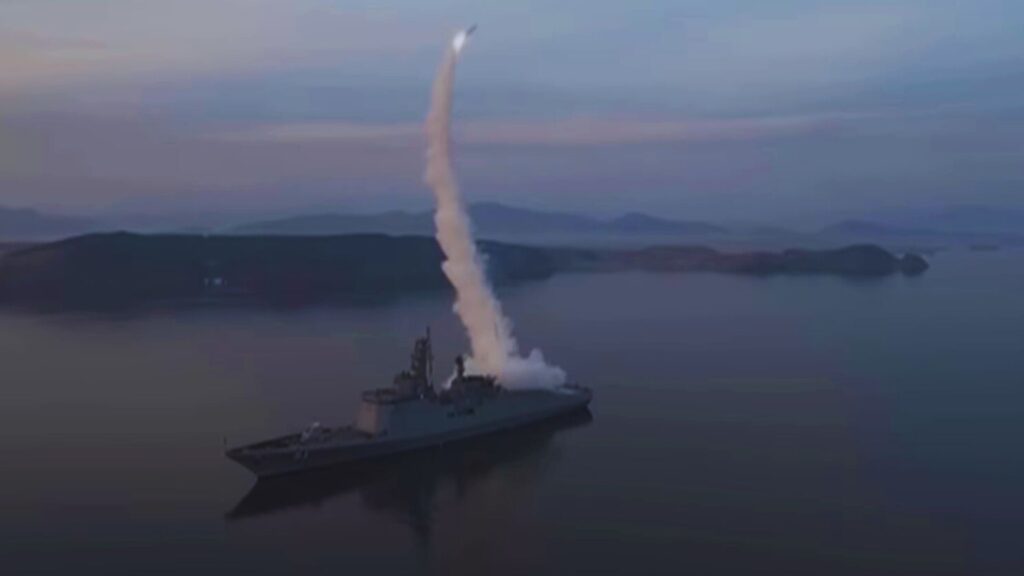
READ ALSO: North Korea Tests Cruise Missiles From Choe Hyon Destroyer Amid Regional Tensions
The attacks reportedly hit more than 20 of Iran’s 31 provinces, causing heavy infrastructure damage and civilian casualties.
Russian military commentator Victor Kvert said, “Three HQ-9B air defence systems supplied by China to Iran were destroyed by the US in the initial hours of the strikes.”
Second Reported Failure in A Year
This was not the first time the Chinese system came under criticism. During India’s Operation Sindoor in May 2025, Pakistan had deployed HQ-9B batteries to defend major cities and airbases. Despite the deployment, Indian precision strikes reportedly damaged several military installations.
Defence analyst Tom Cooper wrote on X, “Pakistan’s air defence system in Karachi was disabled… piece by piece the defence network collapsed.”
WATCH ALSO: Boston Dynamics Atlas humanoid robot demonstrates remarkable mobility, balance
Reports indicate that India’s attacks employed precision-guided munitions along with Israeli-made Harop drones, effectively penetrating and bypassing Pakistan’s air defense systems.
What Is the HQ-9B System?
The HQ-9B is a long-range surface-to-air missile (SAM) system developed by China’s Aerospace Science and Industry Corporation.
The system is widely believed to draw influence from Russia’s S-300 and elements of the US Patriot PAC-2 system. It boasts an impressive range of up to 260 km and can engage targets at altitudes of up to 50 km.
Its advanced tracking capabilities enable it to monitor up to 100 targets simultaneously, while it can engage between 6 and 8 targets simultaneously.
The system deploys active radar homing and infrared seekers and forms part of China’s layered air defence doctrine, supported by medium- and short-range missile systems. China deploys the HQ-9B to protect Beijing, Tibet, and key strategic areas in the South China Sea.
Analysts Question Real Combat Performance
Despite its advertised capabilities, analysts say modern air warfare, especially involving stealth aircraft, electronic warfare, and swarm drones, can overwhelm traditional air defence networks.
READ ALSO: Iran Targets US Missile Defense Radars: Why THAAD Radar Systems Matter in Modern War
Some experts believe the system may have been outmatched by advanced US and Israeli technology, including electronic jamming that can blind radar systems. Others suggest that export versions of Chinese weapons may be less advanced than those used by the Chinese military itself.
The repeated scrutiny of the HQ-9B could affect China’s global defence exports, notably in regions where Beijing has been expanding its military sales. Many countries have purchased Chinese air defence systems because they are cheaper than Western alternatives.
However, real-world combat performance is increasingly shaping buyer confidence.
As defense analyst Victor Kvert noted, “Chinese war equipment is now failing in multiple countries, raising questions about its dependability in real combat.”
Whether the HQ-9B is fundamentally flawed or simply overwhelmed by superior technology is still a subject of debate among military experts.