China has released the world’s first open dataset combining visible and infrared images of ships, a move that could significantly improve how drones and surveillance systems detect vessels at sea.
The dataset, known as Dual-Modal Ship Detection (DMSD), includes more than 2,000 paired images and nearly 20,000 labeled ship instances. It is designed to help machines better recognize ships in difficult maritime environments.
The study was published in January in the Journal of Radars by a team from the Naval Aeronautical University, Harbin Engineering University, and the Chinese Academy of Sciences.
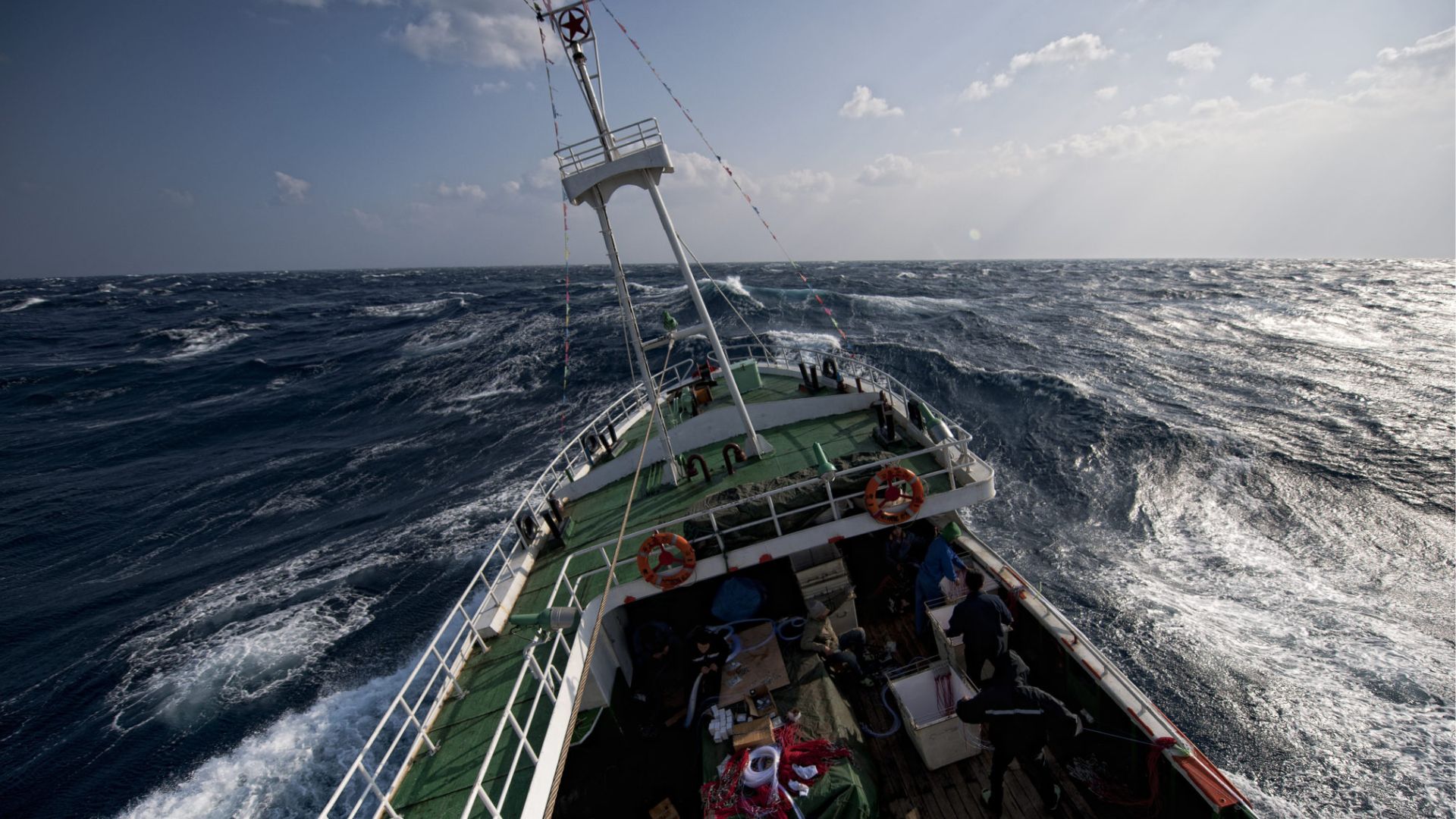
Unlike land-based object detection, identifying ships at sea is far more complex. Glare from sunlight, changing weather, waves, and long distances can distort images. These factors often reduce the accuracy of detection systems.
READ ALSO: US Army’s AH-64 Apache Gets a Powerful Upgrade And It Changes the Aerial Warfare
The challenge becomes even greater at night or in poor visibility, where radar signals may be weak or disrupted. In such cases, combining infrared and visible imaging can provide a clearer picture.
The importance of accurate detection was highlighted recently when Iran claimed it had targeted the USS Abraham Lincoln near the Strait of Hormuz. The US rejected the claim, saying the weapons used did not come close to the vessel. The incident showed how difficult it is not just to strike, but to locate and track moving ships under real-world conditions.
Researchers behind the new dataset say existing resources fall short. Most available maritime datasets rely on a single image type, usually infrared. For example, the MassMIND dataset includes over 22,000 ship instances but only uses infrared images at lower resolution.
In contrast, the DMSD dataset combines high-resolution visible images (1920×1080) with aligned infrared images (640×512). This pairing enables systems to learn from both types of data simultaneously.
READ ALSO: Lockheed Martin Unveils Grizzly Container Firing Hellfire Missiles Covertly
“Data was collected using multiple sensors, including radar, visible-light cameras, and infrared systems,” said lead researcher Long Gao. He added that the sensors were mounted on both coastal and airborne platforms.
The images were captured in coastal waters off Yantai, eastern China. They cover a wide range of conditions from clear skies to rain, fog, and low-light environments. The dataset also includes images taken at different times of day, such as noon, dusk, and night.
This variation is important. It helps train systems to perform reliably in real-world conditions, where lighting and weather can change quickly.
The research team said it plans to expand the dataset further. Future versions may include radar, synthetic aperture radar (SAR), and inverse SAR data, creating a more complete multimodal resource.
WATCH ALSO: Humanoid Robots Are Learning to Work Like Humans in Warehouses
The decision to make such a dataset publicly available is unusual, given its potential military applications. While the researchers describe it as a contribution to computer vision and remote sensing, they did not explain why it was released or how it might be used beyond research.
Even so, experts believe the dataset could play a key role in improving maritime surveillance, especially in challenging environments where traditional systems struggle.