In the vast, open wilderness of the Gobi Desert outside Golmud, China has energized the world’s largest liquid-air energy storage facility—a “super-cold air battery” capable of powering 30,000 homes for a year. The plant, which can run for 10 hours straight per cycle, represents a monumental step in solving renewable energy’s biggest flaw: its intermittency.
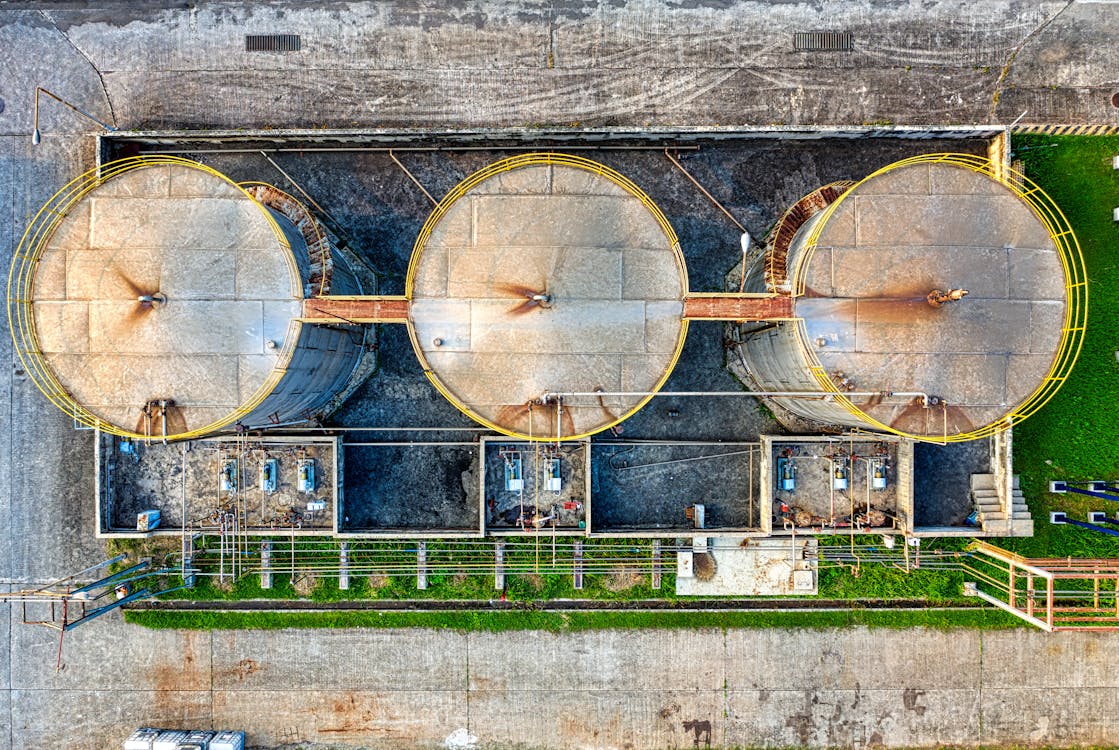
The facility, developed by China Green Development Investment Group and the Technical Institute of Physics and Chemistry of the Chinese Academy of Sciences (TIPC-CAS), operates on a fascinating principle. It uses excess solar or wind power to compress and super-cool air to a frigid -194 degrees Celsius (-317 Fahrenheit), turning it into a liquid stored in massive white tanks. When the grid needs power, the liquid is released, expands by more than 750 times to drive turbines, and generates electricity. According to a Science and Technology Daily report, this “Super Air Power Bank” can deliver a massive 600,000 kilowatt-hours (kWh) per discharge and will produce about 180 million kWh annually.
This technological leap addresses the core challenge of the green transition. “Photovoltaic and wind power generation have characteristics such as randomness, volatility and intermittency,” Wang Junjie, a researcher with TIPC-CAS, told the Beijing Daily. “These lead to supply-demand peaks and valleys, affecting grid stability.” The Gobi Desert plant acts as a giant shock absorber for the grid. It soaks up surplus green energy when the sun shines and wind blows, then releases it on calm, cloudy nights or during peak demand, smoothing out the power supply. Its performance metrics are world-leading, achieving over 95 per cent cold storage efficiency and a round-trip efficiency exceeding 55 per cent, as stated by Wang Junjie.
READ ALSO: https://modernmechanics24.com/post/china-warns-japan-could-build-nuclear/
The engineering behind this “battery” is as impressive as its scale. The process involves purifying and pressurizing air, chilling it into a liquid in a specialized cold box, and storing it in insulated tanks. The release cycle cleverly integrates waste heat from industrial sources to warm the expanding air, boosting the system’s overall strength and efficiency. Located adjacent to a completed 250,000-kilowatt photovoltaic farm, the plant is part of an integrated clean energy hub. Looking ahead, Wang Junjie sees even greater potential, suggesting that cold energy wasted at coastal liquefied natural gas (LNG) receiving stations could be integrated to push system efficiency higher.
This achievement has been recognized as one of China’s “Top 10 Scientific and Technological Achievements,” announced at the Zhongguancun Forum in Beijing. While other nations like Britain are pursuing similar technology—with a plant under construction in Carrington, Manchester—the Chinese facility is currently in a class of its own in terms of capacity. The UK project aims for 50 megawatts of power and 300 megawatt-hours of storage, significantly smaller than the Gobi Desert giant. By building this unprecedented storage capacity, China is not just generating green power but is mastering the art of banking it, turning the unpredictable rhythms of nature into a reliable, dispatchable source of electricity for its grid and setting a new global benchmark for energy storage.
READ ALSO: https://modernmechanics24.com/post/humanoid-robot-towel-task/