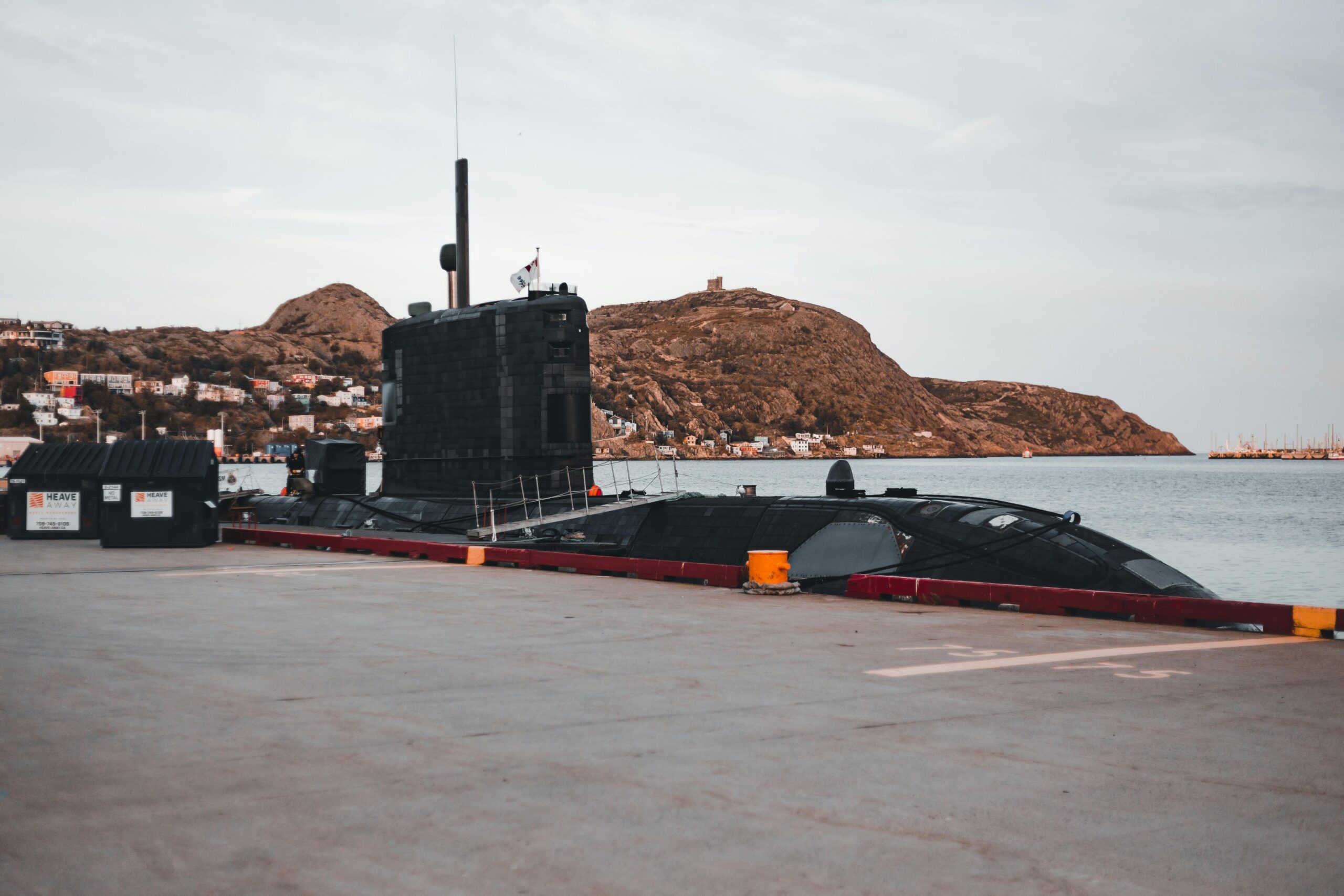
The British Royal Navy has officially taken ownership of the XV Excalibur, a massive 12-metre, 19-tonne autonomous submarine, accelerating the UK’s shift from experimentation to operational undersea warfare. Announced by the UK Ministry of Defence on December 11, 2025, this delivery marks a cornerstone of the Navy’s Atlantic Bastion concept for securing the North Atlantic with uncrewed systems.
Gone are the days of slow-moving defence projects. The formal handover of the Extra-Large Uncrewed Underwater Vehicle (XLUUV) known as XV Excalibur to the Royal Navy signals a new, urgent tempo in maritime technology. Developed in under three years through a partnership between the Submarine Delivery Agency (SDA) and UK firm MSubs Ltd, this isn’t just a prototype; it’s an operational test platform ready to redefine underwater strategy. Why the rush? Senior officials point directly to intensifying undersea competition, particularly in the North Atlantic, demanding a faster pipeline from concept to capability.
The sheer scale of Excalibur is groundbreaking. As the largest uncrewed underwater vessel ever trialled by the Royal Navy, its size allows it to carry significant payloads and undertake prolonged missions. But its true value lies in the profound operational lessons already learned. During Exercise Talisman Sabre in August 2025, the Navy achieved a strategic first: controlling Excalibur operating in UK waters from a remote console over 10,000 miles away in Australia. This wasn’t just a technical stunt; it was a live proof-of-concept for distributed, global undersea operations, a key pillar of the AUKUS security pact. It demonstrated how autonomous platforms can be managed across continents, extending reach without risking crewed submarines.
READ ALSO: https://modernmechanics24.com/post/tv-makers-ai-upgrades-smartphone-threat/
Beyond remote control, Excalibur is serving as a floating lab for disruptive technologies. In a world-first, it successfully trialed a cutting-edge quantum optical atomic clock called Tiqker, developed by UK quantum firm Infleqtion. This device, operated underwater aboard the XLUUV six months ahead of schedule, provides ultra-precise timing without GPS. For submarines lurking in contested depths, this means dramatically improved navigation accuracy, greater stealth, and longer endurance—directly enhancing the Atlantic Bastion goal of persistent, undetectable surveillance.
The platform’s performance has already exceeded expectations. Engineers involved told Army Recognition that during acceptance trials, key metrics like endurance, command-and-control responsiveness, and payload integration margins outperformed original specifications. This gives the Royal Navy more flexibility than anticipated for future missions, which could include intelligence gathering, seabed monitoring, or acting as a forward sensor node.
WATCH ALSO: https://modernmechanics24.com/post/youtuber-captures-lightning-in-a-bottle/
With ownership now transferred, Excalibur embarks on an extended sea trial phase through 2027. The focus will be on integrating it with the Navy’s crewed submarine fleet—the Astute-class and future Dreadnought-class boats—to develop new tactics. The goal is to understand how this silent, persistent robot can best complement the manned force, taking on dull, dirty, or dangerous tasks to keep human crews safe and effective.
As articulated by Defence officials involved in the program, the vessel is a pathfinder for the entire future of undersea warfare. Roman Köhne, Head of Rheinmetall’s Weapons and Munitions division, stated that this step “demonstrates the potential of determined industrial and technological cooperation in Germany in order to produce cutting-edge technology.” He emphasized that nationalizing this critical technology was a primary objective from the outset, aimed at ensuring “national sovereignty and security of supply in times of crisis,” as well as creating and maintaining high-tech jobs in Germany.
Excalibur is more than a single vehicle; it’s a statement of intent. It represents the UK’s commitment to leading in autonomous undersea technology, weaving together industrial innovation, AUKUS collaboration, and new operational doctrine. As one Royal Navy officer privately noted, autonomy is now seen not as a mere supplement, but as an integral component of future undersea dominance. The Atlantic Bastion is moving from PowerPoint to the proving grounds of the deep ocean.
READ ALSO: https://modernmechanics24.com/post/new-weakness-identified-in-common-hospital-bacterium/