Boston Dynamics has launched a major software and hardware update for its Spot quadruped robot and Orbit fleet management platform, introducing an AI system that learns from customer sites, a powerful new Spot Cam 2 payload with acoustic imaging, and the ability for Spot to autonomously open doors—even without an arm. The Update 5.1 release accelerates the robot’s transition from a advanced demo to an essential, multi-role industrial asset.
The iconic yellow robot just got a major brain and sensory upgrade. Boston Dynamics has rolled out its Spot and Orbit 5.1 update, packed with features that make the quadruped more autonomous, perceptive, and useful than ever before. At its core is an enhanced artificial intelligence system designed to continuously improve based on real-world use. According to the company’s announcement, the cloud-based Orbit AIVI (Artificial Intelligence Visual Inspection) models will now evolve by learning from the “most common and valuable inspections” Spot performs across global customer facilities.
This learning capability means new inspection models can be added without disrupting existing workflows. The improvements bolster existing tasks and add new ones, like detecting sight glass and pallets. Notably, the AIVI system now also uses images from Spot’s body and gripper cameras, allowing robots equipped with the Spot Arm to inspect dark, cramped spaces previously out of reach.
READ ALSO: https://modernmechanics24.com/post/navy-admiral-modular-frigate-construction/
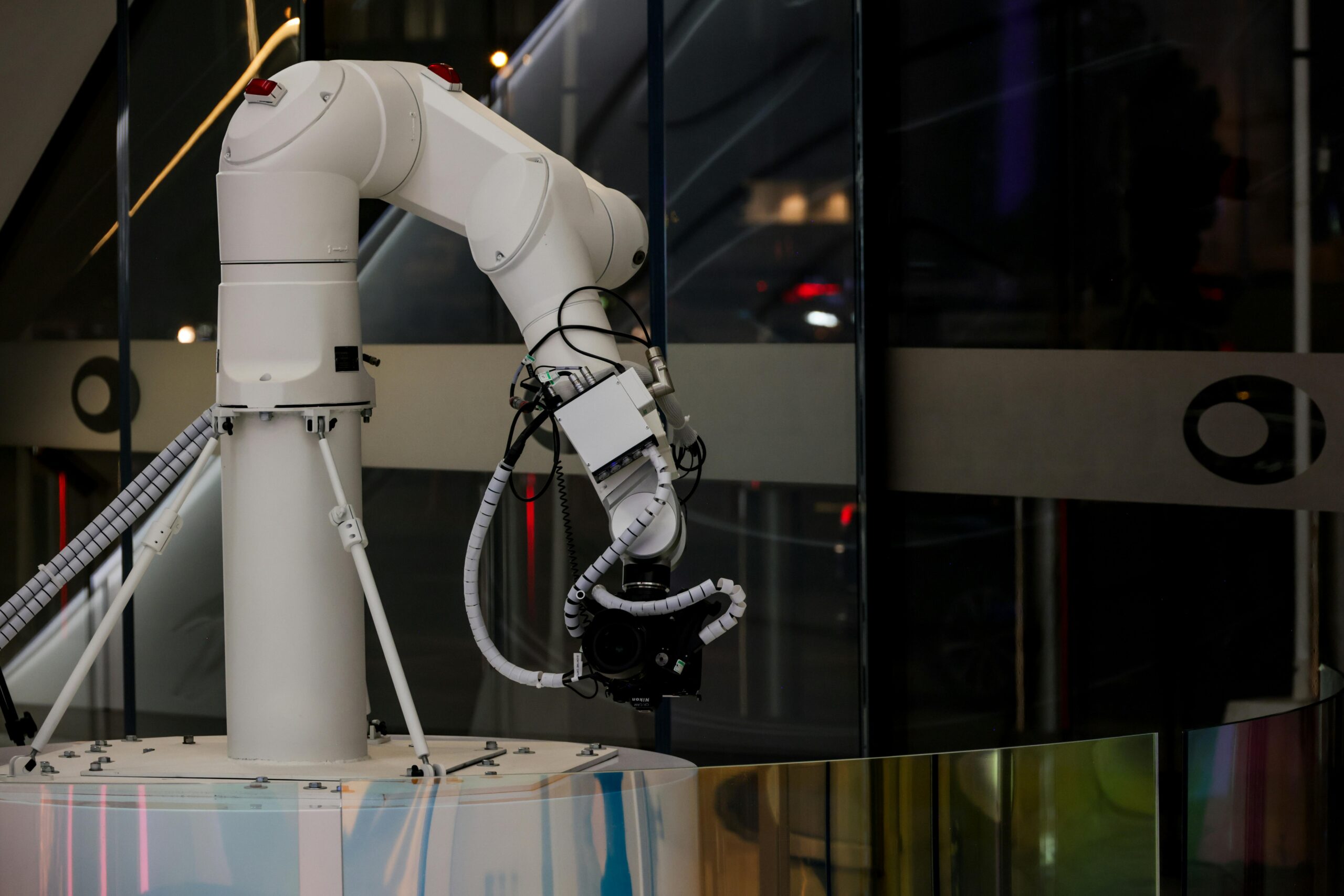
But seeing better is only part of the story. The company unveiled the Spot Cam 2, a significant hardware upgrade replacing the Spot Cam+IR. This new payload is a sensor powerhouse: it includes a 4K pan-tilt-zoom camera with 25x optical zoom, an integrated radiometric thermal camera, a 360-degree spherical camera, and ultra-bright LEDs. Crucially, its onboard accessory bay is compatible with acoustic imagers from Sorama and Fluke. This allows Spot to perform acoustic inspections, listening for leaks or abnormal vibrations in mechanical equipment and flagging changes over time.
Perhaps the most practically transformative new feature is Door Opening. Boston Dynamics has expanded its robot behavior library to allow Spot to autonomously navigate both motion-activated and access-controlled doors—without needing its robotic arm. After integration, Spot can add door-opening actions to its missions, vastly increasing its range within a facility. The feature, tested with 18 beta customers, has already successfully opened 2,500 doors.
WATCH ALSO: https://modernmechanics24.com/post/isro-gaganyaan-crew-parachute-validation/
Update 5.1 also formally introduces Security Patrol as a new mission type. If Spot detects a person during an off-hours patrol, it will pause, activate lights, capture images from all its cameras, trigger an alert, and then resume its path. This provides a mobile security layer for sensitive areas. The update also unlocks multi-modal inspections, where a single automated check can combine acoustic, thermal, and visual data into one unified report.
Alongside the Spot news, Boston Dynamics confirmed the product version of its Atlas humanoid robot is now available. Developed in partnership with parent company Hyundai Motor Group, Atlas stands 1.9 meters (6.2 ft) tall, has a reach of 2.3 meters (7.5 ft), and can handle repeated lifts of 30 kg (66 lb). Hyundai is the first customer, with plans to deploy Atlas at its manufacturing facilities this year.
With these updates, Boston Dynamics is systematically solving the practical barriers to large-scale robot deployment. Spot is no longer just a robot that can walk; it’s a learning, sensing, door-opening automated colleague that can see, hear, and patrol—bringing the promise of persistent, useful autonomy closer to reality.