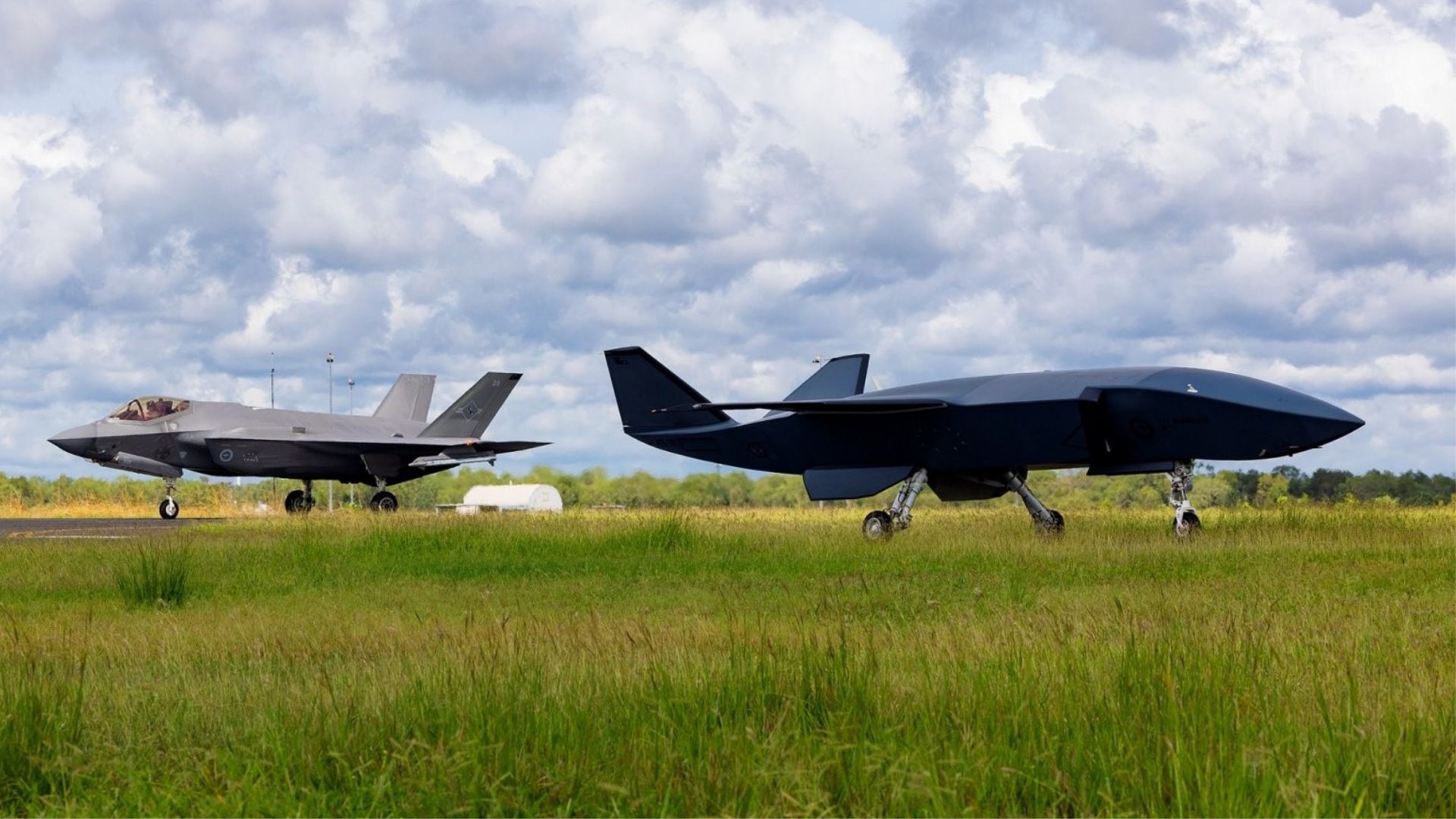
Boeing revealed new details about the next version of its MQ-28 Ghost Bat uncrewed combat aircraft and confirmed it is actively pursuing customers across the Indo-Pacific region.
The updates were shared by MQ-28 program director Glen Ferguson during the Singapore Airshow, as the drone moves closer to operational service with its launch customer, the Royal Australian Air Force (RAAF).
“The opportunities for collaborative combat aircraft in Southeast Asia are immense,” Ferguson said. “We are having conversations with many potential customers right now.”
The MQ-28 is designed as a “loyal wingman” aircraft that can fly alongside crewed fighters and command-and-control aircraft. It is developed by Boeing Defense Australia and is part of a broader push toward autonomous and collaborative air combat systems.
READ ALSO: https://modernmechanics24.com/post/kia-ev-electric-hatch-cold-test/
Australia already operates eight Block 1 MQ-28 aircraft, which are pre-production prototypes. The country has also ordered nine Block 2 aircraft so far, with six contracted last year and three ordered earlier. The Block 2 version is now in production and is intended to pave the way for operational use.
At the same time, Australia has contracted Boeing to develop the more advanced Block 3 version. Ferguson said Block 3 is the most ambitious upgrade yet.
One of the most significant changes is the addition of an internal weapons bay. Ferguson confirmed that the bay is sized to carry one AIM-120 AMRAAM air-to-air missile or two GBU-39 Small Diameter Bombs. It could also carry two GBU-53/B StormBreaker glide bombs.
“We provision for the weapons bay, but the system is modular,” Ferguson said. “Customers can integrate their own weapons if they choose.
He added that the open architecture allows operators to adapt the aircraft without heavy involvement from Boeing, something that appeals to countries seeking sovereign control over their systems.
WATCH ALSO: https://modernmechanics24.com/post/ula-atlasv-amazon-leo-success/
Although Block 1 and Block 2 aircraft do not currently have internal weapons bays, they could be retrofitted if required, Ferguson said.
In late 2024, a Block 2 MQ-28 carried out a landmark live-fire test using an externally mounted AMRAAM. During the trial, the drone worked with an RAAF E-7A Wedgetail and an F/A-18F Super Hornet to destroy an Australian-made target drone.
Boeing said the MQ-28 received only four main commands during the test. These were to take off, establish a combat air patrol, intercept the target, and fire the missile. The drone carried out all other actions autonomously.
“This showed how much autonomy the aircraft already has,” Boeing said.
Another key feature of the MQ-28 is its modular design. The nose section can be swapped out to carry different sensors and payloads. Block 2 aircraft have already flown with infrared search-and-track sensors, believed to be supplied by Leonardo.
For Block 3, Boeing is developing three or four new sensor payload options, though Ferguson refused to provide details.
The Block 3 aircraft will also be larger. Its wingspan will increase from 20 feet to 24 feet, boosting fuel capacity by about 30 percent. This will significantly extend the drone’s range.
READ ALSO: https://modernmechanics24.com/post/rolls-royce-smr-skanska-uk-aseismic-demo/
“One of the reasons for the bigger wing is range,” Ferguson said. “For Pacific missions, you obviously need range.”
There have also been hints that future versions could support aerial refueling, though Boeing has not confirmed this.
Ferguson said the MQ-28 is well-suited for the Indo-Pacific and attractive to allied air forces in the region. When asked about specific discussions, he confirmed talks with Japan.
Australia and Japan agreed last year to expand defense cooperation on the MQ-28. Japan’s Air Self-Defense Force is expected to observe flight testing and take part in training activities this year.
The RAAF is expected to introduce the Block 2 aircraft into service in 2028, alongside the start of Block 3 production. Ferguson said interest in collaborative combat aircraft is growing quickly.
“If countries do not start planning now, they risk falling behind,” he said. “The appetite for adoption is massive.”
With its flexible design and growing autonomy, the MQ-28 is positioning itself as a key player in the future of air combat across the Indo-Pacific.