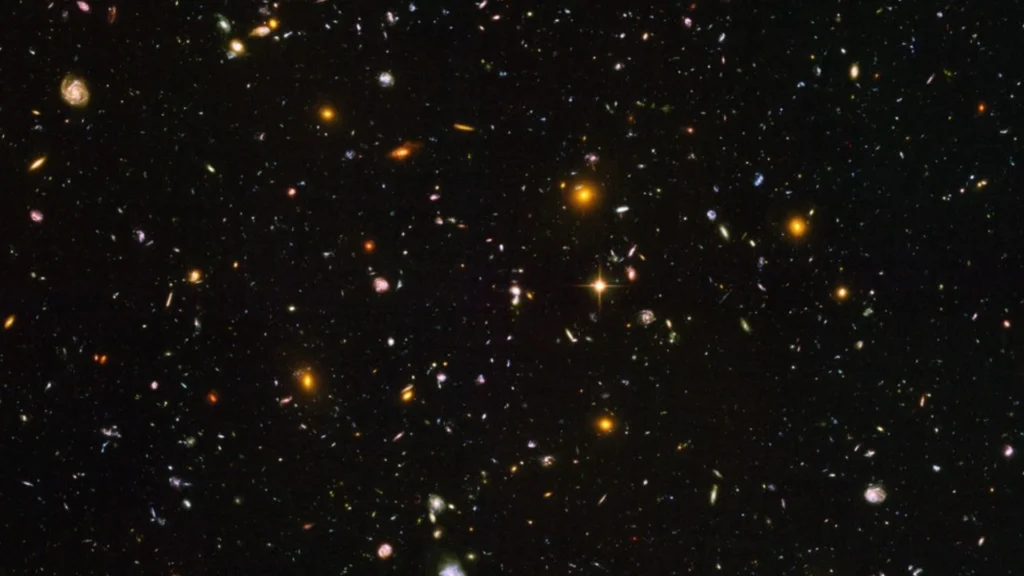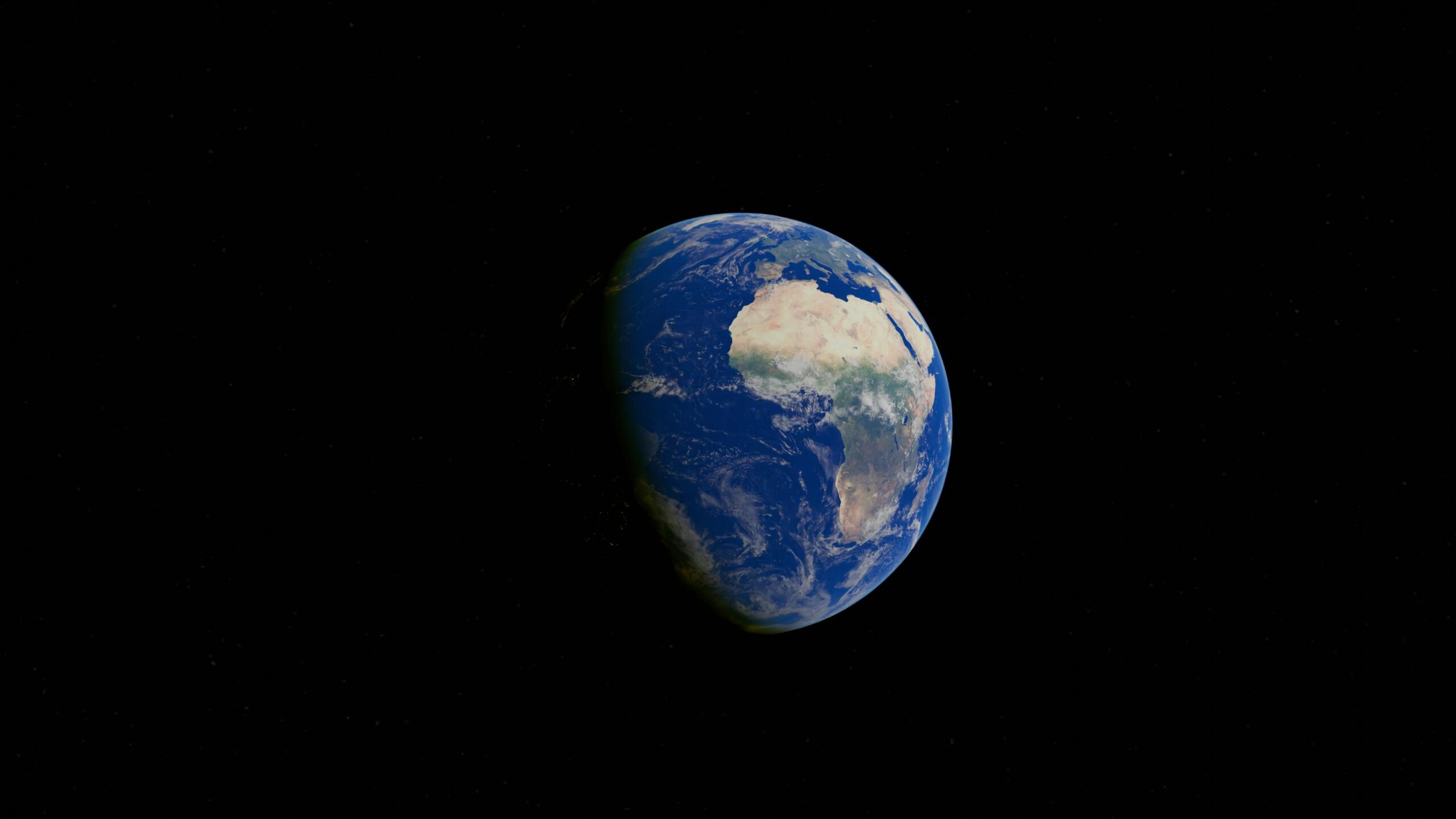
Polish and Chinese astronomers have, for the first time, precisely measured the distance and mass of a starless “rogue planet” adrift in deep space. The world, roughly the size of Saturn, lies about 9,950 light-years from Earth, and its discovery suggests our galaxy may be flooded with these dark, wandering worlds.
Imagine a planet born into the darkness, untethered to any sun, drifting alone through the vast, cold expanse of the Milky Way. This isn’t just science fiction—it’s the confirmed reality of a recent astronomical breakthrough. For the first time, an international team of scientists has not only spotted one of these elusive “rogue planets” but has also pinned down exactly how far away it is and how massive it is, transforming it from a speculative blip into a characterized world.
The discovery, led by researchers from the University of Warsaw and Peking University, was detailed in a study published online on January 1 in the prestigious journal Science. The key to their success was a clever cosmic technique and coordinated observations from both Earth and space.
READ ALSO: https://modernmechanics24.com/post/chinese-cargo-ship-convert-combat-drone/
Rogue planets are notoriously difficult to find because they emit virtually no light of their own. “The only way to discover these wandering worlds is with the help of gravitational fields, which warp the fabric of spacetime,” according to the original Space.com report. Astronomers use a method called gravitational microlensing, where the planet’s gravity acts as a lens, briefly magnifying the light of a distant star it passes in front of. While this can reveal a planet’s presence, it typically leaves two giant questions unanswered: how far away is it, and how much does it weigh?
This time was different. The team observed the microlensing event, dubbed KMT-2024-BLG-0792, from two different vantage points: ground-based telescopes and the European Space Agency’s now-retired Gaia space telescope. This parallax effect allowed them to triangulate the object’s distance with unprecedented accuracy. Once they knew it was 9,950 light-years away, they could calculate its mass: about 70 times the mass of Earth, placing it firmly in the planetary realm and ruling out the possibility of it being a failed star, or brown dwarf.
WATCH ALSO: https://modernmechanics24.com/post/us-deadly-strike-isis-nigeria/
“Our discovery offers further evidence that the galaxy may be teeming with rogue planets,” stated study co-author Professor Subo Dong, an astronomer at Peking University.
Where do these lonely worlds come from? Professor Andrzej Udalski, an astrophysicist at the University of Warsaw and co-author of the study, explained the prevailing theory to Space.com: “Theoretical studies of formation of planetary systems suggest that they should be very numerous in the Milky Way, even a few times more numerous than the number of stars in the galaxy.” They are likely cast-offs from violent planetary system formation, ejected by gravitational tussles with sibling worlds or passing stars. Some may even condense directly from isolated clouds of gas and dust.
This discovery is a major proof of concept and a preview of a coming wave of rogue planet science. The next generation of observatories is poised to find them by the thousands. NASA’s Nancy Grace Roman Space Telescope, slated for launch in 2026, will scan the infrared sky 1,000 times faster than Hubble. Similarly, China’s Earth 2.0 satellite, planned for 2028, will have rogue planets in its sights. “The future of free-floating planet science looks very bright,” Udalski said.
READ ALSO: https://modernmechanics24.com/post/wisk-gen6-autonomous-evtol-first-flight/
By pulling this single, Saturn-sized world from the shadows and measuring it, astronomers have cracked open a window onto a vast, hidden population of planets. It challenges our star-centric view of planetary systems and suggests that for every world orbiting a sun, there may be several more drifting silently in the interstellar dark.