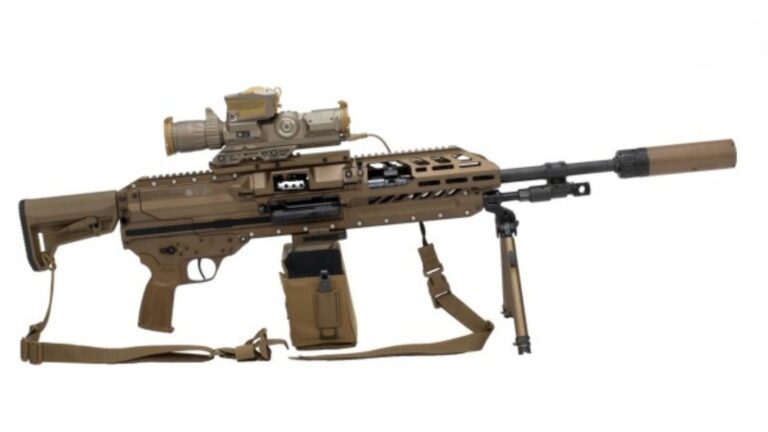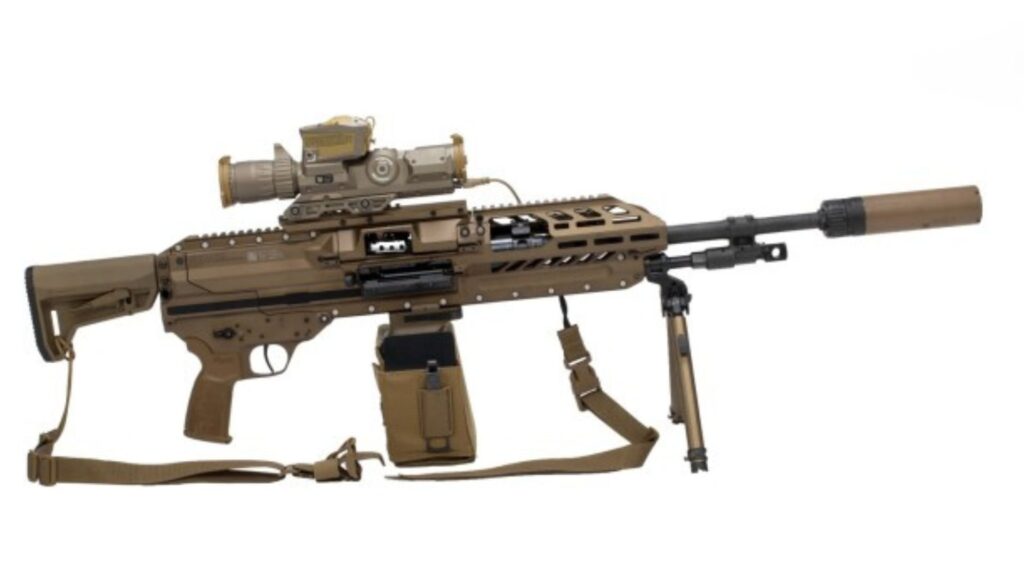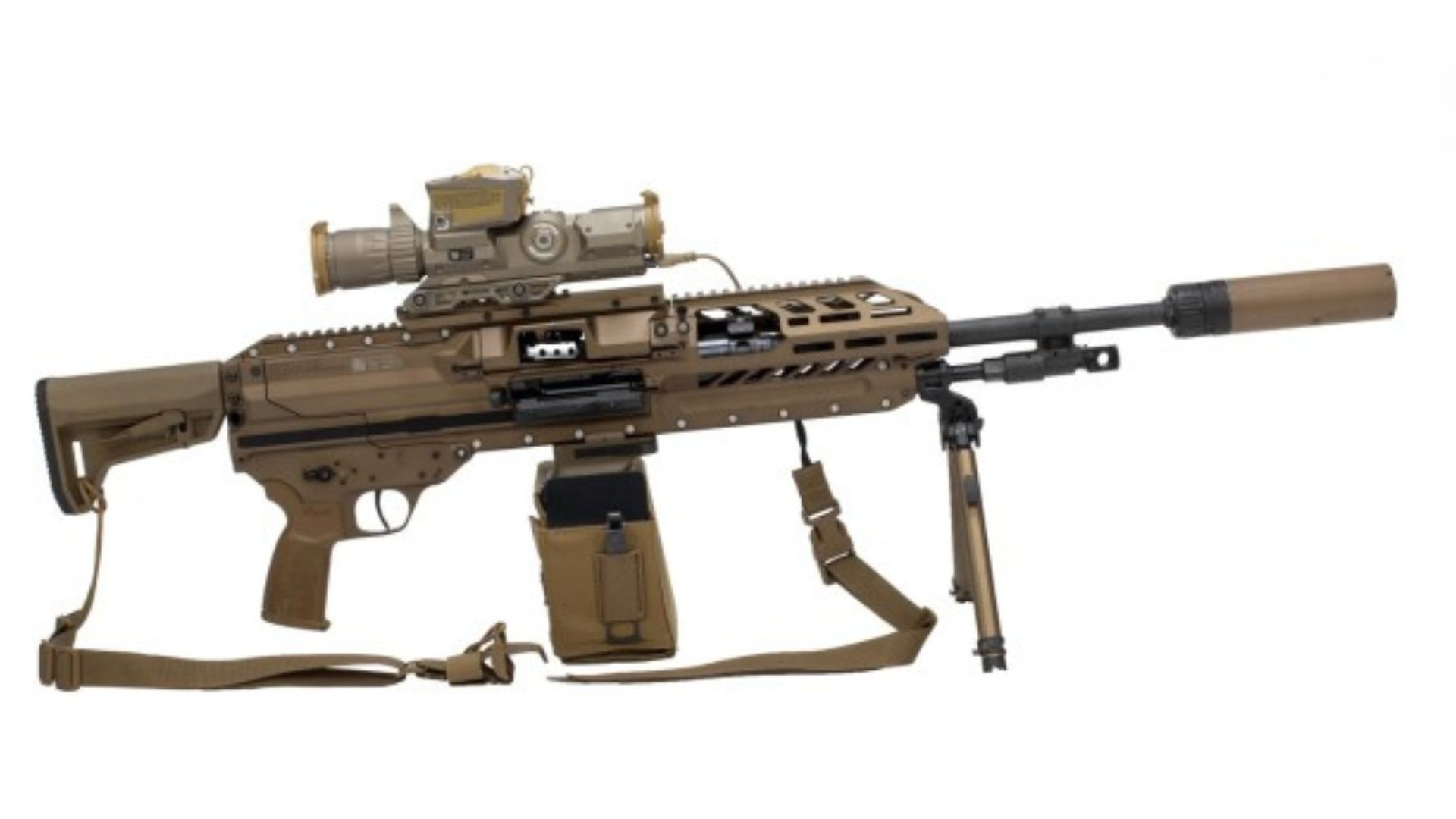
The US Army has introduced a new carbine variant of its latest service rifle, and the weapon is now officially called the XM8, a designation that once belonged to a failed rifle program from the early 2000s.
This new XM8 is not a revival of the old futuristic rifle. Instead, it is a shorter, lighter version of the Army’s modern M7 rifle, chambered in the powerful 6.8x51mm caliber.
The decision to reuse the XM8 name has sparked interest across defense circles, especially given its history.
Modern Upgrade to M7 Rifle
The new XM8 carbine is part of the Army’s Next Generation Squad Weapon (NGSW) program. The M7 rifle was selected in 2022 as the Army’s standard infantry weapon, replacing the long-serving M4 platform in frontline units.
READ ALSO: A 150-Year-Old Geometry Rule Just Failed; Mathematicians Found the Proof
However, the M7 has faced criticism since its introduction. Soldiers and analysts pointed out concerns about its weight, handling, and overall ergonomics. In response, the Army and manufacturer Sig Sauer worked on improvements. The XM8 carbine is the result of those efforts.
It is designed to be lighter, more compact, and easier to handle in close combat situations. These changes aim to make it more practical for soldiers operating in modern, fast-paced battle environments.
XM8: Smaller, Lighter, More Practical
One of the most noticeable changes in the XM8 is its size. The carbine measures just over 32 inches in length. This is significantly shorter than the standard M7, which is around 37 inches long. The reduction in length comes mainly from a shorter barrel and a more compact suppressor.
The XM8 uses an 11-inch barrel, compared to the M7’s longer barrel. Its suppressor is also slightly smaller, reducing both size and weight.
Weight reduction is another key improvement. The XM8 weighs around 7.33 pounds without the suppressor. In comparison, the M7 weighs about 8.36 pounds. Even the suppressor on the XM8 is lighter, helping reduce the overall load soldiers have to carry.
These changes may seem small, but in combat, every ounce matters. A lighter weapon reduces fatigue and improves mobility, especially during long missions.
WATCH ALSO: United Launch Alliance’s Atlas V rocket delivers success for Amazon Leo
Improved Design and Handling
The XM8 is not just smaller, it is also more refined in design. One major change is the stock. The carbine features a fixed stock instead of the folding one found on the M7. This change came directly from soldier feedback. Many preferred a fixed stock for better stability and reliability.
The butt pad has also been improved. It is softer, making the weapon more comfortable to use, especially during extended firing.
Another important upgrade is the handguard. It is now more rigid, providing a stable platform for mounting optics and other equipment. This is crucial, as modern rifles rely heavily on accessories such as scopes, lasers, and targeting systems.
These improvements show that the Army is actively listening to soldiers and making adjustments based on real-world use.
The XM8 is part of a larger system, not just a standalone rifle. It is designed to work with advanced fire-control systems, such as the XM157 optic. This computerized sight enhances accuracy and target acquisition, especially at longer ranges.
While these optics add weight, they also significantly improve performance. The XM8’s improved handguard ensures that such systems can be mounted securely without affecting accuracy.
READ ALSO: NVIDIA Vera Rubin POD Unites 7 Chips, 5 Racks Into One AI Supercomputer
This combination of weapon and technology represents a shift in how modern infantry fights, relying not just on firepower, but also on precision and data. The XM8 is based on what the Army previously called the product-improved version of the M7.
Engineers reduced the weight by redesigning key components. They modified the upper receiver, adjusted the barrel profile, and optimized the internal operating system. Removing the folding-stock hinge also helped reduce weight.
These changes brought the carbine closer to the weight of older rifles like the M4, which soldiers are already familiar with. However, development is still ongoing.
The Army plans to test the XM8 with operational units soon. Feedback from these trials could lead to further refinements. This means the final version of the XM8 may continue to evolve.
Why the XM8 Matters
The introduction of the XM8 carbine highlights a larger shift in military priorities. Modern warfare demands weapons that are not only powerful but also adaptable. Soldiers need rifles that work well in both close combat and longer-range engagements.
The 6.8x51mm ammunition used in the XM8 offers greater range and stopping power than older 5.56mm rounds. This gives soldiers an advantage in engagements against well-equipped adversaries.
At the same time, reducing the size and weight of the weapon ensures that soldiers remain mobile and effective. The XM8 strikes a balance between these needs.
The XM8 name carries a unique legacy. In the early 2000s, the Army worked on a completely different XM8 rifle. That weapon was part of a larger effort to modernize infantry arms. It even drew inspiration from science fiction, with a design influenced by futuristic movies.
WATCH ALSO: Explore Raytheon’s giant facility where it develops powerful naval radar SPY-6
Despite promising tests, the program was eventually cancelled in 2005. Changing requirements, high costs, and political factors contributed to its downfall.
Since then, the XM8 name has remained associated with an ambitious but unsuccessful project. Bringing the name back now adds an interesting twist. It connects the Army’s past efforts with its current push toward modernization.
The new XM8 carbine represents more than just a redesign. It reflects the Army’s willingness to adapt and improve its equipment based on real-world feedback. It also shows a commitment to balancing power, weight, and usability in next-generation weapons.
As testing continues, the XM8 can be a key part of the Army’s future arsenal. While the name may come from the past, this new XM8 is clearly built for the future.