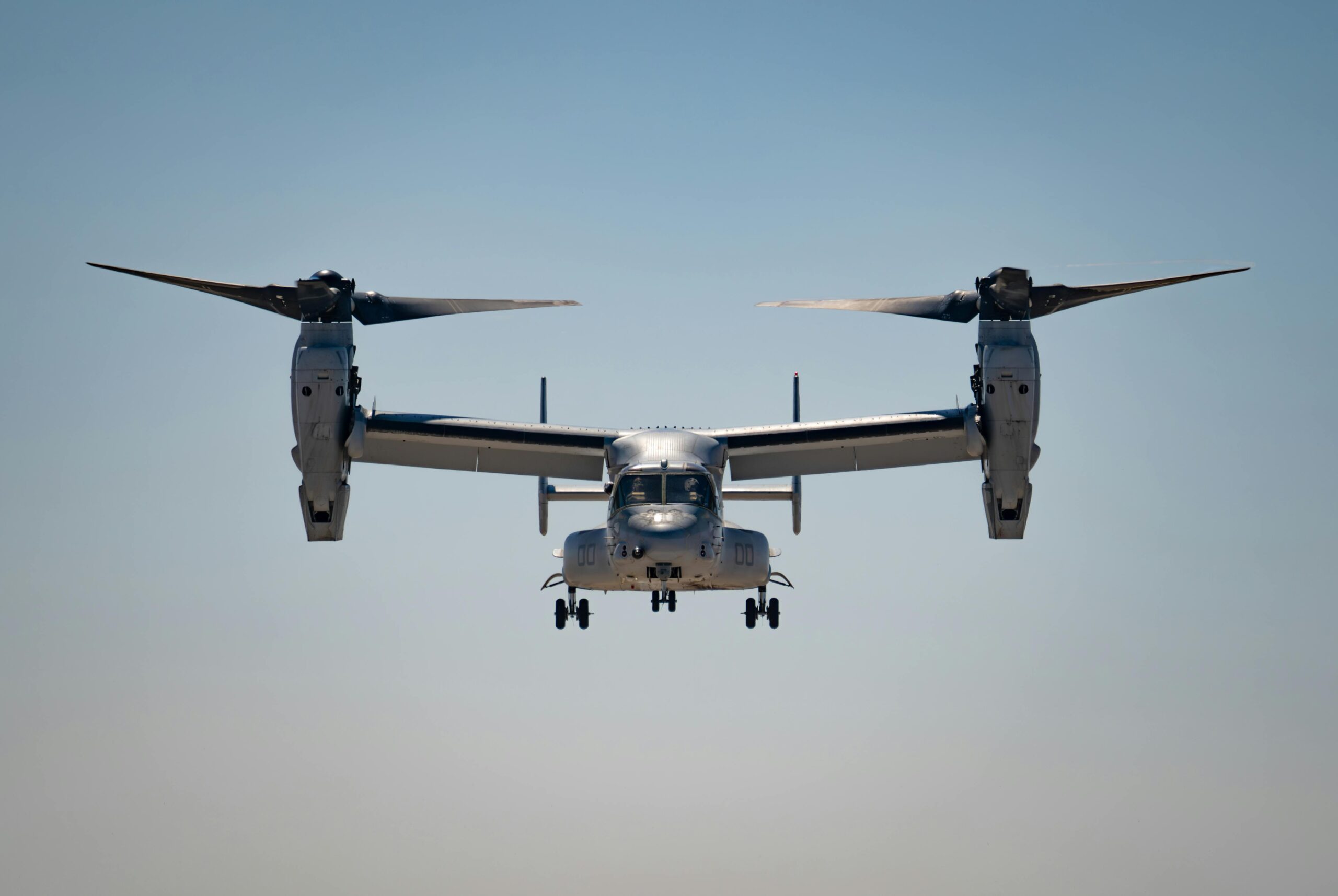
The U.S. Army is dramatically accelerating its Future Long-Range Assault Aircraft (FLRAA) program, now aiming to field the first MV-75 tiltrotors as early as 2027. This marks a shift of five years earlier than the original timeline, driven by the service’s urgent need for long-range, high-speed air assault capability for potential conflicts in the Indo-Pacific region.
The U.S. Army is hitting the gas on its next-generation vertical lift program in a major way. In a stunning acceleration, the service now plans to start fielding its new MV-75 tiltrotor, developed by Bell (a Textron subsidiary), in 2027—a full five years earlier than initially planned and three years ahead of the target set just last year. This aggressive push underscores the aircraft’s critical role in the Army’s future, particularly for vast, distributed operations across the Pacific.
Col. Dave Butler, an Army spokesperson, confirmed the ambitious new timeline to The War Zone (TWZ), stating: “We’re going to get the MV-75 this year. The acquisitions strategy calls for testing this year and fielding next year.” He emphasized the driving philosophy: “We’re getting the best capability for our Soldiers, as fast as we can.”
READ ALSO: https://modernmechanics24.com/post/x-square-robot-ai-140m-foundation-model/
This acceleration was highlighted publicly by U.S. Army Chief of Staff Gen. Randy George during a town hall at Fort Drum in January. “We have a new tiltrotor aircraft, and it was supposed to be delivered in 2031-2032,” Gen. George told soldiers. “And we said, ‘No, we need it very quickly.’ At the end of this year, we will actually have those flying and out in formations.”
The MV-75, based on Bell’s extensively tested V-280 Valor demonstrator, is poised to be a game-changer. It is expected to offer roughly twice the range and speed of the venerable UH-60 Black Hawk helicopters it will eventually replace, including a segment of the elite 160th Special Operations Aviation Regiment (SOAR) fleet. This performance leap is deemed essential for the vast distances and limited basing options characterizing the Indo-Pacific theater.
WATCH ALSO: https://modernmechanics24.com/post/us-hits-isis-terrorists-nigeria/
However, this breakneck pace has raised eyebrows and concerns. A 2025 report from the Government Accountability Office (GAO), the Congressional watchdog, flagged significant risks. It noted that the program’s critical technologies were not fully mature when system development began—a departure from best practices. The GAO report, cited by TWZ, also warned of “high risk” to meet planned milestone dates due to various delays and highlighted a concerning weight growth issue putting mission payload capabilities at “moderate risk.”
Despite these warnings, the Army is pressing forward, leveraging digital engineering tools and open-architecture systems to mitigate developmental risk. The service appears willing to accept certain risks to achieve an operational capability much sooner. “We used to talk about ‘Hey, we got to change by 2030.’ … I think we’ve proven … that we can change more rapidly,” Gen. George reflected, signaling a cultural shift in Army acquisition.
If successful, fielding the MV-75 by 2027 would be a monumental achievement, demonstrating the Army’s ability to rapidly deliver a major new weapons system. It would provide a massive boost to air assault units like the 101st Airborne Division and special operations forces years ahead of schedule. But the aggressive timeline sets up a high-stakes race against the clock, where technical hurdles and weight challenges must be swiftly overcome to turn the promise of a Pacific-ready tiltrotor into a reality on the flight line.