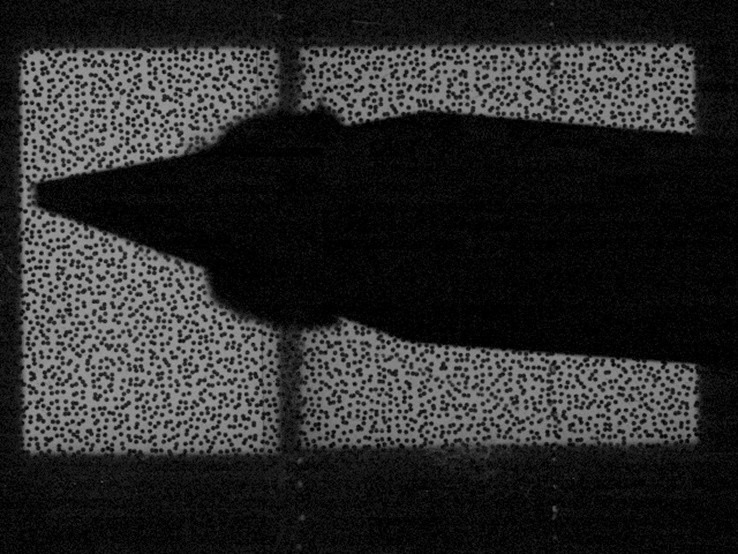
Engineers at the U.S. Army Space and Missile Defense Command Technical Center have fired a successful hypersonic test shot through a simulated rainfield, a critical step in understanding how moisture affects vehicles traveling faster than Mach 5. The test at the Aerophysics Research Facility (ARF) utilized one of the Army’s fastest guns to launch a specialized projectile at hypervelocity speeds.
What happens when a hypersonic vehicle, screaming through the atmosphere at several miles per second, encounters a rainstorm? The answers are crucial for designing reliable next-generation weapons, and finding them requires recreating that incredible violence in a laboratory. That’s the mission of the Aerophysics Research Facility (ARF), a premier hypersonic lab where engineers recently notched another major success.
On December 11, the ARF team executed a complex test firing a non-spherical projectile through a meticulously crafted artificial rainfield. “The facility is a gun range the size of an aircraft carrier,” explained Zack Perrin, ARF manager and technical lead engineer. At its heart are powerful light gas guns (LGGs), with the largest able to launch a 6-inch projectile at 3 kilometers per second or smaller models over 6 km/s—many times the speed of sound.
READ ALSO: https://modernmechanics24.com/post/robot-dog-flexes-like-real-dog/
The core challenge is simulating real-world conditions with precision. “An artificial rainfield is exactly what it sounds like,” said Perrin, describing a system of water reservoirs and precision-aligned needles that create controlled streams of droplets. The team can adjust the size, spacing, and number of droplet streams that the projectile will smash through on its journey. This allows them to collect vital data on erosion, stability, and material integrity.
This latest shot was the third in a dedicated research project but marked a significant evolution, according to Matthew Intardonato, a general engineer with SMDC. The first two tests used 2.7-inch nylon spheres (about the size of a baseball) fired at speeds around Mach 8. “A core objective… was to evaluate and gain experience operating advanced imaging capabilities and optical diagnostics systems,” Intardonato stated. The December test moved beyond spheres, using a more vehicle-relevant shape to gather even more applicable data.
The process is a symphony of high-stakes engineering. It begins with customer requirements, followed by a detailed design of the experiment. Then comes the hands-on buildout, configuring the massive gun and its diagnostics. When the moment comes, the firing is surprisingly anti-climactic behind two feet of protective concrete. “It’s much more of a relatively quiet thud,” Intardonato noted, not the giant boom many expect. Then begins the critical work of data processing and analysis.
READ ALSO: https://modernmechanics24.com/post/us-made-monolithic-3d-chip-ai-boost/
The team’s tempo is remarkable. “We are currently on track to execute three hypervelocity shots on our largest gun system, in three weeks, with three different projectiles, at three different velocities, for two different customers,” Perrin reported. This flexibility and success stem from deep experience and teamwork. The ultimate beneficiary is the warfighter. By expanding the experimental body of knowledge, ARF provides designers with the data needed to build better, more lethal, and more reliable weapons systems, ensuring they perform as intended in any environment.