Researchers at Argonne National Laboratory have developed an AI adviser that can guide robotic laboratories during experiments and recommend adjustments when progress slows.
The new AI adviser can monitor ongoing research, evaluate results in real time, and recommend more effective experimental strategies, thereby speeding up the search for advanced electronic materials.
The breakthrough could accelerate the development of technologies such as wearable electronics, flexible devices, smart sensors, and next-generation energy storage systems.
Discovering new materials has traditionally been a long and repetitive process. Researchers typically design a material, build it in the laboratory, test its performance, adjust the formula, and then repeat the cycle many times.
Because each experiment must be carefully planned and conducted, this process can take years before scientists identify a breakthrough. Meanwhile, fast-growing fields such as bioelectronics and flexible electronics demand new materials much more quickly than traditional research methods allow.
To tackle this challenge, researchers are turning to artificial intelligence. AI can analyze large amounts of data and suggest promising new experiments. However, most AI systems require huge datasets to make accurate decisions, and gathering that data in materials science can be slow and expensive.
To overcome this limitation, scientists developed an AI adviser that supervises other AI algorithms rather than running experiments itself.
READ ALSO: HQ-9B in Trouble: How Chinese Advanced Air Defense Failed in Real Combat
By analyzing incoming experimental data, the adviser helps scientists refine their strategies and choose better experiments. The result is a collaborative system where humans guide the research goals, AI analyzes the data, and robots perform the experiments.
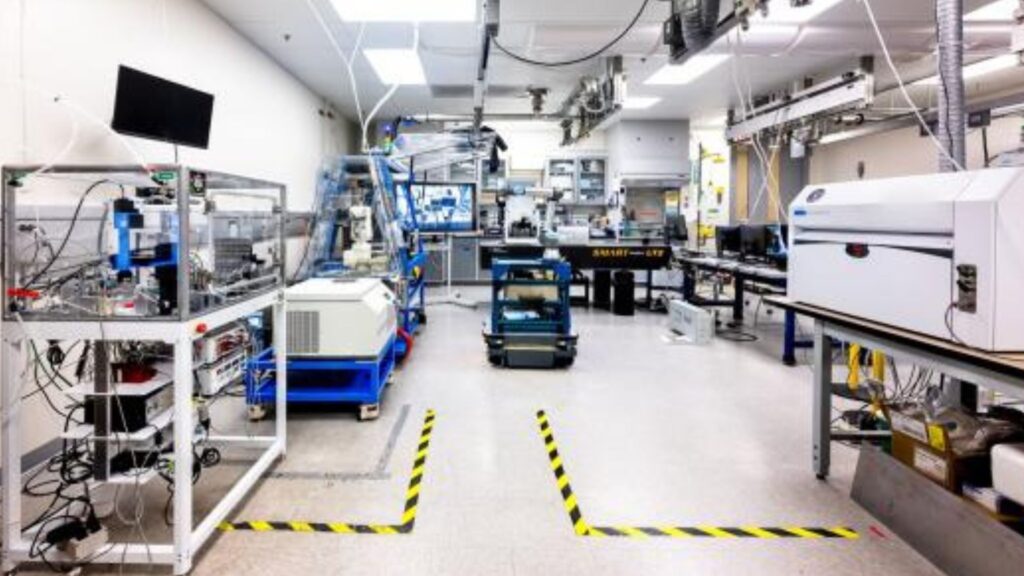
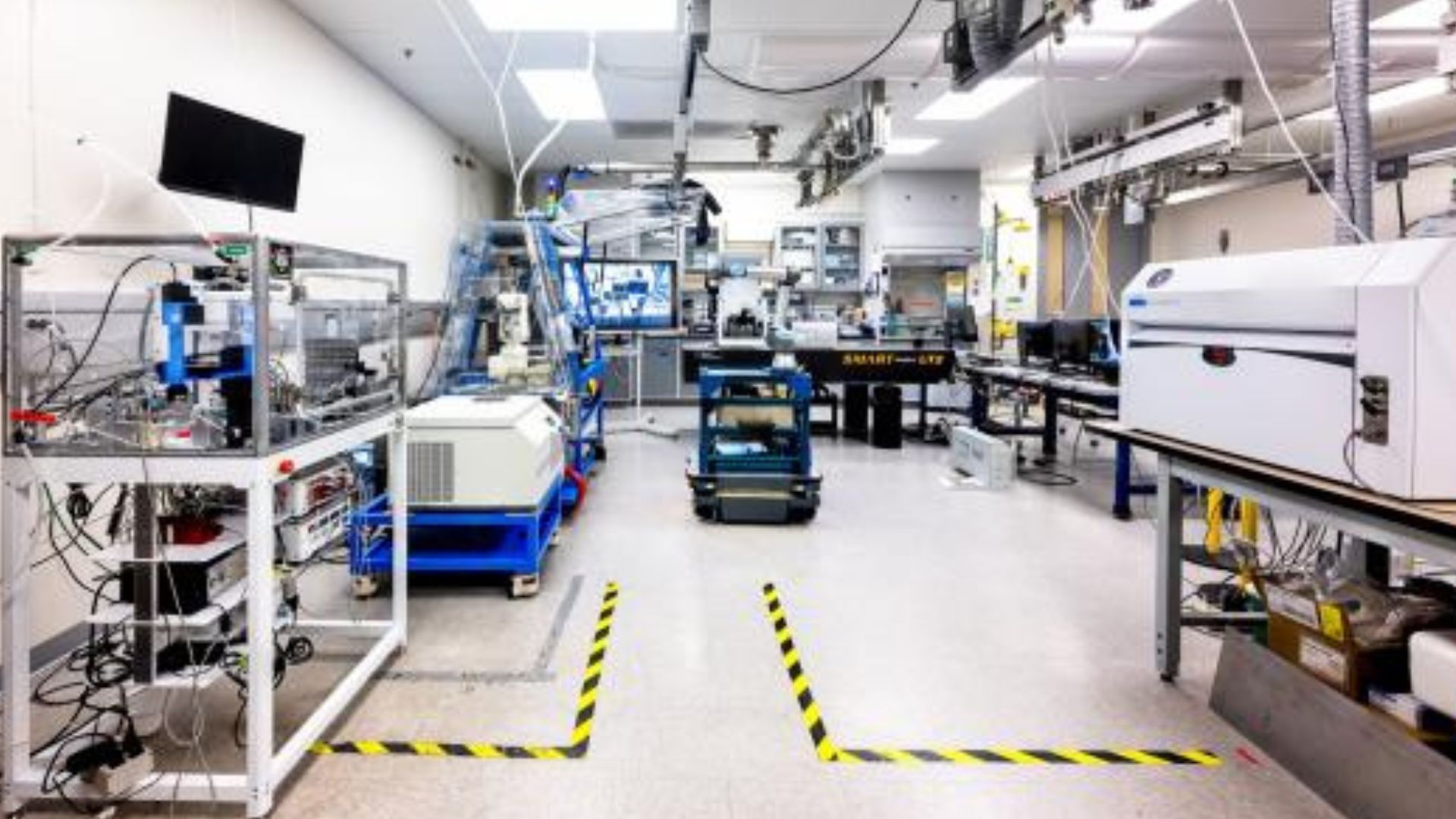
The AI adviser was tested in an advanced robotic laboratory called Polybot, an autonomous platform capable of conducting materials research with minimal human intervention.
Inside the lab, robots can create new materials, fabricate electronic devices, measure their performance, and analyze the results using AI. Based on the findings, the system automatically selects the next experiment to run, enabling continuous operation of the lab.
For the study, scientists focused on a class of materials called mixed ion-electron-conducting polymers. These materials can simultaneously carry both electrons and ions, making them highly useful for wearable electronics, smart sensors, bioelectronic systems, and energy storage technologies.
WATCH ALSO: US firm successfully demonstrates ship-based Sea Launcher for autonomous underwater vehicle ops
Designing these polymers is extremely complex because even small changes in processing can significantly affect performance.
During the experiments, the AI adviser constantly evaluated the robotic lab’s progress. At one point, it detected that the current experimental approach was no longer producing improvements.
Instead of continuing the same strategy, the adviser recommended switching to a different AI algorithm.
When researchers followed the suggestion, the robotic system quickly resumed identifying better-performing materials. This demonstrated the adviser’s ability to adapt experiments dynamically and keep the research moving forward.
Exploring every possible combination for these materials would normally require more than 4,300 experiments.
With the AI adviser guiding the robotic laboratory, scientists completed the study in just 64 experiments. It reduces time and cost. This efficiency means discoveries that once took years could potentially happen in a fraction of the time.
After identifying the most promising samples, researchers used advanced tools such as lasers and X-rays to analyze the materials more closely.
Their investigation revealed two key structural features that improved performance. The features are wider spacing between molecular layers and thinner, fiber-like structures within the material.
They also discovered that the polymer could crystallize into two distinct structural forms, each influencing how effectively the material conducts electricity and ions.
READ ALSO: Mars’ Water Mystery: Dust Storms Reveal Clues to Red Planet’s Ancient Water
These findings provide valuable guidelines for designing better electronic materials in the future.
The study highlights the growing power of combining artificial intelligence, robotics, and human expertise in scientific research. Instead of testing ideas one by one, autonomous laboratories guided by AI can rapidly explore thousands of possibilities and learn from each result.
In the future, systems like this could help scientists discover improved batteries, advanced medical devices, flexible electronic displays, and next-generation energy technologies.
AI is no longer just helping scientists analyze data. It is now actively guiding the discovery process itself, potentially transforming how new materials are created.
The study was published in Nature Chemical Engineering. In addition to Argonne, the research team included the University of Chicago, DOE’s Lawrence Berkeley National Laboratory (LBNL), the University of Southern Mississippi, and the University of Central Florida.