The iconic A-10 Warthog demonstrated its adaptability by flying with a nose-mounted aerial refueling probe for the first time, highlighting new capabilities for the US Air Force’s tactical jets.
This addition could enhance both combat operations and special missions, particularly in the Pacific theater.
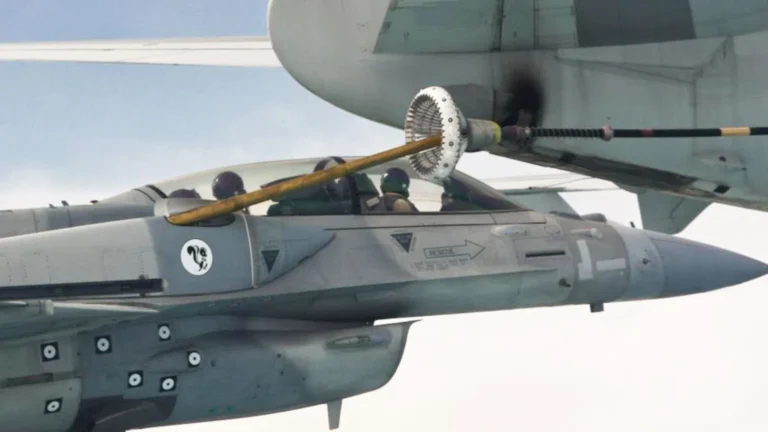
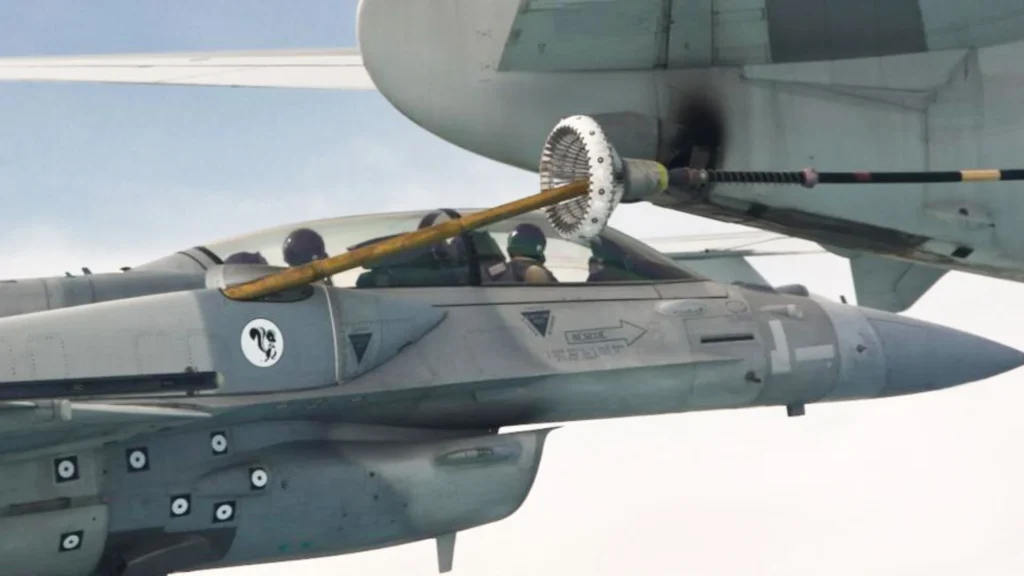
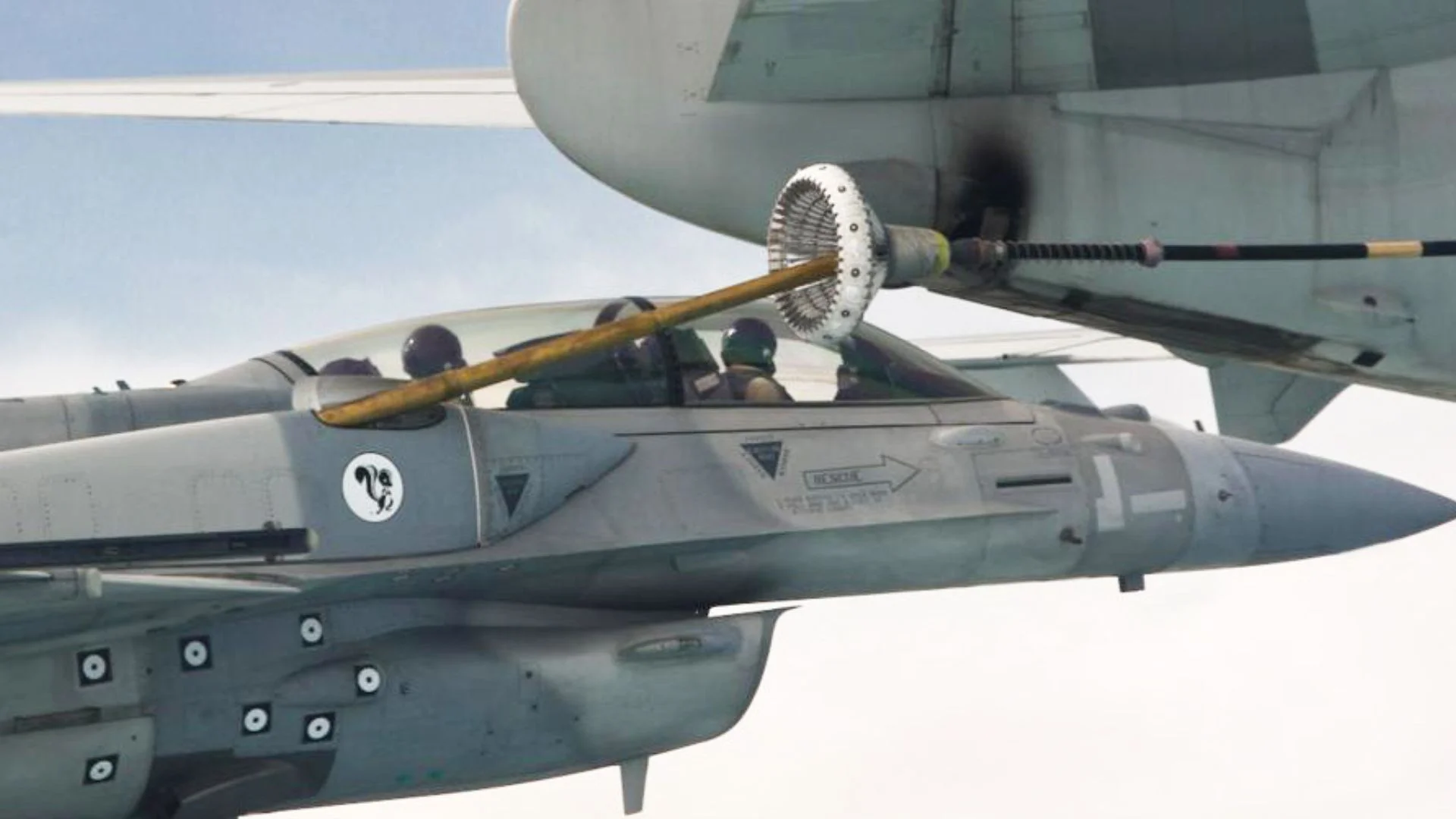
The test A-10 replaced its usual nose-mounted receptacle with a refueling probe. Within days, it successfully connected to a C-130 carrying aerial refueling drogues. Photos shared online show the Warthog mid-air, attached to a drogue trailing behind a Hercules transport aircraft.
READ ALSO: THAAD Kill Vehicle Found Intact in Syria: What Secrets Did It Leave Behind?
This test has implications far beyond the A-10 itself. US Air Force fighters traditionally rely on boom-and-receptacle refueling, a method requiring tankers to connect at higher altitudes. While effective, this system can be restrictive during rapid, dispersed operations, a key concept in the Air Force’s Agile Combat Employment (ACE) strategy.
How A-10 Refueling Probe Changes Tactical Operations
The ACE strategy focuses on moving fighters quickly between forward airfields, often in austere conditions or battle-damaged runways. Refueling immediately after takeoff is critical to maintain operational range and remain combat-effective. Traditional jet tankers require long runways and cannot refuel at low altitudes, limiting flexibility.
By equipping fighters with probes, they could refuel from smaller aircraft like the MC-130, HC-130, or Marine KC-130, even from short or rough airstrips. This capability allows fighters to operate closer to conflict zones while staying under the radar horizon, reducing vulnerability to long-range air defenses. This is particularly important against countries investing heavily in anti-access/area-denial systems.
WATCH ALSO: U.S. lab advances demo microreactor as Project Pele gets nuclear fuel
Low-altitude refueling introduces new risks. Weather conditions, aircraft handling, and pilot skill all become critical factors. Despite these challenges, using C-130s for refueling allows jet tankers such as KC-135s and KC-46s to focus on longer-range missions. This division could ease the operational burden during high-tempo operations in the Pacific.
For the A-10, the refueling probe enhances more than just range. The aircraft frequently supports combat search and rescue (CSAR) missions, escorting helicopters on high-risk operations to retrieve personnel from contested areas.
Currently, HC-130s and MC-130s provide fuel to helicopters, but adding probe refueling to A-10s extends the Warthog’s endurance, allowing it to stay on station longer and operate from more locations.
Future plans may include expanding the probe option to other tactical jets, such as the F-16, F-15, and even the F-35. Solutions could include probes mounted on drop tanks, conformal fuel tanks, or empennages. Some modern F-35 variants already use probes in addition to receptacles.
The program faced delays due to the A-10’s planned retirement, but it appears to be advancing quickly. Experts note that even simple modifications can make ACE operations more realistic and flexible. With probe-equipped fighters, small groups of jets could hop across islands or forward airfields while still having access to mid-air refueling support.
READ ALSO: Tiny 9-Spin Quantum System Beats Massive AI in Real Weather Forecast Test
Operationally, this opens new possibilities. Fighters could launch from short, forward airstrips with heavy payloads, refuel immediately, and reach deeper targets without returning to base. In fast-moving Pacific scenarios, this agility could be decisive.
Adding a probe also strengthens CSAR and special operations support. A-10s can now refuel from the same C-130 assets that support helicopters. This synergy improves mission endurance and reduces dependency on traditional jet tankers, which are constrained by runway length and altitude limits.
Beyond tactical benefits, the test demonstrates the Air Force’s willingness to explore flexible, adaptive solutions. Rather than developing entirely new aircraft for short-field, probe-based refueling, modifying existing jets and C-130 tankers is a practical approach. This could save time and resources, and allow rapid integration into current operations.
While there are challenges, especially training pilots for low-altitude refueling and adapting procedures for safety in variable conditions, the potential payoff is significant. Longer range, greater mission flexibility, and enhanced CSAR capabilities strengthen US tactical airpower.
WATCH ALSO: Explore Raytheon’s giant facility where it develops powerful naval radar SPY-6
The A-10’s probe test may be a stepping stone for a broader shift in Air Force operations. If implemented across other fighters, probe refueling could redefine how ACE missions are conducted, combining rapid deployment, short-field operations, and mid-air refueling for unprecedented tactical flexibility.
The Warthog continues to prove its relevance. Even as it approaches the end of its service, it is helping chart the future of US tactical aviation, showing that small but strategic upgrades can yield major operational benefits.