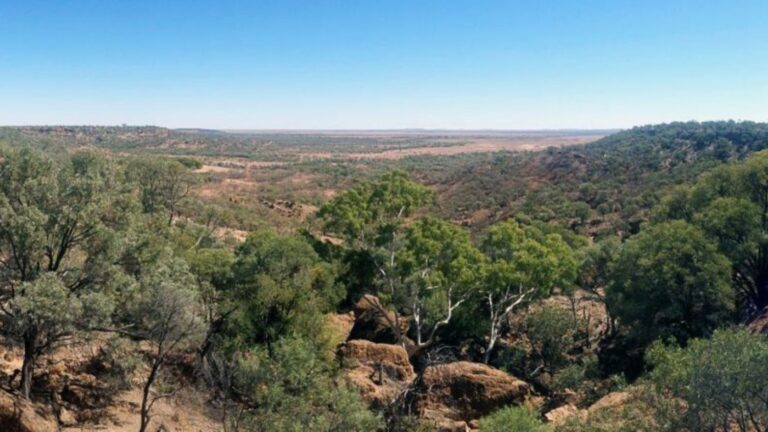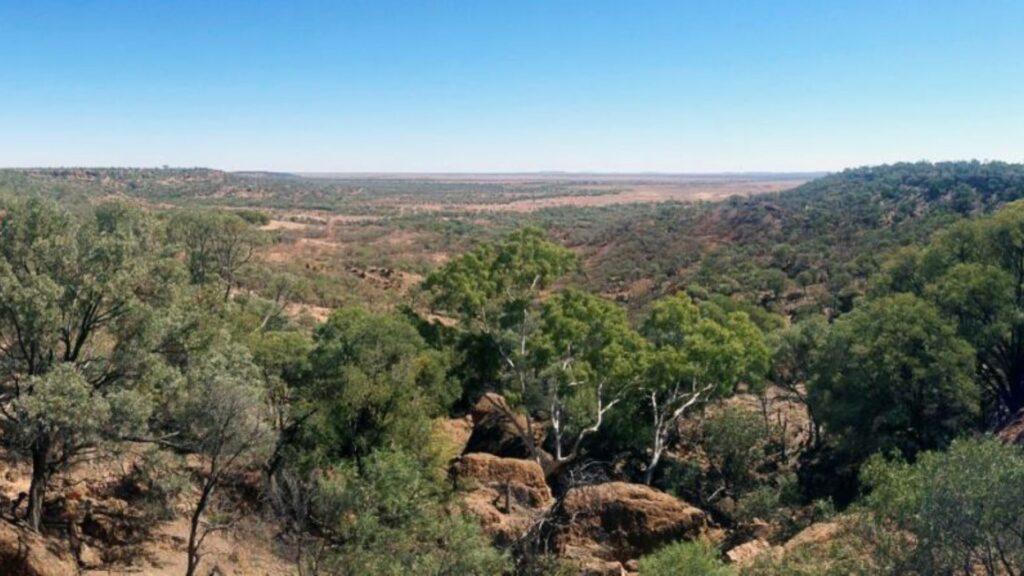
More than 300 million years ago, long before dinosaurs walked the Earth, thick layers of salt formed deep beneath what is now central Queensland.
Now, scientists believe this ancient salt could help solve one of Australia’s biggest clean energy challenges.
Buried two to three kilometres underground, the Adavale Basin has the potential to become one of the country’s largest renewable energy storage systems.
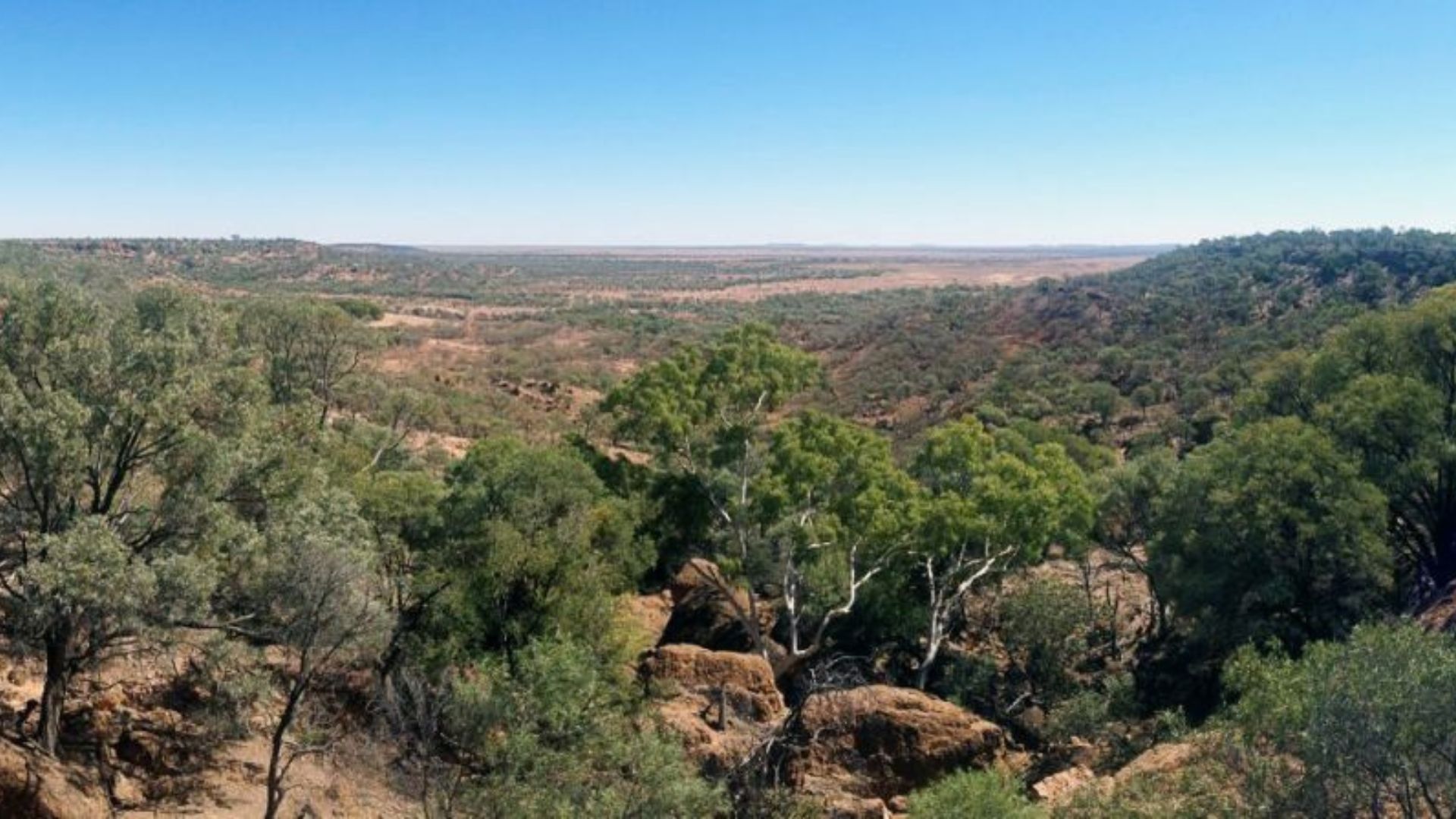
The basin covers around 1,42,000 square kilometres in southern central Queensland. It is largely invisible at the surface. There are no dramatic rock formations or cliffs to mark its presence. Instead, it lies quietly beneath other geological layers, waiting to be explored.
Now, researchers say this hidden formation could play a major role in Australia’s future of renewable hydrogen and large-scale energy storage.
READ ALSO: https://modernmechanics24.com/post/dlr-rotor-blade-helicopter-noise-reduction/
Why Australia Needs Massive Energy Storage
Australia is producing record levels of electricity from solar and wind power. Solar farms stretch across inland regions. Wind turbines spin along coastlines and ridges.
But renewable energy has one major weakness. It depends on weather conditions.
When the sun shines brightly or the wind blows strongly, electricity production can exceed demand. This extra energy often goes unused. When clouds roll in or winds slow down, supply can fall short. At that point, the grid needs reliable backup power.
Lithium-ion batteries help balance short-term fluctuations. However, these batteries are expensive and limited in size. They can store electricity for a few hours, but not for several days. They also struggle to power millions of homes over long periods.
That is why scientists are looking underground for answers.
Basin Beneath Basins
The Adavale Basin was first identified in 1958. Yet it remains one of Australia’s most under-explored geological regions.
It lies beneath the younger Eromanga and Galilee Basins, which form part of the vast Great Artesian Basin. The Great Artesian Basin is one of the largest underground freshwater systems in the world. It supplies water to many rural communities and farms across Queensland and beyond.
WATCH ALSO: https://modernmechanics24.com/post/blue-dogs-spotted-in-chernobyl-zone/
The Adavale Basin contains sedimentary rocks dating back to the Devonian Period. Over millions of years, thick deposits of salt formed within it. One of these deposits, known as the Boree Salt layer, has now drawn strong scientific interest.
Unlike many other regions, the Adavale Basin offers no visible clues at the surface. To understand its structure, scientists must drill deep into the Earth.
In recent years, Geoscience Australia launched a $31 million drilling program to study the basin’s energy potential.
In November, researchers drilled a borehole nearly three kilometres deep into the formation, marking a major step in exploring the region’s hidden geology.
From that single borehole, they recovered a continuous 976-metre rock core, providing an unbroken record of the subsurface layers.
In addition, they collected more than 500 rock chip samples and multiple groundwater samples for detailed laboratory analysis. The findings have been promising. It offered valuable insights into the basin’s structure, composition, and potential resource value.
Scientists identified a thick rock salt formation known as the Boree Salt deposit. This is currently the only known salt layer in eastern Australia thick enough for underground hydrogen storage.
According to researchers, this discovery could unlock a new chapter in Australia’s clean energy transition.
How Salt Caverns Store Clean Energy?
Salt formations have a unique and valuable property. They can be dissolved with water to create vast underground caverns.
READ ALSO: https://modernmechanics24.com/post/nasa-moon-mission-delayed-rocket-issue/
The process begins when engineers inject water deep into the salt layer. As the water comes into contact with the salt, it gradually dissolves the rock, forming a concentrated brine solution.
This brine is then pumped back up to the surface for removal or processing. What remains underground is a stable, hollow chamber. It is a purpose-built cavern used to store energy resources such as hydrogen, natural gas, or compressed air.
These chambers can then store gases such as hydrogen or compressed air.
When renewable electricity production is high, the excess power can be used to produce green hydrogen through electrolysis. That hydrogen is then injected into the underground cavern.
Later, when electricity demand rises, the hydrogen is brought back to the surface and converted into power.
In simple terms, the cavern acts like a giant underground battery.
Gigawatt-Scale Storage Potential
Experts estimate that a single cavern in the Adavale Basin could store around 6,000 tonnes of hydrogen. That equals roughly 100 gigawatt hours of energy.
To put that in perspective, that is similar to the combined capacity of about 50 of Australia’s largest grid-scale batteries.
With several caverns operating together, the storage capacity could be enough to power around 20 million homes for a day, based on average household electricity demand in Brisbane.
This type of long-duration energy storage could help stabilise Australia’s electricity grid during extended periods of low wind or sun.
Australia would not be the first country to use salt caverns for hydrogen storage.
WATCH ALSO: https://modernmechanics24.com/post/china-astronauts-mice-space-research-mission/
Large-scale hydrogen storage in salt formations has been operating internationally for decades. In the United States, for example, major projects in Utah are developing caverns designed to store thousands of tonnes of hydrogen each.
This shows the technology is not experimental. It has already been proven and is commercially viable in other parts of the world.
If developed successfully, the Adavale Basin could position Australia as a global leader in renewable hydrogen storage.
Australia’s Green Hydrogen Strategy
Australia has strong ambitions to become a global exporter of green hydrogen. With abundant sunlight and wind resources, the country is well placed to produce hydrogen using renewable energy.
However, producing hydrogen at scale requires reliable storage.
Underground salt caverns offer a practical solution. They can store large volumes safely for long periods. They also allow flexible release of hydrogen when needed.
By combining renewable generation with underground hydrogen storage, Australia could reduce reliance on fossil fuels and cut greenhouse gas emissions.
The Adavale Basin may therefore become a key part of the country’s emissions reduction strategy.
The project remains in its early assessment phase.
One major concern is groundwater protection. The Adavale Basin lies beneath parts of the Great Artesian Basin. This freshwater system supports many rural communities and agricultural operations.
Any future development would require strict environmental safeguards to protect groundwater.
READ ALSO: https://modernmechanics24.com/post/ai-neuro-tech-with-menstrual-cycle/
Further geological studies, environmental impact assessments, and economic feasibility tests are required before commercial development can begin.
Scientists must also confirm the long-term stability and safety of underground caverns in this specific geological setting.
Data-Driven Discoveries Program
The detailed study of the Adavale Basin is part of a broader Data-Driven Discoveries program.
This program examines legacy geological data and collects new seismic, geochemical, and stratigraphic information. The goal is to better understand Australia’s under-explored basins and identify resources that can support modern energy needs.
The Adavale Basin is considered underexplored, yet it holds significant potential to contribute to Australia’s clean energy transition.
For decades, the Adavale Basin remained a little-known geological formation hidden beneath Queensland’s dry plains.
Now, it may become one of Australia’s most important clean energy assets.
As the nation moves away from coal and gas, long-duration energy storage will become essential. Solar panels and wind turbines can generate clean electricity, but without reliable storage, renewable energy cannot fully replace fossil fuels.
The ancient salt layer beneath central Queensland could provide the missing piece.
WATCH ALSO: https://modernmechanics24.com/post/us-supersonic-jet-cuts-flight-time-silences-sonic-boom/
If future studies confirm its suitability, the Adavale Basin could transform into Australia’s largest underground renewable energy reserve.
A geological formation laid down more than 300 million years ago may soon help power millions of Australian homes. The question is no longer whether renewable energy will dominate Australia’s future. The real question is how to store it safely, efficiently, and at a massive scale. Deep beneath the outback, the answer may already be waiting.