A team of mathematicians has solved a long-standing problem in classical geometry, challenging a rule that had guided surface theory for more than 150 years.
Researchers from the Technical University of Munich(TUM), the Technical University of Berlin, and North Carolina State University have shown that a famous assumption proposed by the French mathematician Pierre Ossian Bonnet does not always hold.
For decades, mathematicians believed that if two key properties of a surface were known everywhere, the metric and the mean curvature, then the surface’s shape could be uniquely determined. This principle is known as Bonnet’s rule of thumb.
However, the new study shows that this is not always the case.
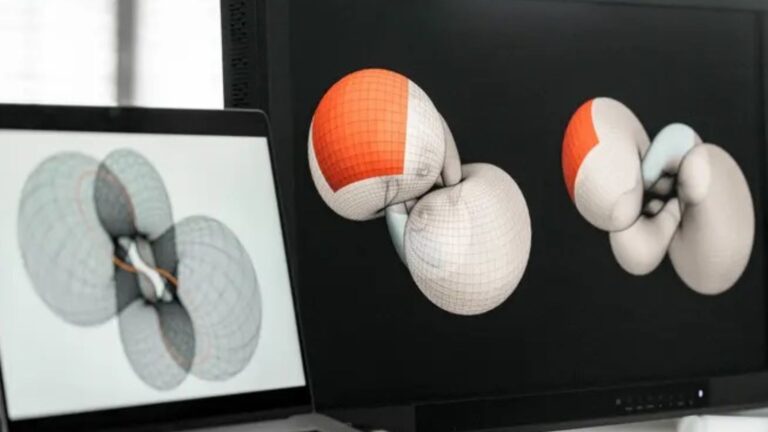
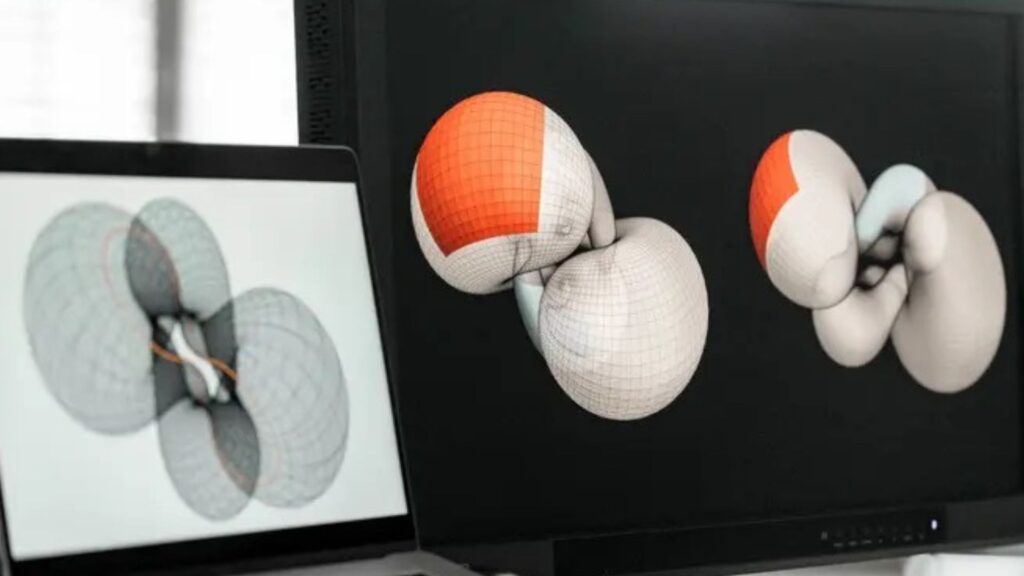
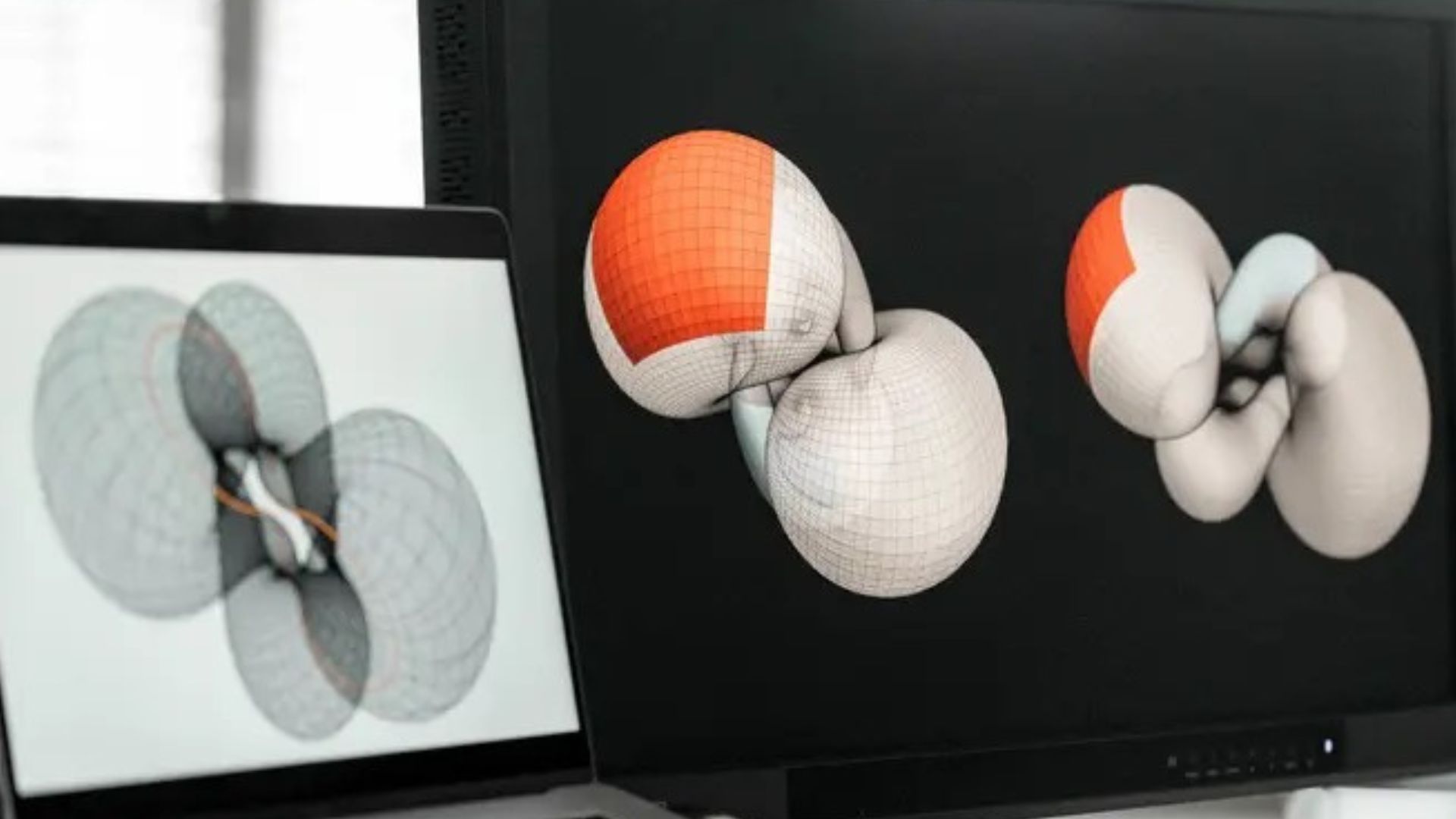
The research team constructed two compact, doughnut-shaped surfaces known as tori. Although the surfaces share the same metric and the same mean curvature at every point, they have different global structures.
The metric describes distances on a surface, indicating how far apart two points are. Mean curvature measures how strongly a surface bends outward or inward in space.
Despite having identical local measurements, the two surfaces differ when viewed as complete shapes.
This finding contradicts the long-standing assumption that such measurements would uniquely determine the surface.
Understanding Bonnet’s rule
In the past, exceptions to Bonnet’s rule had been found only for non-compact surfaces. These are surfaces that extend infinitely, like a plane, or have boundaries.
READ ALSO: Terrific ‘Black Rain’ Falls On Iran After US-Israel hit Tehran’s Oil Fields
For compact, closed, finite surfaces, the rule appeared to work reliably. For example, spheres can be uniquely determined by their metric and mean curvature.
Tori, however, was known to be a special case. Mathematicians had proven that a torus could have at most two different shapes sharing the same metric and mean curvature. Yet no one had ever found an actual example of such a pair.
A Decades-long Geometry Search Ends
The new research finally provides that missing example. Tim Hoffmann, professor of applied and computational topology at the Technical University of Munich, said the discovery answers a long-standing question in geometry.
“We have succeeded in finding a concrete case that shows that even for closed, doughnut-like surfaces, local measurement data do not necessarily determine a single global shape,” Hoffmann said.
He added that the result solves a decades-old problem in differential geometry, the field that studies curved surfaces and spaces.
WATCH ALSO: New Intelligence Platform Powers Top Research Robot
The finding reshapes a fundamental understanding of surface theory. It shows that local geometric measurements alone may not always reveal the full global structure of a surface.
The work also highlights how long-standing mathematical assumptions can still be challenged with new ideas and techniques.
After decades of searching, mathematicians now have the first real example of two different torus shapes sharing exactly the same local geometric data.