Italy’s Itaca: First 3D-Printed Quake-Resistant Eco Home
Italy completed its first certified 3D-printed house, taking a major step toward sustainable living. Itaca, the innovative structure, was built

Italy completed its first certified 3D-printed house, taking a major step toward sustainable living. Itaca, the innovative structure, was built

Researchers at Brigham and Women’s Hospital have enrolled the first patient in a unique trial for Wandercraft’s Atalante X robotic exoskeleton. The study will test if the hands-free, 12-joint device can safely mobilize fragile patients after thoracic surgery, aiming to improve recovery outcomes where traditional methods are challenging.

Anduril founder Palmer Luckey has launched the AI Grand Prix, a unique recruitment contest where teams compete for $500,000 and jobs by writing software to pilot autonomous drones. Partnering with the Drone Champions League, the finals will be held in Ohio this November.

Researchers from Peking University led by Professor Sun Zhong have developed an analogue AI chip that runs 12 times faster and is 200 times more energy-efficient than top digital processors. The breakthrough, published in Nature Communications, tackles real-world tasks like recommendation systems, marking a major leap for sustainable computing.

Scientists led by the Chinese Academy of Sciences have built the world’s first 3D “mini-womb on a chip” that fully mimics human embryo implantation. Reported in the journal Cell, the model could unlock personalized treatments for infertility, affecting one in six adults globally.

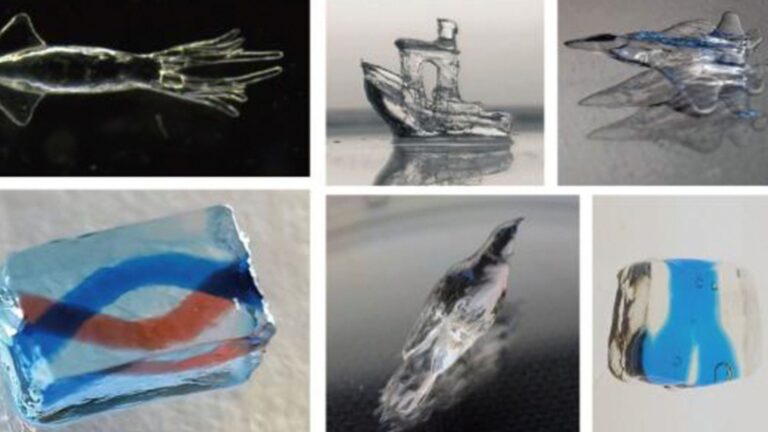
Researchers led by Prof. Yossi Weizmann at Ben-Gurion University have developed “smart” plastic materials using dormant “latent monomers.” These liquids remain stable for weeks but solidify instantly when triggered by light or gentle heat, revolutionizing on-demand curing for industry and 3D printing.

Chinese researchers led by Chief Scientist Wang Kejian have created the world’s first self-cloning hybrid rice. The Fix8 series replicates with 99.7% efficiency, potentially slashing seed costs by 99% and doubling global output to enhance food security.

The British Royal Navy has taken delivery of the massive XV Excalibur autonomous submarine. The 12-metre, 19-tonne XLUUV, key to the Atlantic Bastion strategy, was remotely controlled from 10,000 miles away and has tested a groundbreaking quantum navigation clock underwater.

Scientists from the Chinese Academy of Sciences have discovered Dinanomodon guoi, a new dicynodont species in Gansu province. The 250-million-year-old fossil proves a migration corridor linked China and South Africa across Pangaea’s equator.

Researchers at Carnegie Mellon University, led by Ph.D. student Violet Han and Professor Alexandra Ion, are animating everyday objects. Using AI models and cameras, their system allows items like coffee cups and trivets to roll to users autonomously, offering a new vision for assistive technology that integrates seamlessly into existing environments.
We uphold the highest standards of journalistic integrity and ethical reporting, ensuring that truth and transparency prevail in all our content.
contact@modernmechanics24.com