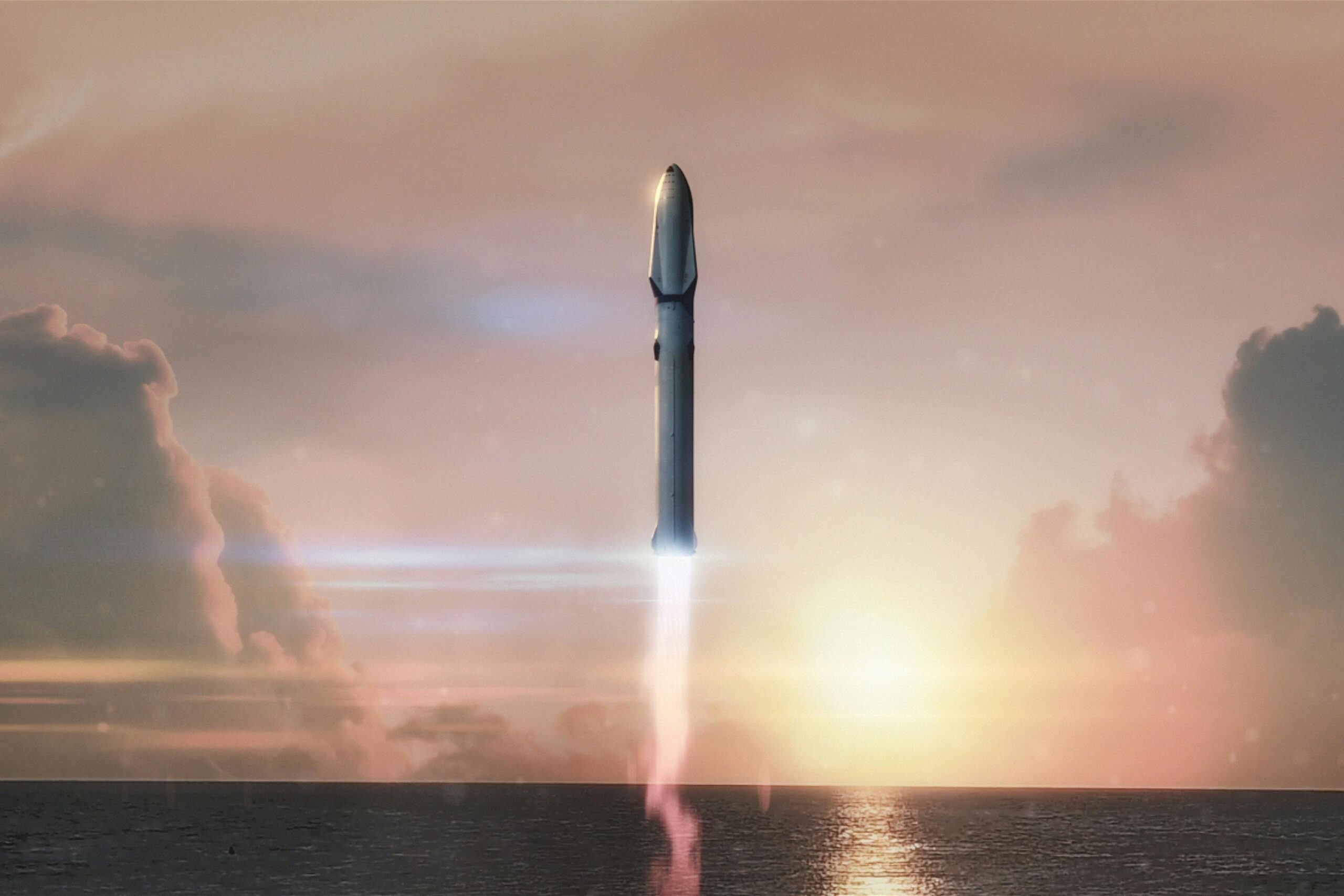
CAS Space, a leading Chinese commercial space company, has successfully launched and recovered its Lihong-1 capsule, marking the country’s first parachute-assisted recovery of a commercial payload from beyond 100 kilometers. The mission, conducted from the Jiuquan Satellite Launch Center, briefly crossed the edge of space, providing precious minutes of microgravity for scientific experiments.
For China’s burgeoning commercial space sector, Monday’s mission was a quiet but profound milestone. While reusable rockets grab headlines, the ability to send a capsule to space and bring it back intact—payloads and all—opens a new, affordable frontier for research and development. The Lihong-1 vehicle, developed by CAS Space, soared to a maximum altitude of about 120 kilometers, skimming the internationally recognized Kármán line that defines the boundary of space. This suborbital arc provided the capsule’s contents with several minutes of high-quality microgravity before a controlled re-entry and parachute-assisted touchdown back on Earth.
So, what’s the point of a quick trip to space without going into orbit? The answer lies in the unique, transformative environment of microgravity. Conditions that are impossible to replicate reliably on Earth allow materials to behave in fundamentally different ways. Metals can be 3D-printed without gravitational defects, proteins can crystallize into more perfect structures, and biological cells can grow free from the constant pull of gravity.
READ ALSO: https://modernmechanics24.com/post/china-padj-x-software-b21-bomber-flaws/
The Lihong-1 mission carried a scaled-down version of a crewed spacecraft specifically to exploit these conditions. Its payload included a pioneering microgravity-based laser additive manufacturing experiment—essentially testing 3D-printing in space—and rose seeds exposed to space radiation for mutagenesis studies. Scientists are now analyzing these returned samples to see how their physical and biological properties were altered.
According to the company, the Lihong-1 is designed as a versatile, general-purpose research platform. It offers payloads over 300 seconds of stable microgravity, boasts low launch costs, and allows for flexible experiment integration. This makes it an ideal tool for universities, research institutes, and companies looking to conduct space-based research without the exorbitant cost and long lead times of a full orbital mission. The successful recovery validates the capsule’s core systems, including its heat shield, parachutes, and overall structural integrity during the punishing re-entry process.
WATCH ALSO: https://modernmechanics24.com/post/byd-seal-smooth-electric-power/
The mission is far from a one-off demonstration. CAS Space has ambitious plans to evolve this technology. The company intends to upgrade the re-entry capsule into an orbital-class spacecraft capable of remaining in space for over one year and being reused for at least 10 flights. This vision aligns with China’s broader push to build a robust infrastructure for commercial space activities, encompassing reusable rockets, satellite constellations, and now, recoverable orbital platforms.
As China’s commercial space industry rapidly expands, platforms like Lihong-1 are poised to become essential workhorses. They will serve as testbeds for in-space manufacturing techniques, accelerate scientific discovery in materials and life sciences, and eventually, pave the way for the technological foundations needed for commercial passenger experiences. This first successful recovery is a small but critical step, proving that routine, round-trip access to the space environment is within reach for China’s private sector.
READ ALSO: https://modernmechanics24.com/post/china-mind-control-robot-telepathy-tech/