Researchers at the China Aerodynamics Research and Development Centre have used a novel “all-in-one” simulation software called PADJ-X to analyze the U.S. Air Force’s newest B-21 Raider stealth bomber, suggesting the classified aircraft’s design may have room for significant aerodynamic and stability improvements. The tool dramatically reduces computational costs to optimize aircraft across multiple stealth and performance disciplines simultaneously.
In the high-stakes world of stealth aviation, where every curve and angle is a state secret, a new type of digital x-ray has emerged from China. A powerful, multidisciplinary simulation platform appears capable of reverse-engineering the most sensitive aircraft designs, pinpointing potential weaknesses without ever seeing a blueprint. According to a peer-reviewed paper, this software, named PADJ-X, was used to analyze the configuration of America’s most advanced bomber, the Northrop Grumman B-21 Raider, and the findings suggest the multi-billion dollar aircraft might not be optimally designed for range and stable flight.
The research, led by Huang Jiangtao and his team, was published last month in the journal Acta Aeronautica et Astronautica Sinica. PADJ-X is based on adjoint optimisation technology, an algorithmic method that calculates the optimal direction for all design parameters at once. The team applied 288 parameters in a simulation of a B-21-type layout. The results, according to the South China Morning Post, were striking: aerodynamic optimisation increased the aircraft’s lift-to-drag ratio by 15 per cent and significantly reduced shock wave drag.
READ ALSO: https://modernmechanics24.com/post/keenon-humanoid-robot-ces-2026/
Crucially, the software improved the aircraft’s pitching moment—a key stability metric—from 0.07 to -0.001. A value near zero indicates an aircraft can maintain stable, level flight with minimal pilot input, enhancing natural trim and fuel efficiency. “Combined with increased lift and reduced wave drag, the optimised B-21 design suggested that the aircraft had a high potential for extended range,” Huang wrote.
What sets PADJ-X apart is its integrated, “all-in-one” approach. As reported by the South China Morning Post, the platform boasts full Chinese intellectual property rights and integrates five major disciplines: aerodynamics, propulsion, electromagnetics, infrared signature, and sonic boom. This allows it to find the optimal compromise between conflicting requirements—for instance, a shape that is both aerodynamically slick and radar-evading.
WATCH ALSO: https://modernmechanics24.com/post/cartoon-robot-learns-kitchen-chores-2/
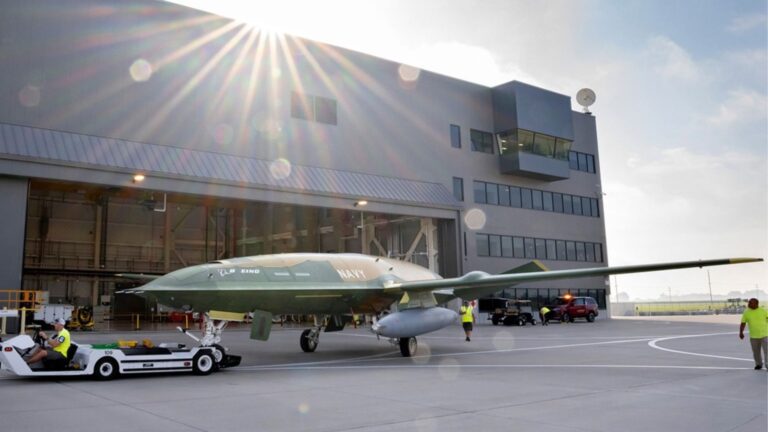
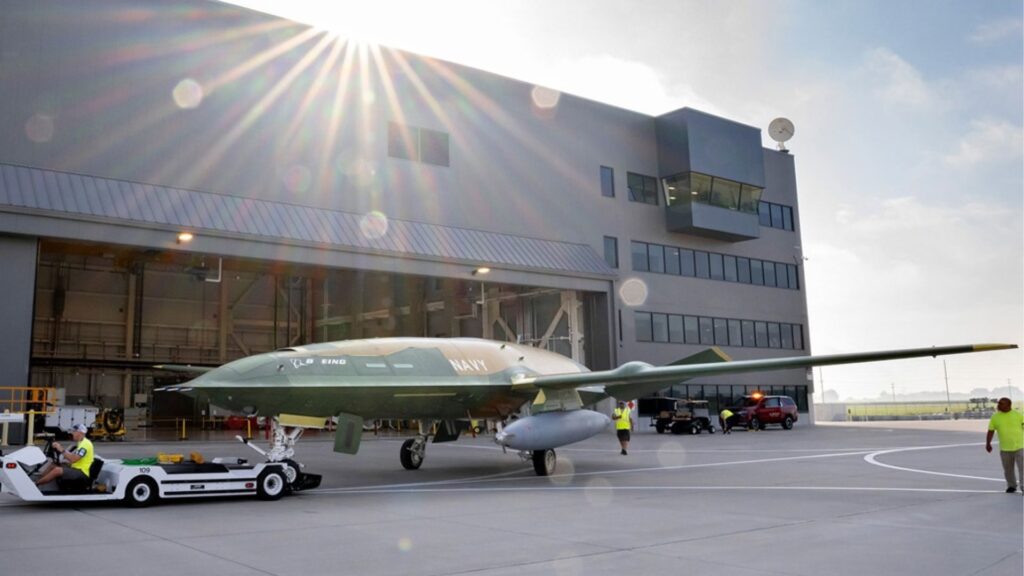
In a separate simulation of the U.S. Navy’s classified X-47B stealth drone, PADJ-X reportedly reduced the drag coefficient by about 10 per cent and slashed the average forward Radar Cross Section (RCS) from 13.55 square metres to a mere 1.33 square metres, a tenfold improvement in stealth signature. It’s important to note that the actual classified parameters of the B-21 and X-47B are unknown, so the software’s results are a theoretical exercise on a representative model, not a confirmed flaw.
Globally, adjoint optimisation platforms like NASA’s FUN3D have existed for decades, but the Chinese researchers claim PADJ-X covers a wider range of disciplines with less need for manual adjustment. If the technology performs as described, it represents a formidable tool that could accelerate China’s own sixth-generation aircraft development, reduce reliance on costly wind tunnels, and lower prototyping costs. More immediately, its application to American stealth designs signals a new frontier in digital espionage and design competition, where algorithms can probe for vulnerabilities in an adversary’s most guarded technological crowns, all from a computer lab half a world away.
READ ALSO: https://modernmechanics24.com/post/tesla-expands-model-y-europe-canada/