Professor Zhang Hongzhang, a 39-year-old researcher from the Dalian Institute of Chemical Physics and the second civilian astronaut in China’s history, is leading a series of experiments on the Tiangong space station to study how microgravity affects lithium-ion batteries. This pioneering research, reported by state media, could lead to safer, more powerful energy systems for future spacecraft by isolating gravity’s influence on critical internal processes.
High above Earth, a unique laboratory is operating inside China’s Tiangong space station. There, Professor Zhang Hongzhang isn’t just an astronaut; he’s a hands-on scientist conducting delicate experiments that are impossible to perform on Earth. His mission: to unravel how weightlessness changes the very heart of a lithium-ion battery. Why does this matter? For all our reliance on these power packs in satellites and future deep-space missions, we still don’t fully understand how gravity subtly influences their performance and safety. Zhang’s work aims to remove that fundamental blind spot.
On Earth, gravity’s pull is a constant, silent partner in every chemical reaction inside a battery. It affects how ions move and how substances distribute within the liquid electrolyte, making it nearly impossible to study these processes in isolation. The microgravity environment of the space station cuts through this complexity. “The microgravity environment on the space station provides an ideal experimental environment for overcoming this scientific bottleneck,” stated reports from state media Xinhua. It allows Zhang and the ground team to observe, with unprecedented clarity, the core behaviors that dictate a battery’s power, lifespan, and safety.
READ ALSO: https://modernmechanics24.com/post/china-test-truck-em-catapult-tech/
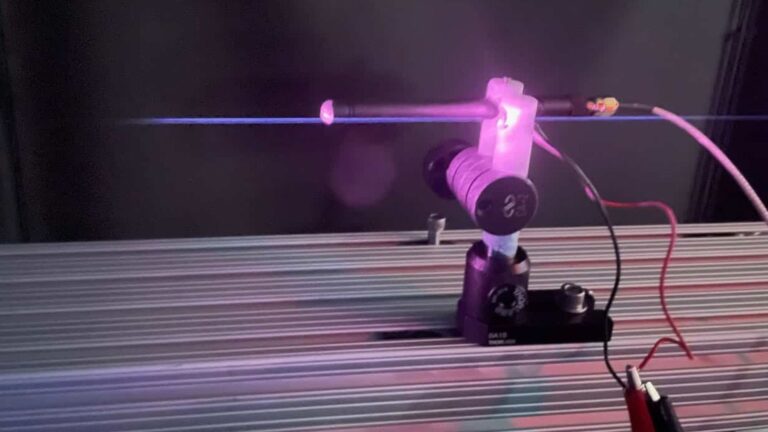
One of the most critical—and hazardous—phenomena Zhang is studying is the growth of lithium dendrites. These are tiny, needle-like metallic structures that can form on a battery’s electrodes. On Earth, they are a known culprit for reduced battery life and, in worst-case scenarios, internal short circuits that lead to fires. In the confined, critical environment of a spacecraft, such a failure would be catastrophic. By capturing images of how these dendrites grow in microgravity, scientists can develop better models to suppress them, designing batteries that are inherently safer for space exploration.
Zhang’s journey to this point is itself a milestone for China’s space program. He was selected from a 2018 recruitment drive that, for the first time, explicitly sought flight engineers and specialist scientists alongside military pilots. In an interview with China Youth Daily before his launch in late October, Zhang spoke of the privilege and duty of his role. “Every experiment conducted on the space station embodies the hard work of the ground researchers. Being able to carry out their experiments in space is not only a privilege but also a responsibility,” he said. He works in constant communication with researchers on the ground to maximize the value of every moment in orbit.
WATCH ALSO: https://modernmechanics24.com/post/britain-laser-guided-air-defense-ukraine/
The practical implications are vast. Understanding ion movement and substance distribution in zero-g could lead to batteries with higher energy density and longer lifecycles—critical for powering long-duration lunar bases, crewed missions to Mars, and next-generation satellites. It represents a shift from simply using existing terrestrial technology in space to actively engineering technology for space, based on fundamental science conducted off-world.
While the Shenzhou-21 mission is a scientific endeavor, it also symbolizes China’s maturing, scientist-driven approach to human spaceflight. By sending experts like Professor Zhang Hongzhang to personally conduct research in orbit, China is not only advancing its technical capabilities but also building the foundational knowledge required to become a true deep-space power.
READ ALSO: https://modernmechanics24.com/post/hiv-shape-shifting-protein-drug-design/