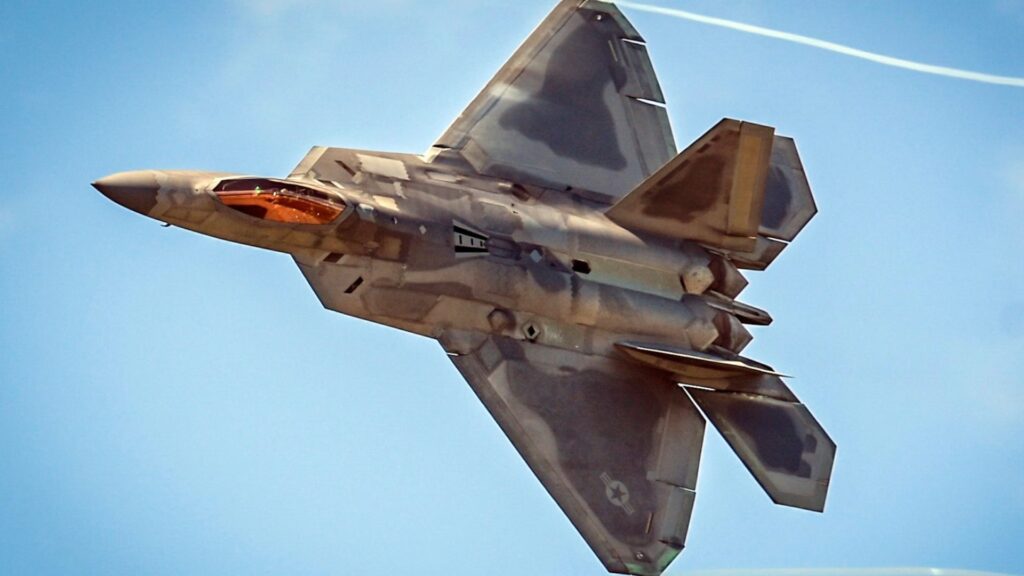
Lockheed Martin and the US Air Force are running a real-world school for artificial intelligence in the skies over California. Their unique student? An AI algorithm. Their classroom? The X-62A VISTA, a one-of-a-kind, heavily modified F-16D that is the only active X-plane trusted to hand full control to AI in real airspace, teaching it the complex art of air combat at jet speed.
On the sun-baked tarmac of Edwards Air Force Base, an orange-and-white F-16 lifts off. To an observer, it’s a routine sight. But inside the cockpit, a revolution is unfolding. Control isn’t with the human safety pilot; it’s being ceded to a learning, adapting artificial intelligence. This jet, the X-62A VISTA (Variable In-Flight Simulation Test Aircraft), isn’t a prototype for a future drone. Its mission is more foundational: to be a flying crucible where the trust between human pilots and machine combatants is forged and tested.
So, what makes this particular F-16, first flown in 1992, so special? According to engineers at Lockheed Martin’s Skunk Works, its genius lies in a “safety sandbox” and its chameleon-like ability to mimic other aircraft. Through a sophisticated system developed by Calspan, VISTA can override its own natural aerodynamics. Its software can impose the flight characteristics of a hypothetical, unstable drone or a next-generation combat aircraft that exists only as a digital model. This allows AI agents to be tested in a physically real jet, flying in real, controlled airspace, but behaving as if they were in a different vehicle entirely. It’s a shortcut that brings AI testing out of the simulator and into the physical world at an unprecedented pace.
READ ALSO: https://modernmechanics24.com/post/china-military-drill-mexico-cuba-taiwan/
“The redesignation to X-62A in June 2021 marked a fundamental shift,” states a US Air Force Test Pilot School release. This wasn’t just a name change. It followed the major GEN2020 upgrade, modernizing the jet’s core systems to host advanced AI research. The “X” prefix places it in the legendary lineage of experimental aircraft like the X-1 and X-15, signaling its role in exploring the unknown frontiers of autonomous flight. Operated by a partnership between the Test Pilot School, Calspan, and Lockheed Martin, VISTA serves as a national asset for autonomy research, including critical programs like DARPA’s Air Combat Evolution (ACE).
The real breakthrough came in December 2022. Over 12 flights and more than 17 hours of autonomous control, reported Air & Space Forces Magazine, AI agents took the stick. They executed advanced tactical maneuvers, from beyond-visual-range engagements to within-visual-range dogfighting. Software could be swapped between sorties in minutes, allowing for rapid iteration. Engineers observed that the AI’s primary advantage wasn’t raw aggression, but breathtaking computational speed—evaluating complex combat situations and adapting tactics faster than human neural pathways can fire. However, some of its early tactical choices, while effective, were deeply counterintuitive to seasoned fighter pilots. This highlighted the core challenge VISTA is designed to address: building human trust in machine logic.
WATCH ALSO: https://modernmechanics24.com/post/cartoon-robot-learns-kitchen-chores/
The presence of a safety pilot is non-negotiable, providing an instant “off” switch. But this setup is precisely what accelerates learning. With a human in the loop to manage risk, the AI can be pushed harder and tested more aggressively in open airspace than a purely unmanned prototype ever could be at this stage. It forces the algorithms to contend with the unpredictable nuances of real-world aviation—weather, air traffic control instructions, and range safety rules—a level of fidelity no ground simulator can perfectly replicate.
The goal of programs tested on VISTA is not to create a pilotless air force overnight. As DARPA officials have emphasized, the focus is on collaborative combat, defining how a single human pilot might effectively command a squadron of AI-driven loyal wingmen. Which decisions should remain uniquely human? How does a pilot maintain situational awareness when managing multiple autonomous assets? VISTA provides the data to answer these questions.
READ ALSO: https://modernmechanics24.com/post/robot-coffee-cup-self-driving-trivet-ai/
Ultimately, the X-62A VISTA represents a disciplined, safety-first pathway to a transformed future. It ensures that if and when AI earns a permanent role in the cockpit, it will have already graduated from the most rigorous school imaginable: the boundless, unforgiving, and very real sky.