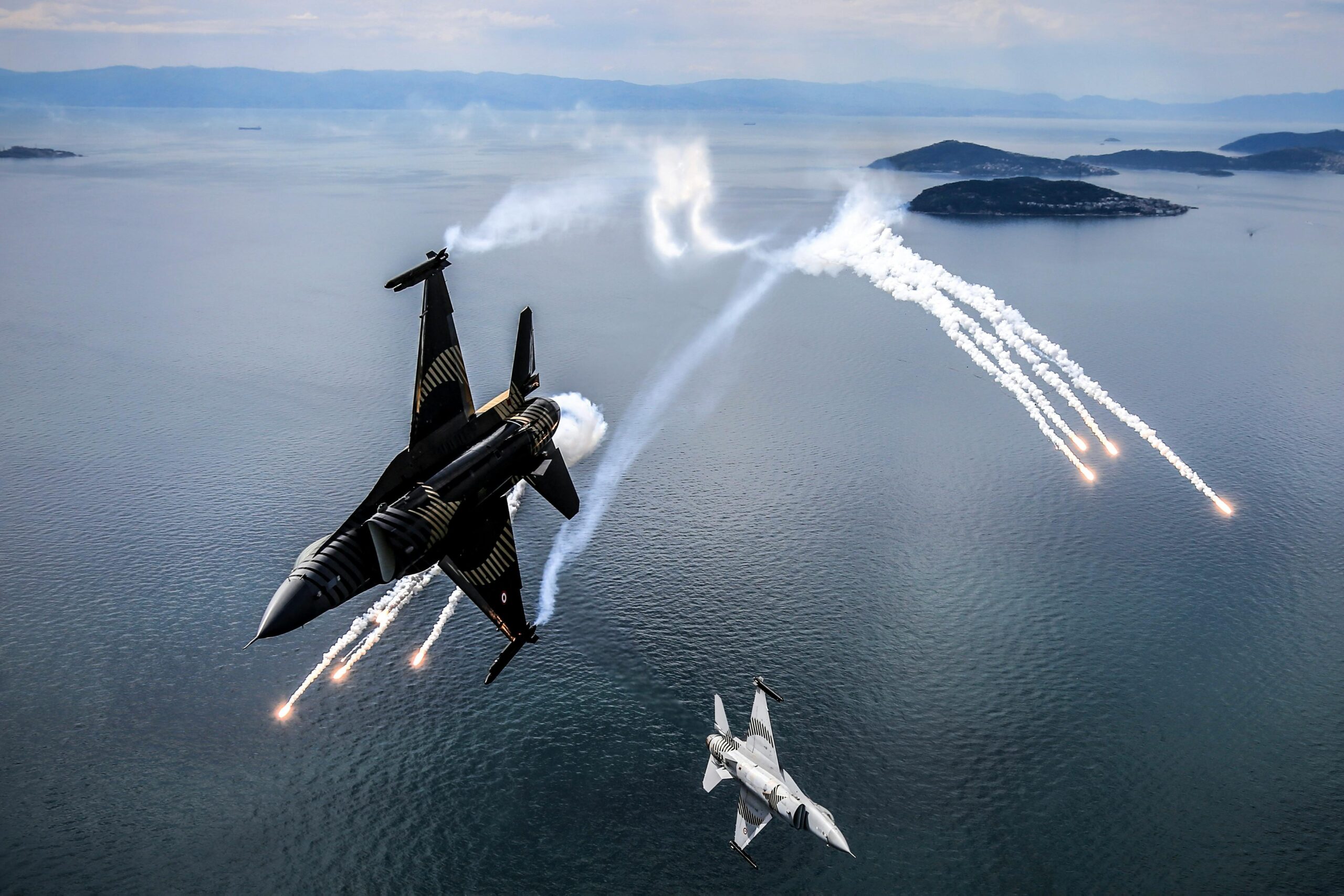
The U.S. Naval Air Systems Command (NAVAIR) has awarded a sole-source contract to Leonardo UK for its BriteCloud 218 expendable decoy system, designated the AN/ALQ-260(V), to enhance the F-35 Lightning II’s defense against advanced missile threats. The decision, formalized on December 23, 2025, culminates over a year of negotiations and addresses a recognized gap in the stealth fighter’s electronic warfare suite.
In the high-stakes cat-and-mouse game of modern air combat, a fighter jet’s greatest asset can sometimes be a convincing lie. The U.S. Navy is now investing in a sophisticated form of aerial deception, selecting a British-made electronic decoy to protect its most advanced stealth fighters. In a move signaling urgency, the Navy has formally contracted Leonardo UK to supply its BriteCloud Active Expendable Decoy for integration onto the F-35C and F-35B variants, bypassing a competitive bid process to field the technology years faster. This system is designed to trick incoming radar-guided missiles by emitting a false target more attractive than the jet itself.
Why the rush? Navy officials concluded that developing a similar system from scratch would cause an “unacceptable delay” of approximately eight years, a timeline deemed untenable given the rapid proliferation of advanced air-defense missiles. NAVAIR justified the sole-source award by pointing to over 14 years of joint research and testing between Leonardo and the UK Ministry of Defence, which has matured the technology to Technology Readiness Level 9. “Awarding the program to any alternative supplier would result in an unacceptable delay,” stated the official procurement notice, as reported by Army Recognition. The contract is structured with a base year and one option year, with projected annual buys of 3,000 to 6,000 decoys to sustain carrier air wing and expeditionary operations.
READ ALSO: https://modernmechanics24.com/post/norway-launches-panoramic-night-train/
The BriteCloud 218 fills a critical vulnerability in the F-35’s otherwise formidable defensive arsenal. While the jet boasts a low-observable design and the sophisticated BAE Systems AN/ASQ-239 electronic warfare suite, it lacks traditional chaff and carries a limited number of ALE-70 fiber-optic towed decoys. This leaves it potentially exposed in dense threat environments where its stealth advantage may be compromised. The compact, cartridge-based BriteCloud adds a vital outer layer of defense. Once ejected from a standard countermeasure dispenser like the AN/ALE-47, the self-contained, battery-powered decoy creates spatial separation from the jet and uses an onboard processor to generate a highly realistic false radar signature, fooling missiles with manipulated Doppler and range data.
The path to this contract was significantly paved by the U.S. Air National Guard’s Foreign Comparative Testing program. After successful trials on F-16 fighters in 2022, the Guard issued a fielding recommendation, confirming the decoy’s effectiveness and ease of integration. This gave the Navy high confidence that the system could be adapted to the F-35 with minimal software updates and no airframe modifications, preserving the aircraft’s stealth coating and signature. According to defense officials familiar with the program, this validation was crucial for the swift transition.
WATCH ALSO: https://modernmechanics24.com/post/chinas-humanoid-robot-embroidery-skills/
From a strategic standpoint, this procurement is a clear acknowledgment that stealth alone is no longer a silver bullet. “The introduction of an expendable active decoy adds a critical outer layer to the F-35’s defensive system, extending survivability once stealth advantages begin to erode,” analysts noted. In a future conflict against a peer adversary with advanced integrated air defenses, the F-35 may need to penetrate multiple engagement zones. Having a store of smart decoys allows pilots to break missile locks without relying solely on onboard jamming, which can reveal their position, or by expending their limited towed decoys too early in a mission.
For Leonardo UK, this contract is a major triumph, establishing BriteCloud as a core electronic warfare asset for the premier U.S. fifth-generation fighter. Production timelines indicate initial deliveries could begin within four to ten months of the contract award. While the immediate focus is the F-35, a separate decision on integrating BriteCloud onto the Navy’s F/A-18E/F Super Hornet and EA-18G Growler fleets is anticipated around 2027. This award underscores a broader trend: in an era of evolving threats, survival depends on a layered defense where cutting-edge deception plays a starring role.
READ ALSO: https://modernmechanics24.com/post/wisk-gen6-autonomous-evtol-first-flight/