China National Nuclear Corporation (CNNC) has announced a critical engineering breakthrough in its quest to manage nuclear waste for millennia. The state-owned nuclear giant has completed construction of a unique 7km (4.3-mile) long spiral ramp descending deep into the Gobi Desert, a pivotal milestone for the Beishan Underground Research Laboratory, one of the world’s largest facilities designed to study the permanent disposal of high-level radioactive waste.
Located in the remote Beishan area of Gansu province, the laboratory aims to solve nuclear energy’s most enduring dilemma: what to do with the dangerous byproducts that remain lethal for hundreds of thousands of years. “Nuclear energy is a clean and efficient power source… However, the remaining 1 per ceneist constitutes high-level waste, which requires safe disposal and isolation,” said Wang Ju, chief scientist at CNNC and the laboratory’s chief designer, in a company report. The Chinese strategy, mirroring global scientific consensus, is to bury this waste 500 to 1,000 metres underground in stable geological formations—a final, permanent link in the nuclear chain.
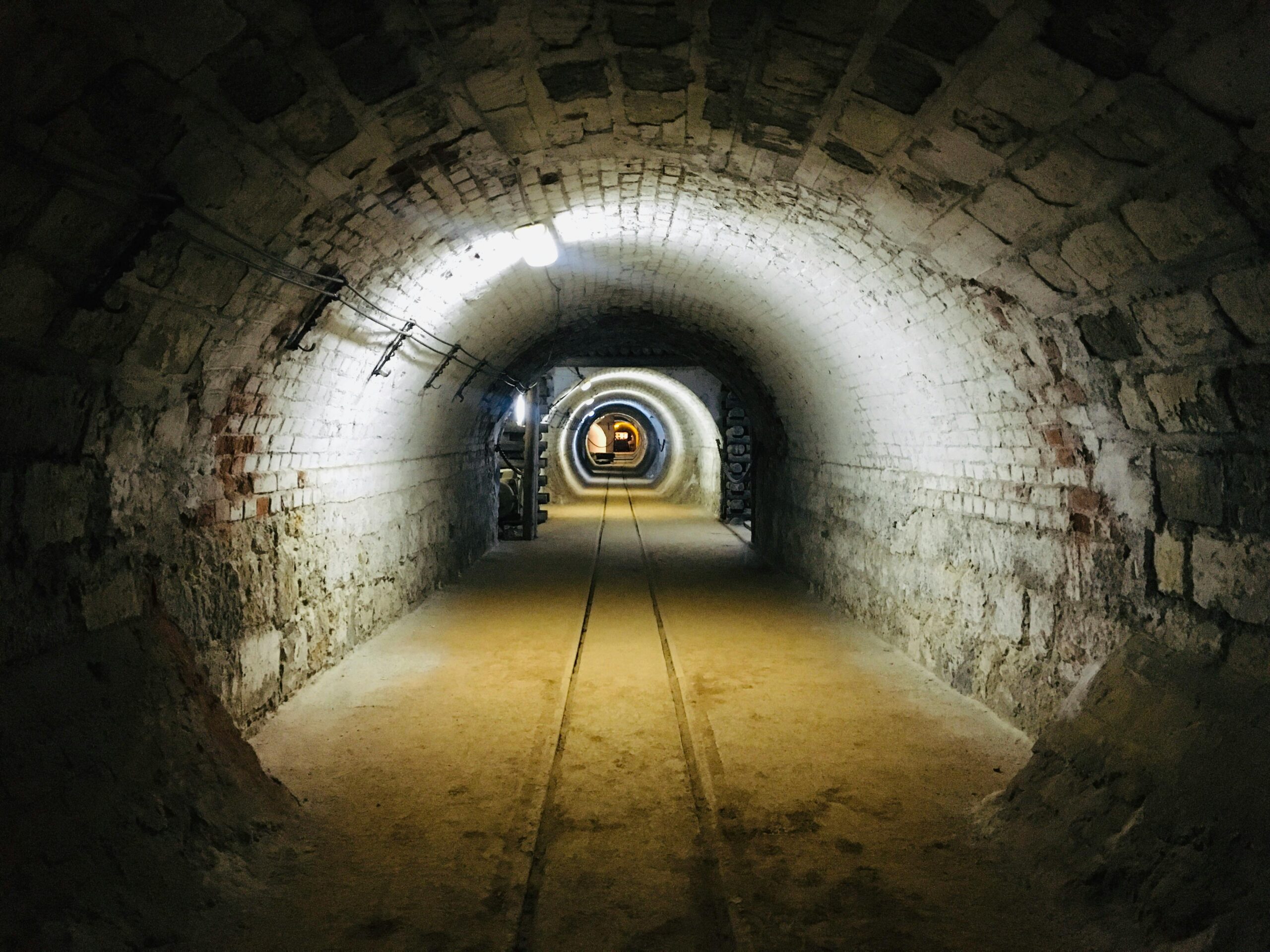
Building this deep geological tomb is a feat of monumental engineering. After nearly 30 years of site selection and research starting in 1996, which included drilling nearly 100 boreholes, construction officially began in June 2021. The laboratory’s design is innovative and complex, featuring the completed spiral ramp, three vertical shafts, and two horizontal levels reaching a maximum depth of 560 metres. The recently finished ramp itself is a 7.03-metre-diameter tunnel with a 10 per cent gradient, snaking its way down through 260-million-year-old granite. This rock, chosen for its ancient stability, presented the first major hurdle; it was so hard that conventional excavation methods were useless.
READ ALSO: https://modernmechanics24.com/post/mg-begins-delivery-semi-solid-state-ev/
To conquer the unforgiving granite and the ramp’s tight, steep turns, Chinese engineers built a custom machine. The Beishan No 1 boring machine is a first-of-its-kind apparatus independently developed by China for exactly this purpose. Key developers included the Beijing Research Institute of Uranium Geology and China Railway Construction Heavy Industry Corporation. This bespoke engineering was essential, as the steep slope demanded extraordinary climbing power, a reliable waste removal system, and pinpoint directional control from the 100-metre-long machine, all while minimizing damage to the surrounding rock to ensure the future repository would be leakproof.
The project’s philosophy has been one of integrated science and construction. Even as engineers bored through rock, over 40 domestic and international research institutes and university teams conducted large-scale engineering tests on site. This parallel work has already yielded innovations in efficient rock breaking, high-performance boring, and precise three-dimensional control for spiral tunnel construction.
WATCH ALSO: https://modernmechanics24.com/post/china-new-massive-battle-tank-live-fire/
According to CNNC, this collaborative, experimental approach is central to the lab’s mission. “Through the Beishan platform, we will exchange knowledge – bringing in global best practices and sharing our own findings with the world,” stated Wang Ju. The facility is not just a Chinese project but a global scientific platform aimed at tackling a universal challenge.
The completion of the spiral ramp is more than a construction update; it signifies China’s systematic and long-term commitment to closing the nuclear fuel cycle. By investing billions and decades into this research, China is addressing the primary environmental concern associated with nuclear power. The Beishan lab represents a critical step toward proving the safety and feasibility of deep geological repositories, a solution that could secure dangerous waste for the epochs required and bolster the case for nuclear energy as a stable, clean baseload power source in a low-carbon future.
READ ALSO: https://modernmechanics24.com/post/chinese-surgeons-ear-grafted-to-foot/