U.S. Department of Energy’s Princeton Plasma Physics Laboratory (PPPL) researchers have won the 2025 Kaul Foundation Prize for developing an artificial intelligence (AI) control system that uses 3D magnetic fields to stabilize the turbulent edge of a fusion plasma, a critical hurdle for reliable fusion energy.
The honor, which includes a $7,500 award for each winner, was bestowed upon Seong-Moo Yang, SangKyeun Kim, and Ricardo Shousha for their groundbreaking work. Their approach solves one of fusion energy’s most persistent problems: keeping the super-hot plasma’s edge from becoming unstable and damaging the walls of its containment vessel, a device called a tokamak. Think of it as trying to hold a flaming, chaotic doughnut in place using only magnets; the edges constantly want to flare out and cause trouble. The team’s AI-powered method offers a sophisticated solution to this fiery challenge, reported the Princeton Plasma Physics Laboratory.
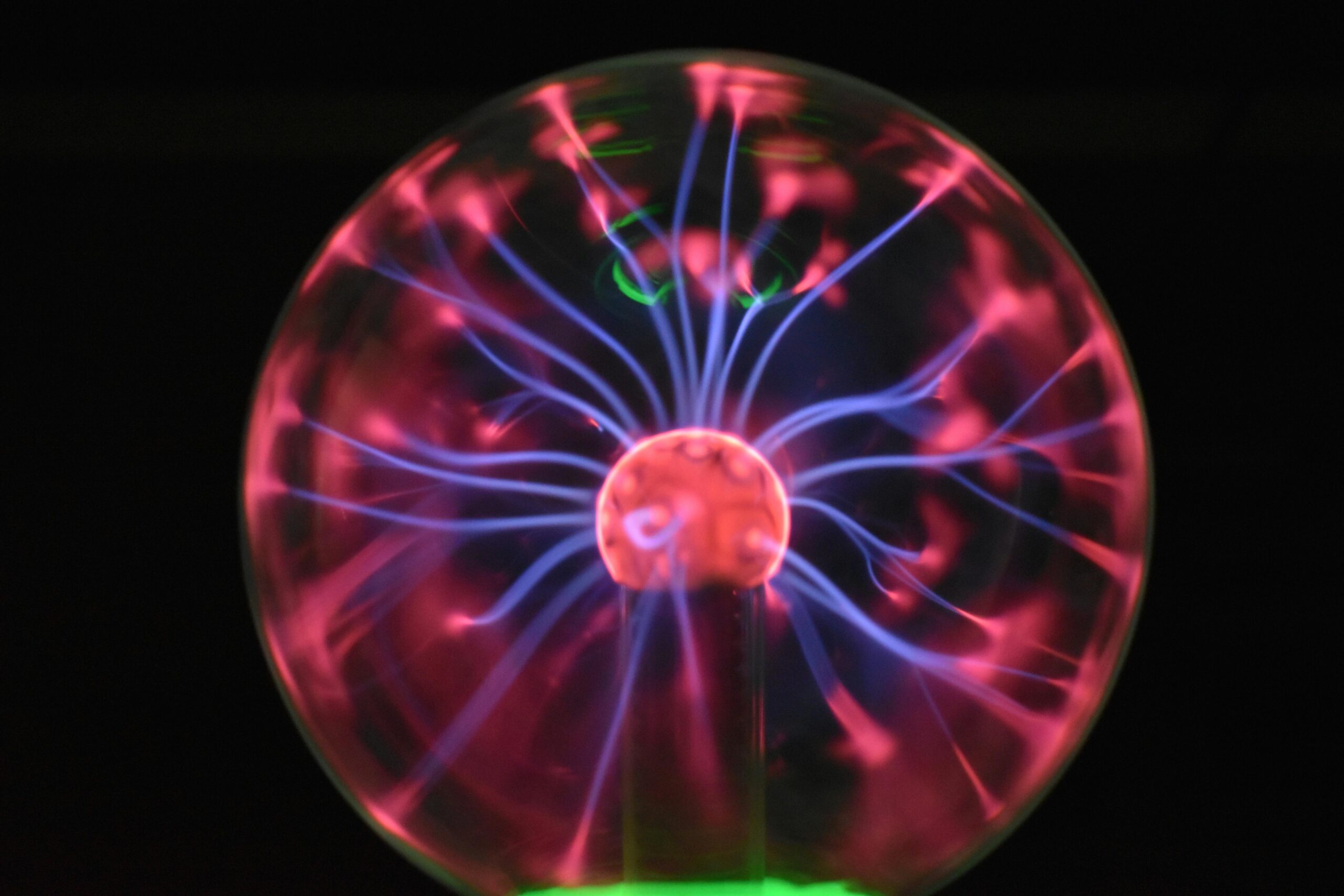
Fusion, the process powering the sun, promises nearly limitless clean energy. Inside doughnut-shaped tokamaks, magnetic fields confine a swirling plasma hotter than the sun’s core. However, the plasma’s edge is notoriously volatile, prone to instabilities called “edge-localized modes.” These are like violent solar flares lashing the tokamak’s inner wall, which can halt reactions and cause damage. While all tokamaks use magnetic fields for confinement, most rely on relatively simple 2D configurations. The PPPL team’s innovation, according to PPPL, involves designing and controlling more complex three-dimensional (3D) magnetic fields, with an AI system dynamically optimizing them in real-time to gently soothe the plasma’s turbulent boundary.
READ ALSO: https://modernmechanics24.com/post/ice-age-mammoth-bone-homes-ukraine/
“Seong-Moo Yang, SangKyeun Kim and Ricardo Shousha have made fundamental contributions to one of the most challenging problems in fusion energy, using artificial intelligence and traditional approaches,” said PPPL Lab Director Steve Cowley. He emphasized that their work is already influencing global fusion experiments, advancing how future power plants might operate reliably.
What makes this research particularly forward-thinking is its design for broad adoption. “Most experiments are proof of principle to show the physics,” explained Ricardo Shousha, a Strategic Science Initiative postdoc at PPPL. “When you make things generic, modular and flexible with the future in mind, as we did here, it gives it long-term viability.” This focus on creating a practical, transferable toolkit involved immense behind-the-scenes technical work, making the prize recognition especially meaningful for the team.
The journey has been highly collaborative, integrating work from major fusion facilities worldwide. Key experiments were conducted at the KSTAR tokamak in South Korea and the DIII-D tokamak in San Diego. This international effort highlights the collective push to solve fusion’s grand challenges. Currently, the system still includes human oversight in its optimization loop. The next ambitious frontier is full automation. “This is too complicated for conventional approaches, so a form of AI known as machine learning will be a key method to make a breakthrough,” said SangKyeun Kim, a staff research physicist at PPPL. The goal is a fully autonomous AI controller that seamlessly integrates with all other plasma control systems.
READ ALSO: https://modernmechanics24.com/wp-admin/post.php?post=6781&action=edit
For the researchers, the prize validates years of interdisciplinary effort. “To me, it recognizes teamwork across theory, experiments and control engineering,” said Seong-Moo Yang, a staff research physicist at PPPL. “I’m grateful to my colleagues and for the strong institutional support at PPPL. It also motivates me to keep pushing toward solutions that make fusion more practical.” Their work represents more than just an award-winning algorithm; it’s a significant step toward taming the raw power of a star, bringing the dream of clean, sustainable fusion energy closer to a practical reality by ensuring the container can survive what’s inside.