A theoretical physicist at the University of Cincinnati, alongside collaborators from MIT and Fermilab, has published a solution to a real particle physics problem featured—and left unsolved—on the CBS sitcom “The Big Bang Theory.” The research outlines how future fusion reactors could be used to hunt for hypothetical particles called axions, which may make up dark matter.
Remember that episode of The Big Bang Theory where Sheldon and Leonard’s whiteboard was covered in cryptic equations, topped with a frowny face? That wasn’t just set dressing. It was a genuine, unsolved physics problem about detecting elusive subatomic particles. Now, a real-world team led by a University of Cincinnati professor claims to have cracked it.
Professor Jure Zupan and his colleagues from Fermi National Accelerator Laboratory (Fermilab), MIT, and the Technion–Israel Institute of Technology have published a study in the Journal of High Energy Physics proposing a new method to search for axions. These hypothetical particles are a leading candidate to explain dark matter—the invisible, mysterious substance that makes up about 85% of the universe’s mass but has never been directly observed.
READ ALSO: https://modernmechanics24.com/post/rolls-royce-test-methanol-marine-engine/
“The general idea from our paper was discussed in The Big Bang Theory years ago, but Sheldon and Leonard couldn’t make it work,” Zupan said, according to a University of Cincinnati feature. The show’s whiteboard equations, visible in Season 5, pessimistically calculated the likelihood of detecting axions from a small reactor compared to the sun, hence the drawn sad face. Zupan’s team approached it from a different angle.
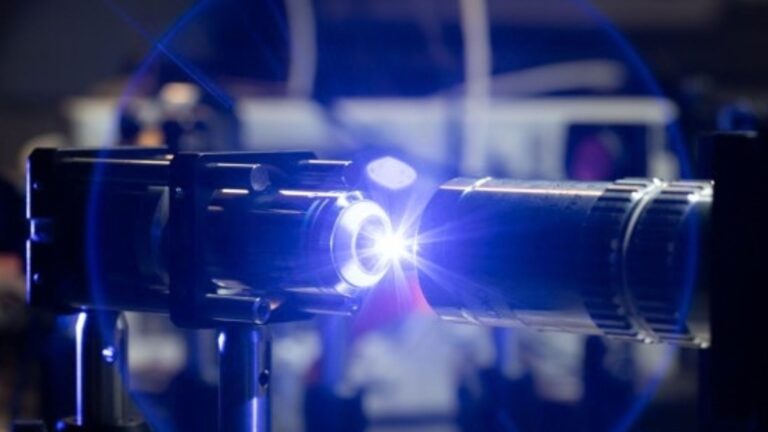
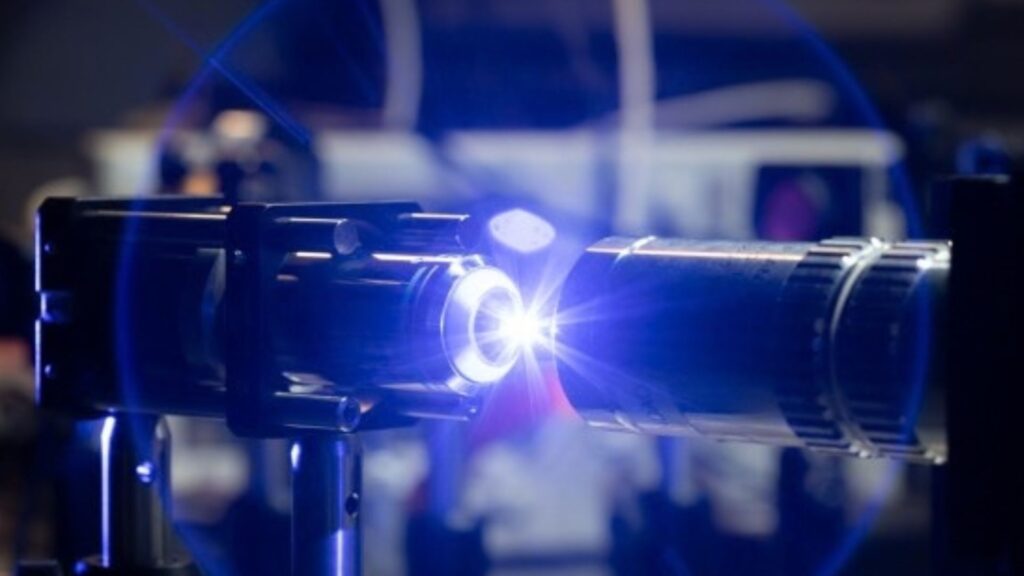
Their theoretical work focuses on next-generation fusion reactors, like the ITER project being built in France. These reactors, which fuse isotopes like deuterium and tritium, will create a massive flux of neutrons. Zupan’s paper proposes that these neutrons could be the key. “Neutrons interact with material in the walls. The resulting nuclear reactions can then create new particles,” he explained. A second process, where slowing neutrons release energy called bremsstrahlung (“braking radiation”), could also generate these elusive particles.
This sets up a fascinating possibility: future fusion reactors could serve a dual purpose. Not only could they provide clean energy, but they could also act as powerful particle factories and detectors for the dark sector of physics. While the sun is a vastly more powerful source, a reactor provides a controlled, measurable environment where different production processes can be isolated and studied.
WATCH ALSO: https://modernmechanics24.com/post/ubtech-world-first-robot-shipment/
Why does this matter? Directly detecting axions or proving dark matter exists would be one of the most monumental discoveries in modern physics. It would fundamentally reshape our understanding of the universe’s composition and evolution since the Big Bang 13.8 billion years ago. A practical method to search for them in a man-made machine brings that dream a step closer.
The synergy between pop culture and cutting-edge science here is palpable. The Big Bang Theory, which ended in 2019, was renowned for weaving real science into its scripts, making Zupan’s contribution a perfect full-circle moment. He noted the show’s deep appeal to scientists: “There are many layers to the jokes.” Now, one of its most visible unanswered questions has a potential answer, moving from a sitcom set piece to a peer-reviewed hypothesis in a major physics journal.
READ ALSO: https://modernmechanics24.com/post/frog-gut-bacterium-cures-cancer-tumors/