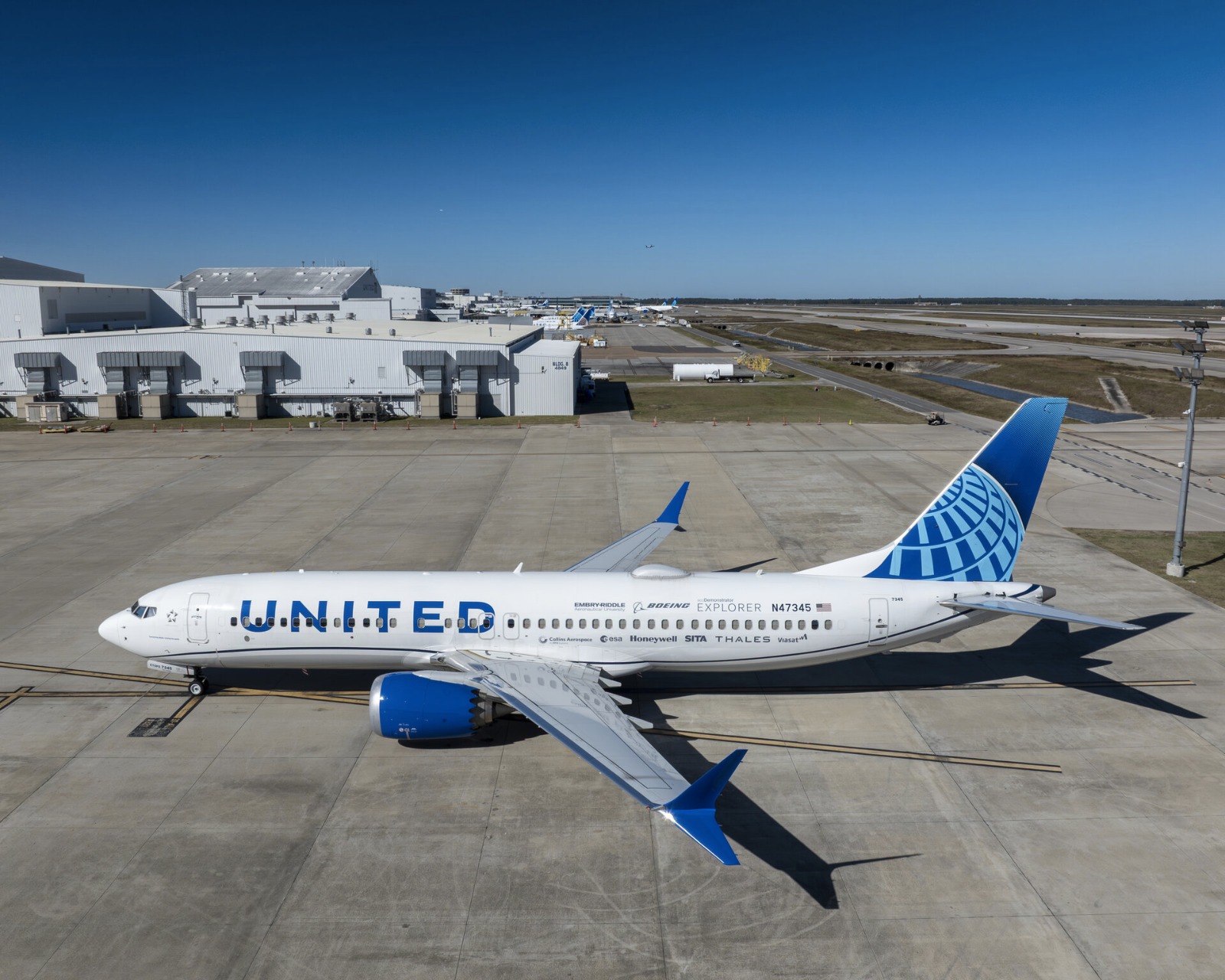
A transatlantic collaboration between the European Space Agency (ESA), satellite firm Viasat, and aerospace giant Boeing has successfully tested a space-enabled air traffic control system on United Airlines flights, aiming to cut aviation’s carbon footprint and reduce global flight delays. The Iris system, already operational in Europe, paves the way for more efficient global skies.
Imagine your flight taking the most direct, fuel-efficient path possible, dynamically adjusting to weather in real-time thanks to a constant digital conversation between the pilot and air traffic control via satellites. This isn’t a futuristic concept—it’s being tested right now, and it could soon become the new normal for air travel, saving millions of tons of CO2 and shaving minutes off your journey.
READ ALSO: https://modernmechanics24.com/post/industrial-robotics-agile-one-launch/
This leap forward is the result of a major partnership between the European Space Agency (ESA), global satellite communications provider Viasat, and aerospace leader Boeing. In late October and early November, they conducted pioneering test flights using a Boeing aircraft operated by United Airlines. The flights, which spanned from Houston, Texas, to Edinburgh, UK, demonstrated the Iris satellite-based communication system, a technology poised to revolutionize how planes navigate our crowded skies.
Traditionally, pilots and air traffic controllers rely heavily on analogue voice radio and limited terrestrial data links. The Iris system changes the game by creating a robust, secure, and high-capacity digital data link via satellite. This allows for the continuous exchange of far more detailed information, enabling something called Trajectory Based Operations. In simple terms, it means flights can be given more precise, optimized routes in real-time, avoiding congestion and adverse weather, leading to less fuel burn and shorter flight times.
The system is not a pie-in-the-sky idea; it’s already a reality over Europe. Developed by Viasat in partnership with ESA and a consortium of European and Canadian companies, Iris has been fully operational in European airspace since 2024, managing more than 17,000 flights so far. This latest collaboration with Boeing and United Airlines is the critical step to making this technology a global standard, reported the European Space Agency.
WATCH ALSO: https://modernmechanics24.com/post/chinese-company-new-humanlike-robot/
The timing couldn’t be more critical. While the COVID-19 pandemic temporarily reduced air travel, the industry has rebounded fully, and global flight numbers are projected to increase by a staggering 50% before 2050. Our current air traffic management systems will struggle under that load. “Such increase makes route optimisation a priority,” the partners emphasize. Iris is designed to handle that future demand, making the aviation system more scalable, efficient, and sustainable.
The test flights were conducted under Boeing’s ecoDemonstrator programme, a flying laboratory that has tested over 400 technologies since 2012. Historically, about one-third of the technologies tested in this program get implemented, suggesting a high likelihood for Iris’s adoption. The potential impact is enormous. “Ultimately, the global use of digital communications technology supported by Iris will ensure more efficient flight routes, resulting in significant savings of CO2 emissions and fewer flight delays for passengers,” states the ESA.
Leadership across all partner organizations highlighted the breakthrough. Laurent Jaffart, ESA Director for Connectivity and Secure Communications, called it “a crucial milestone towards a unified global solution for Air Traffic Management.” Todd Citron, Chief Technology Officer of Boeing, stated the partnership marks “a significant step towards a more sustainable future for air travel.” For the airline directly involved, Lauren Riley, Chief Sustainability Officer of United Airlines, said the collaboration supports their “goal to decarbonise aviation.”
READ ALSO: https://modernmechanics24.com/post/startup-terahertz-sensors-self-driving-safety/
With successful transatlantic tests complete and the system already live in Europe, the foundation is laid. The vision is a globally interconnected sky where every flight flies its optimal path, saving fuel, time, and the planet—one digital data link at a time.