China has started construction of a utility-scale energy project that combines supercritical carbon dioxide power generation with molten salt storage.
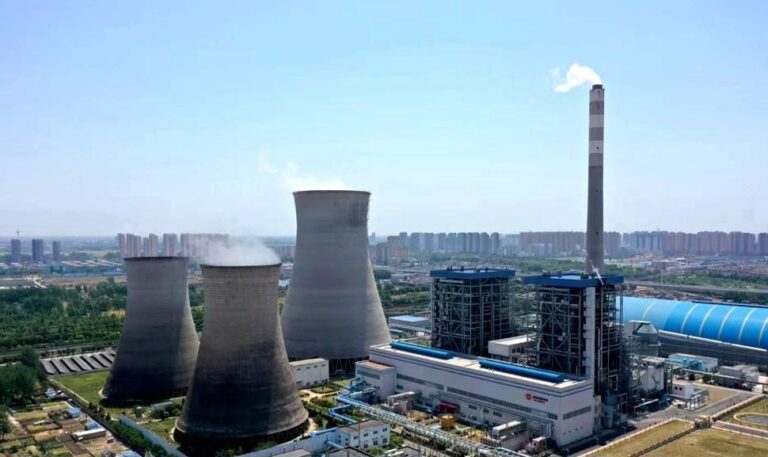
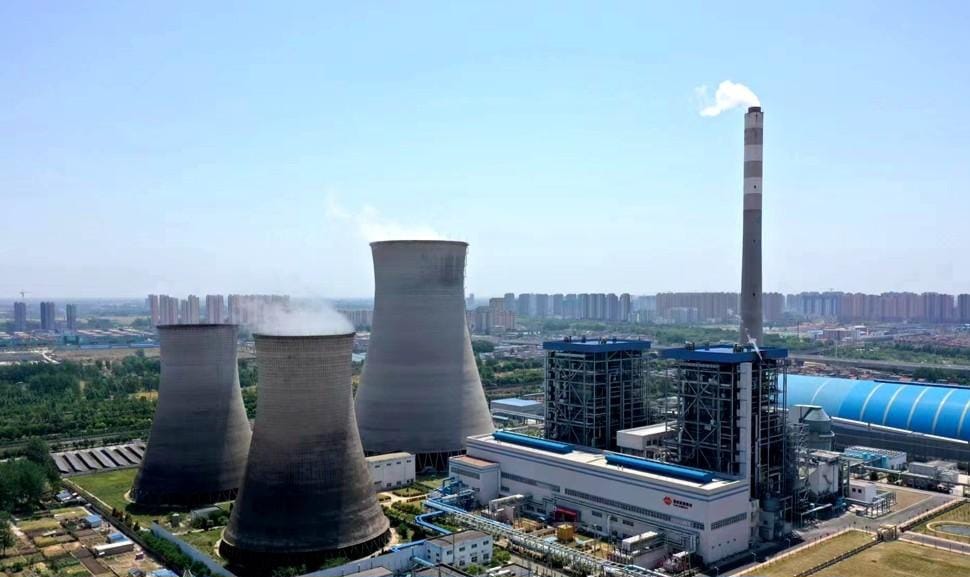
The Ruitan demonstration project is being built at China Huaneng’s Bajiao power station in Yantai, Shandong province. The facility is designed to store surplus electricity as heat and return that energy to the grid when demand rises.
Construction began last week, according to information reported by China’s state news agency Xinhua.
The project is expected to enter operation next year and will initially include a 50-megawatt supercritical carbon dioxide power unit. It will also have a 100MW molten salt storage system with a total storage capacity of 400 megawatt-hours.
The system will use electricity from the station’s existing coal-fired units when demand is low. That surplus electricity will heat molten salt, allowing energy to be stored as thermal energy rather than as electricity. During periods of high demand, the stored heat will be used to run the supercritical carbon dioxide unit and generate electricity.
READ ALSO: https://modernmechanics24.com/post/destroyers-expand-china-pacific-reach/
Traditional thermal power stations generally heat water to produce steam. The steam then drives a turbine connected to a generator. The Ruitan system uses carbon dioxide in a high-temperature, high-pressure state instead of steam to drive its turbine.
How CO2 Generation Works
At the supercritical stage, carbon dioxide reaches conditions where it has properties of both a liquid and a gas. In this dense state, the fluid can move through the power-generation system and drive a turbine directly. The carbon dioxide then circulates through a closed loop instead of being continuously consumed.
The design allows the power unit to be more compact than conventional steam-based systems. According to Xinhua, it also avoids the need for water in the power cycle and offers higher generation efficiency. The turbine can also change its output rapidly, with an adjustment rate reported to be about four times that of conventional coal-fired units.
Heat for a supercritical carbon dioxide system does not have to come from coal generation. Solar power, geothermal sources and industrial waste heat are among the possible sources. This gives the technology potential for use alongside different forms of energy and industrial processes.
Molten Salt Stores Heat
Molten salt storage works differently from battery storage. Batteries store electricity through chemical reactions, while molten salt systems store energy as heat inside tanks containing liquid salt. The stored heat can later be converted into electricity or used directly for industrial applications.
This approach is particularly suited to large energy facilities where substantial amounts of heat need to be stored for several hours. Batteries remain useful for many applications, including mobile devices, vehicles and grid services that require rapid electrical response. Molten salt systems instead provide a way to connect thermal storage with large power-generation units.
The Ruitan project combines these two technologies into a single power system. Electricity that might otherwise be curtailed or wasted during periods of low demand can be converted into stored heat. That heat can then support electricity production when demand is higher.
WATCH ALSO: https://modernmechanics24.com/post/china-five-destroyers-firepower-drill/
China Expands Technology
China already has experience with supercritical carbon dioxide generation. The Chaotan One facility in Guizhou province became the world’s first commercial supercritical carbon dioxide power-generation project at the end of last year. Developed by the China National Nuclear Corporation, the facility uses waste heat from a steel production plant.
The nuclear corporation has also started work on a project that aims to combine molten salt storage with supercritical carbon dioxide generation by 2028. Similar research is taking place outside China. The European Union’s SOLARSCO2OL project, for example, is working on a supercritical power system driven by molten salt within a concentrated solar power plant.
Supercritical carbon dioxide systems are also being studied for future nuclear applications. Their closed-loop operation and lack of dependence on steam make them relevant to some advanced nuclear concepts, including compact nuclear power systems designed for spacecraft. The technology therefore extends beyond conventional electricity generation.
Storage Supports Grid Demand
China is developing molten salt storage in other parts of the country as well. A 50MW concentrated solar power plant under construction in Dangxiong in the Tibet autonomous region includes a molten salt storage system. The facility is expected to be completed next year.
The storage system will capture excess energy produced during daylight hours and retain it as heat. That stored energy can then support power generation when electricity demand reaches its highest levels. The project is also expected to become the highest-altitude concentrated solar power plant.
The Ruitan demonstration project places the same basic storage principle alongside an existing coal-fired power station.
Its performance will provide further operating experience with combining thermal storage and supercritical carbon dioxide generation at utility scale. The results will help show how the technology performs as China seeks greater flexibility from its power system.